Arles Arle (Occitan) | |
|---|---|
Subprefecture and commune | |
Aerial view of Arles and the Rhône | |
 Flag  Coat of arms | |
 Location of Arles | |
  Arles |


https://en.wikipedia.org/wiki/Arles

法國普羅旺斯地區的古城阿爾勒,是文森梵谷創作一些最著名的作品的地方,包括向日葵系列和《羅納河上的星夜》。
《黃房子》(又稱《街道》)是19世紀荷蘭後印象派畫家文森梵高於1888年創作的一幅油畫。畫中的房子位於法國阿爾勒拉馬丁廣場2號的右翼,1888年5月1日,梵谷租住了那裡的四個房間。
The Yellow House, alternatively named The Street, is an 1888 oil painting by the 19th-century Dutch Post-Impressionist painter Vincent van Gogh. The house was the right wing of 2 Place Lamartine, Arles, France, where, on May 1, 1888, Van Gogh rented four rooms.
梵谷與黃色的意義
在一段快樂的創作時期,梵谷尤其鍾愛黃色,並創作出了一些他最著名的作品。但正如一場新展覽所展示的,黃色還可以承載許多不同的意義。
Van Gogh and the Meaning of Yellow
The artist gave prominence to the color during a happy period that produced some of his most famous works. But it can have many different associations, a new exhibition shows.

巴勃羅·畢卡索在 20 世紀初經歷了他的藍色時期,這是一個以藍色調為主的憂鬱階段。梵谷的「黃色時期」(人們或許可以這樣稱呼它)反映了普羅旺斯陽光的溫暖,同時也反映了這位藝術家在他短暫的藝術生涯中所感受到的慰藉、希望和樂觀。
Pablo Picasso had his Blue Period in the early 1900s, a melancholic phase in shades of blue. Van Gogh’s “yellow period,” as one might call it, reflected the warmth of the Provençal sun, but also the artist’s feeling of consolation, hope and optimism during that brief period of his career.
----
"黃色"的故事說不盡: 金,火,...butter yellow:Is It Time to Wear Butter Yellow?
補充翻讀《色彩列傳:黃色》Jaune : histoire d'une couleur By [法]米歇爾·帕斯圖羅;顏色的故事‧調色板的自然史 (Color: A Natural History of the Palette By Victoria Finlay);中國/日本/印度.....的顏色,FANAC公司,Ginkgo tree, Japan
Hanching Chung
A Giant Ginkgo tree, Japan

Photo by Kaji Nori
#Earth #Nature #HomePlanetEarth
黃色"的故事說不盡:翻讀《色彩列傳:黃色》Jaune : histoire d'une couleur By [法]米歇爾·帕斯圖羅;顏色的故事‧調色板的自然史 (Color: A Natural History of the Palette By Victoria Finlay);中國/日本/印度.....的顏色
https://www.facebook.com/hanching.chung/videos/419713972818253
butter yellow
nyt 2025


of positivity and warmth,” she said, adding that it goes well with many neutral tones — white, navy, brown — that tend to populate wardrobes.


批評:
日本FANAC 公司的黃色"獨斷"
https://www.fanuc.co.jp/eindex.html
火的顏色
Howard Chang
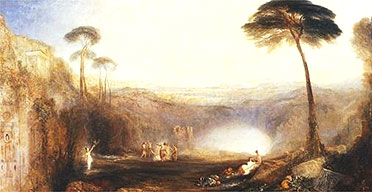
n fact, Turner's 1834 painting The Golden Bough, owned by Tate Britain, depicts Lake Avernus in Campania, with the Cumaean Sibyl, but no matter. Turner did also depict Lake Nemi, beside which in ancient times stood a sanctuary of the goddess Diana Nemorensis, Diana of the Wood; votive offerings left there can be seen today in the British Museum. The shrine, explains Frazer, was next to a sacred grove. And it's what took place inside the grove that concerns him.
Why does he invoke Turner? To answer this question is to discover the true nature of Frazer's book, The Golden Bough's golden bough.
Frazer started his book in the 1880s; Turner had died in 1851. Over the course of the book's successive editions (published in two volumes in 1890, it was expanded to 12 volumes by 1915, and condensed to a mere 714 pages in the author's own abridged version of 1922), the very identity of Turner as an artist changed. In his lifetime Turner had been controversial; people were constantly disparaging his "mustard" yellows and "harsh" light. He was famous as a painter of myth and history: a perspective on Turner of which we've almost lost sight. In 1905, the Tate Gallery exhibited a selection of some of the works left by Turner to the nation that had previously been considered unfinished; in the light of Monet it suddenly looked as if Turner had secretly invented impressionism, yet been unable to make this public in the culture of Victorian England.
沒有留言:
張貼留言
注意:只有此網誌的成員可以留言。