Reading Turgenev : Trevor, William, 1928-2016
This novel, hailed by many as a masterpiece, "beautifully written and wonderfully readable," is the story of Mary Louise Dallon who, denied love in her marriage, turns to a half-imaginary romance with a cousin who reads Turgenev to her in a cemetery; later, she desolately retreats into the shadowy world of her memories and desires
閱讀屠格涅夫:特雷弗·威廉(1928-2016)
這部被許多人譽為傑作的小說,“文筆優美,引人入勝”,講述了瑪麗·路易絲·達倫的故事。她在婚姻中得不到愛情,於是與一位在墓地裡為她朗讀屠格涅夫作品的表兄展開了一段半虛構的戀情;之後,她孤獨地退縮到自己回憶和慾望的陰影世界裡。
A Biography of the Pixel (Leonardo) Paperback – August 3, 2021
by Alvy Ray Smith (Author)
4.7 4.7 out of 5 stars (109)
Part of: Leonardo (28 books)
The pixel as the organizing principle of all pictures, from cave paintings to Toy Story.
The Great Digital Convergence of all media types into one universal digital medium occurred, with little fanfare, at the recent turn of the millennium. The bit became the universal medium, and the pixel--a particular packaging of bits--conquered the world. Henceforward, nearly every picture in the world would be composed of pixels--cell phone pictures, app interfaces, Mars Rover transmissions, book illustrations, videogames. In A Biography of the Pixel, Pixar cofounder Alvy Ray Smith argues that the pixel is the organizing principle of most modern media, and he presents a few simple but profound ideas that unify the dazzling varieties of digital image making.
Smith's story of the pixel's development begins with Fourier waves, proceeds through Turing machines, and ends with the first digital movies from Pixar, DreamWorks, and Blue Sky. Today, almost all the pictures we encounter are digital--mediated by the pixel and irretrievably separated from their media; museums and kindergartens are two of the last outposts of the analog. Smith explains, engagingly and accessibly, how pictures composed of invisible stuff become visible--that is, how digital pixels convert to analog display elements. Taking the special case of digital movies to represent all of Digital Light (his term for pictures constructed of pixels), and drawing on his decades of work in the field, Smith approaches his subject from multiple angles--art, technology, entertainment, business, and history. A Biography of the Pixel is essential reading for anyone who has watched a video on a cell phone, played a videogame, or seen a movie. 400 pages of annotations, prepared by the author and available online, provide an invaluable resource for readers.
This item: My Mother Was a Computer: Digital Subjects and Literary Texts
$26.00
+
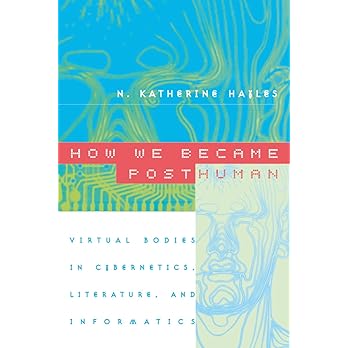
How We Became Posthuman: Virtual Bodies in Cybernetics, Literature, and Informatics
像素傳記(Leonardo系列)平裝本 – 2021年8月3日
作者:艾爾維‧雷‧史密斯 (Alvy Ray Smith)
系列:Leonardo(共 28 冊)
像素是所有圖像的組織原則,從洞穴壁畫到《玩具總動員》都是如此。
在千禧年之交,所有媒體類型悄悄融合為一個通用的數位媒介。比特成為通用媒介,而像素——比特的一種特殊封裝形式——征服了世界。從此以後,世界上幾乎所有圖像都由像素構成——手機照片、應用程式介面、火星探測器傳輸的圖像、書籍插圖、電子遊戲等等。在《像素傳記》一書中,皮克斯聯合創始人艾爾維·雷·史密斯論證了像素是大多數現代媒體的組織原則,並提出了一些簡單而深刻的觀點,將令人眼花繚亂的數位影像製作方式統一起來。
史密斯筆下的像素發展史始於傅立葉波,途經圖靈機,最後以皮克斯、夢工廠和藍天工作室的首批數位電影告終。如今,我們接觸到的幾乎所有圖像都是數位影像——由像素媒介傳輸,並與原始媒介徹底分離;博物館和幼兒園是模擬媒介最後的兩個堡壘。史密斯以引人入勝、通俗易懂的方式解釋了由不可見物質構成的影像如何變得可見——也就是數位像素如何轉換為類比顯示元素。他以數位電影為例,代表所有「數位光」(他用來指稱由像素構成的圖像的術語),並結合自己在該領域數十年的研究,從藝術、科技、娛樂、商業和歷史等多個角度探討了這一主題。 《像素傳記》是所有在手機上看過影片、玩過電子遊戲或看過電影的人的必讀之作。書中400頁由作者撰寫的註釋可在網路上查閱,為讀者提供了寶貴的參考資料。
本書:《我的母親是一台電腦:數位主體與文學文本》
《我們如何成為後人類:控制論、文學與資訊學中的虛擬身體》
20.99 美元
《我的母親是一台電腦:數位主體與文學文本》平裝本 – 2005 年 10 月 1 日
作者:N. Katherine Hayles
N. Katherine Hayles 認為,我們生活在一個新語言不斷湧現、擴散並最終消亡的世界。這些語言是我們自己創造的:為我們稱為「電腦」的智慧機器編寫的程式語言。 Hayles 的最新探索提供了一個令人興奮的新視角來理解程式碼與語言之間的關係,並探討了它們的互動如何影響了創意、技術和藝術實踐。
《我的母親是一台電腦》探討了程式碼對日常生活的影響如何與語言和文字的影響相提並論:語言和程式碼的交織日益加深,曾經區分人與機器、類比與數位、新舊科技的界線變得模糊不清。 《我的母親是一台電腦》為我們提供了理解這些複雜關係所需的工具。海爾斯認為,我們生活在一個媒介化的時代,這挑戰了我們對語言、主體性、文學對象和文本性的固有觀念。這種媒介化過程發生在數位媒體與傳統媒體相關的文化實踐互動之時,海爾斯對此進行了深刻的描繪:代碼與語言的區別;電子文本與印刷文本的區別;數位媒體對自我概念的影響;數位化對紙質書籍的影響;我們對電腦作為生命體的認知;人類意識本身是否可能具有計算性;以及人類透過自身數位時代的視角來看待宇宙觀的主體。
從某種意義上說,我們都是電腦的後代,而沒有哪位評論家比N·凱瑟琳·海爾斯更深入地闡釋了這些技術如何定義我們以及我們的文化。 《我的母親是一台電腦》一書引人深思且發人深省,將被譽為她迄今為止的最佳作品。
My Mother Was a Computer: Digital Subjects and Literary Texts Paperback – October 1, 2005
by N. Katherine Hayles (Author)
We live in a world, according to N. Katherine Hayles, where new languages are constantly emerging, proliferating, and fading into obsolescence. These are languages of our own making: the programming languages written in code for the intelligent machines we call computers. Hayles's latest exploration provides an exciting new way of understanding the relations between code and language and considers how their interactions have affected creative, technological, and artistic practices.
My Mother Was a Computer explores how the impact of code on everyday life has become comparable to that of speech and writing: language and code have grown more entangled, the lines that once separated humans from machines, analog from digital, and old technologies from new ones have become blurred. My Mother Was a Computer gives us the tools necessary to make sense of these complex relationships. Hayles argues that we live in an age of intermediation that challenges our ideas about language, subjectivity, literary objects, and textuality. This process of intermediation takes place where digital media interact with cultural practices associated with older media, and here Hayles sharply portrays such interactions: how code differs from speech; how electronic text differs from print; the effects of digital media on the idea of the self; the effects of digitality on printed books; our conceptions of computers as living beings; the possibility that human consciousness itself might be computational; and the subjective cosmology wherein humans see the universe through the lens of their own digital age.
We are the children of computers in more than one sense, and no critic has done more than N. Katherine Hayles to explain how these technologies define us and our culture. Heady and provocative, My Mother Was a Computer will be judged as her best work yet.
Read less
by Alvy Ray Smith (Author)
4.7 4.7 out of 5 stars (109)
Part of: Leonardo (28 books)
The pixel as the organizing principle of all pictures, from cave paintings to Toy Story.
The Great Digital Convergence of all media types into one universal digital medium occurred, with little fanfare, at the recent turn of the millennium. The bit became the universal medium, and the pixel--a particular packaging of bits--conquered the world. Henceforward, nearly every picture in the world would be composed of pixels--cell phone pictures, app interfaces, Mars Rover transmissions, book illustrations, videogames. In A Biography of the Pixel, Pixar cofounder Alvy Ray Smith argues that the pixel is the organizing principle of most modern media, and he presents a few simple but profound ideas that unify the dazzling varieties of digital image making.
Smith's story of the pixel's development begins with Fourier waves, proceeds through Turing machines, and ends with the first digital movies from Pixar, DreamWorks, and Blue Sky. Today, almost all the pictures we encounter are digital--mediated by the pixel and irretrievably separated from their media; museums and kindergartens are two of the last outposts of the analog. Smith explains, engagingly and accessibly, how pictures composed of invisible stuff become visible--that is, how digital pixels convert to analog display elements. Taking the special case of digital movies to represent all of Digital Light (his term for pictures constructed of pixels), and drawing on his decades of work in the field, Smith approaches his subject from multiple angles--art, technology, entertainment, business, and history. A Biography of the Pixel is essential reading for anyone who has watched a video on a cell phone, played a videogame, or seen a movie. 400 pages of annotations, prepared by the author and available online, provide an invaluable resource for readers.
This item: My Mother Was a Computer: Digital Subjects and Literary Texts
$26.00
+
How We Became Posthuman: Virtual Bodies in Cybernetics, Literature, and Informatics
像素傳記(Leonardo系列)平裝本 – 2021年8月3日
作者:艾爾維‧雷‧史密斯 (Alvy Ray Smith)
系列:Leonardo(共 28 冊)
像素是所有圖像的組織原則,從洞穴壁畫到《玩具總動員》都是如此。
在千禧年之交,所有媒體類型悄悄融合為一個通用的數位媒介。比特成為通用媒介,而像素——比特的一種特殊封裝形式——征服了世界。從此以後,世界上幾乎所有圖像都由像素構成——手機照片、應用程式介面、火星探測器傳輸的圖像、書籍插圖、電子遊戲等等。在《像素傳記》一書中,皮克斯聯合創始人艾爾維·雷·史密斯論證了像素是大多數現代媒體的組織原則,並提出了一些簡單而深刻的觀點,將令人眼花繚亂的數位影像製作方式統一起來。
史密斯筆下的像素發展史始於傅立葉波,途經圖靈機,最後以皮克斯、夢工廠和藍天工作室的首批數位電影告終。如今,我們接觸到的幾乎所有圖像都是數位影像——由像素媒介傳輸,並與原始媒介徹底分離;博物館和幼兒園是模擬媒介最後的兩個堡壘。史密斯以引人入勝、通俗易懂的方式解釋了由不可見物質構成的影像如何變得可見——也就是數位像素如何轉換為類比顯示元素。他以數位電影為例,代表所有「數位光」(他用來指稱由像素構成的圖像的術語),並結合自己在該領域數十年的研究,從藝術、科技、娛樂、商業和歷史等多個角度探討了這一主題。 《像素傳記》是所有在手機上看過影片、玩過電子遊戲或看過電影的人的必讀之作。書中400頁由作者撰寫的註釋可在網路上查閱,為讀者提供了寶貴的參考資料。
本書:《我的母親是一台電腦:數位主體與文學文本》
《我們如何成為後人類:控制論、文學與資訊學中的虛擬身體》
20.99 美元
《我的母親是一台電腦:數位主體與文學文本》平裝本 – 2005 年 10 月 1 日
作者:N. Katherine Hayles
N. Katherine Hayles 認為,我們生活在一個新語言不斷湧現、擴散並最終消亡的世界。這些語言是我們自己創造的:為我們稱為「電腦」的智慧機器編寫的程式語言。 Hayles 的最新探索提供了一個令人興奮的新視角來理解程式碼與語言之間的關係,並探討了它們的互動如何影響了創意、技術和藝術實踐。
《我的母親是一台電腦》探討了程式碼對日常生活的影響如何與語言和文字的影響相提並論:語言和程式碼的交織日益加深,曾經區分人與機器、類比與數位、新舊科技的界線變得模糊不清。 《我的母親是一台電腦》為我們提供了理解這些複雜關係所需的工具。海爾斯認為,我們生活在一個媒介化的時代,這挑戰了我們對語言、主體性、文學對象和文本性的固有觀念。這種媒介化過程發生在數位媒體與傳統媒體相關的文化實踐互動之時,海爾斯對此進行了深刻的描繪:代碼與語言的區別;電子文本與印刷文本的區別;數位媒體對自我概念的影響;數位化對紙質書籍的影響;我們對電腦作為生命體的認知;人類意識本身是否可能具有計算性;以及人類透過自身數位時代的視角來看待宇宙觀的主體。
從某種意義上說,我們都是電腦的後代,而沒有哪位評論家比N·凱瑟琳·海爾斯更深入地闡釋了這些技術如何定義我們以及我們的文化。 《我的母親是一台電腦》一書引人深思且發人深省,將被譽為她迄今為止的最佳作品。
My Mother Was a Computer: Digital Subjects and Literary Texts Paperback – October 1, 2005
by N. Katherine Hayles (Author)
We live in a world, according to N. Katherine Hayles, where new languages are constantly emerging, proliferating, and fading into obsolescence. These are languages of our own making: the programming languages written in code for the intelligent machines we call computers. Hayles's latest exploration provides an exciting new way of understanding the relations between code and language and considers how their interactions have affected creative, technological, and artistic practices.
My Mother Was a Computer explores how the impact of code on everyday life has become comparable to that of speech and writing: language and code have grown more entangled, the lines that once separated humans from machines, analog from digital, and old technologies from new ones have become blurred. My Mother Was a Computer gives us the tools necessary to make sense of these complex relationships. Hayles argues that we live in an age of intermediation that challenges our ideas about language, subjectivity, literary objects, and textuality. This process of intermediation takes place where digital media interact with cultural practices associated with older media, and here Hayles sharply portrays such interactions: how code differs from speech; how electronic text differs from print; the effects of digital media on the idea of the self; the effects of digitality on printed books; our conceptions of computers as living beings; the possibility that human consciousness itself might be computational; and the subjective cosmology wherein humans see the universe through the lens of their own digital age.
We are the children of computers in more than one sense, and no critic has done more than N. Katherine Hayles to explain how these technologies define us and our culture. Heady and provocative, My Mother Was a Computer will be judged as her best work yet.
Read less
沒有留言:
張貼留言
注意:只有此網誌的成員可以留言。