2025年11月24日 星期一

【 眾生報:每日人事物 2025 1126 週三】王雲五:為學勿萌老態,做人須具童心。《文化之旅》;法朗士·麥綏萊勒(Frans Masereel,1889-1972)。吉田兼好《徒然草》;《月亮與六便士》。 Le Phénix by Paul Éluard, 1951黃榮村:《時代與往事:我的學習與奉獻之路》。程兆熊《大地湖山》。ESSEX 大學 藝術教師Dr Matt Lodder(史麥特勞德) 的著作《彩繪人物:21 個紋身中的人性Painted People: Humanity in 21 Tattoos 》等。埃羅·沙裡寧設計的麻省理工學院教堂MIT Chapel, designed by Eero Saarinen. 名藝術收藏家:買賣雙方幾乎都付不出房租: Vogels, “Herb and Dorothy” (2009) and “Herb & Dorothy 50x50” (2013).夫婦靠著公務員微薄的薪水,在曼哈頓的一房公寓裡收藏了約4000件藝術界名家的作品。多蘿西·沃格爾(擁有大量藝術收藏的圖書館員)逝世,享年90歲。 俄國的藝術收藏家 George Costakis (科斯塔基斯 1913~90 ) . Bruce Chatwin, 蘇聯蘇聯藝術收藏家 George Costakis (科斯塔基斯 1913~90 ) 的故事; 俄國是西方20世紀的發源地及其思想 Moscows Unofficial Art, / George Costakis: The Story of an art collector in the Soviet Union. 俄國20世紀西方藝術收藏史:【Art and Design 國際週報】005 富豪:俄國傳奇藝術品收藏故事,以H. Matisse 作品為主: Collecting Matisse. Voyage into Myth. The Collections Of Sergei Shchukin And Ivan Morozov. Matisse and Russian Icons


2024

回憶錄: 工作不停,令英國主管很驚訝:讀BBC Future (它卻談 18世紀末的英國,即使窮人一...
王永慶 Y. C. Wang, 善舉。The World Seeks an End to Plast...
George Steinmetz: FEED THE PLANET: A Photographic ...
程兆熊作品集及其他 ;大地湖山:鵝湖與台灣兩岸
第三屆世界12強棒球賽冠軍 2024.11!台灣英雄:陳傑憲......
曾约農(1893-1986),約農路(東海大學 1973).Forrest J Ackerman"M...
Utagawa Kuniyoshi. 簡介伊藤若冲Ito Jakuchu (1716-1800)、...
簡學義( Chien Architects & Associates 簡建築師事務所)20...
Agatha Christie, T. S. Eliot, James Joyce, Marcel ...
敬悼我們敬愛的葉嘉瑩先生 (臺灣大學中國文學系)。《紅蕖留夢:葉嘉瑩談詩憶往》:我的遺憾都已過去了
敬悼葉嘉瑩 ( ~2024 Yeh Chia-ying 2)、席慕蓉: 〈詩心不滅──敬呈葉嘉瑩先...
Simon Alan Reeve. John Williams
Derry's Richard Moore and the Dalai Lama
《月亮與六便士》傅惟慈 譯, 新潮文庫 368 ,1995/1999 The Moon an...
黃榮村:時代與往事:我的學習與奉獻之路。張則周教授 (黃武雄等人)創辦社區大學 1998........
江燦騰 《自大溪:從失學少年到臺大文學博士之路》2021, 舊版? 曹銘宗/著《工人博士:江燦騰的奮...
John Berger“Keeping A Rendezvous” 紀念 John Berger (...
黄瑞芬 (Zoe佐依子)。台灣民謠之夜, 民謠與詩的對話。Marc Chagall ( 1887 -...
Madeleine Riffaud, ‘the Girl Who Saved Paris,’ Die...
日本浮世繪大師--歌川廣重 (歌川広重) 漢清講堂251 Utagawa Hiroshige ...
康正果 《泛文與泛情》《出中國記:我的反動自述》youtube 漢清講堂、方秀芹
哥德《浮士德‧第一部》淦克超譯苑舉正教授 亞洲華爾街日報說服台灣有錢人,每天送近100份日報給...
葉公超 (楊聯陞)、吳國楨 楊聯陞(1914-1990) 著《漢學論評集》,楊聯陞《漢學書評》殷惠...
漢寶德(1934年8月19日-2014年11月20日)主編 境與象1975年三期合集。此末期內容貧乏。
18日所引的詩,出自 Le Phénix by Paul Éluard, 1951 阿邦送的這本一...
林順夫《透過夢之窗口》2009 第二章道之轉化:評葛蘭的《莊子.內篇》英譯.
葛飾北齋と浮世絵 2017-09-15 漢清講堂199
吉田兼好《徒然草》周作人等譯:《徒然草》抄; 川端康成 《日本的美與我 一、月歌的桂冠;二,雪月花時...
法朗士·麥綏萊勒(Frans Masereel,1889-1972)20世紀上半葉的木刻小說巨匠 ...
三位老友川瀬先生、《台湾で上映された映画の研究 1952(民国39)~1953(民国42) 年……「...
石守謙〈倪瓚隱居山水中的個人抒情〉《山鳴谷應:中國山水畫和觀眾的歷史》(石頭出版);金恆煒 (2) ...
Le Corbusier Le Corbusier 直之詩 談柯布西耶的一首詩圖:直角之詩 Po...
林洲民Citizen LIN 仙台 南 :[台南國際建築三年展 2024/2025 ]。 馮光...
Oswalt Kolle. Al Hirschfeld Albert Hirschfeld (190...
(美) 劉照男《山中燈火入夢來》(A Light on My Path, 2021回憶錄 )《東海...
學人:饒宗頤 -2018《文化之旅》等等 台北書緣 (13):饒宗頤《文化之旅 》。萬古不磨意,...
王雲五送孫子的詩和英皇贈袖扣.....胡大顧問 墓誌 學習型文明) 胡適日記全集 研究文庫目錄
Tutankhamon and his royal wife Ankhesenamen
Saul Steinberg, Frank Modell,Longtime New Yorker ...
徐春鶯(Emmy 追劇時間)30萬訂戶
關注富察 Yiwu Liao 等 李延賀強迫失蹤案,中國政府應立即停止違反人權之祕密關押與酷刑C...
John Simpson (journalist) Unspun World 主播 (BBC)
簡介 H. A. Simon(司馬賀先生,1916-2001);《Simon 管理行為》(第四版)及...
Masato Sakai, Marcus Freitag,“finding the needle i...
From medieval monks to William Morris and J. Pierp...
Renoirs. 法國信封地址詩 rhyming addresses: 懷念SU的一些朋友
鄭佩佩(1946~2024. 李安:心中永遠的武俠影后。第61屆2024金馬獎把終身成就紀念獎頒給【...
夏曼。 最佳導演:婁燁/十幾年來持續與中國官方審查制度對抗,「拍吧,不然就忘了。」The photo...
佩服的人:王璞:選擇性失憶,義和團等;《新關山奪路》;《幹得漂亮!》Kiki 。邢義田;有趣的A...
張艾嘉:電影的女兒。榮獲二十二屆國家文藝2021。靜下來,擁有真正的圓融自在。」回到最單純的少女心;...
張北海,張艾嘉的叔叔(她說十歲就是叔叔的粉絲),電影的女兒
郭松棻與李渝;陳家榮、駱淑珍 ,郭松棻與李渝的圖書,見台灣大學圖書館
凌叔华, Virginia Woolf, Between the Acts Empty, empty...
Matisse, Diaghilev. Sergei Prokofiev,T.S. Eliot, ...
訃報: 紐約時報/朝日新聞 Forbidden Territories: 100 Years of ...
Shuntaro Tanikawa 谷川 俊太郎之雜記 谷川俊太郎さんと音楽 歌い継がれる「死ん...
JJP. 普拉多博物館PRADO Museo Nacional del Prado 2019 的...
The Antagonists – Rivalry in Art: Nolde vs Lieberm...
馬克·吐溫 The Adventures of Huckleberry Finn. Autobio...
Alumni : 800th Anniversary. Dr. Jane Goodall
讀林景淵 《日本両大私立學校:早稻田大學;慶應義塾大學ˊ》(台北:遠景,2024) 《高座海軍工廠:...
Nikos Kazantzakis( 1883 – 1957) Zorba the Greek 《希...
倉本聰 日劇「從北國來」更要感謝農民等生產者..... Ken Ogata 緒形拳
羅芳華 (Dr. Juanelva Rose)來台57年( 2022) 永遠青春2024 , Mal...
A diver, Fujita Hisao 71歲:The Old Man and the Sea ...
可敬有趣的醫生們: 林衡哲 廖運範 賴其萬 林克明 楊庸一符傳孝 胡海國張清吉 (1927~20...
張金堅 (Chang King-Jen, M.D., Ph.D.) 乳癌治療,公益活動,咖啡研究。瑪喜樂
羅斌: 30多年的東西文化交流經驗以及如何推廣台灣表演藝術到國際舞台 。12/14【林絲緞的身體教育...
紀念漢寶德 先生;逝世10週年2024 幾個展。 漢寶德紀念館 開幕...... 2020/2022...
英語系旅遊民主化/平民化 Arthur Frommer (1929 – 2024 律師,企業家 )
Jonathan M. Chu the director of 2018's breakthr...
默克爾(Angela Merkel)(6):回憶錄摘要Merkel Memoir Recalls W...
Richard Gere:my heart is still young, we are still...
Simon Schama英國面孔:從肖像畫看歷史“The Face of Britain”. Wo...
若慈若暉.....楊双子《臺灣漫遊錄》(金翎譯)得獎美國國家圖書獎翻譯組大獎(National Bo...
王岐山、閻連科 小說家 2024台積講堂、王東明
Noam Chomsky: Criticism of America. No one will pu...
赤峰街 等你,下回咖啡書 台大人故事.....李日章:赤峰街五號的那些事;陳鼓應和王曉波;不是英雄受...
非馬:漢英雙語詩〈中色透明〉及〈咕咕咕〉刊登於《秋水詩刊》202期,五十週年特刊,2025年元月 〈...
劉其偉。天真的人類學家。何穎怡的大耳朵
曹銘宗 (近著)《虱目魚的身世:從台灣到世界,從產地到餐桌的完全考察》《艾爾摩沙的瑪利亞》《台灣史新...
Yamnaya 顏那亞文化 5000年前 The Yamnaya lived 5,000 year...
三毛:《紀實千古回聲:三毛的三百七十五把鑰匙》 ---眭澔平作品---
張炎憲十週年祭,全集問世。行動公民史學家;張炎憲教授紀念特展(國殤國家紀念館 National...
Elon Musk,Trump’s disrupter-in-chief (2)Mr. Musk h...
【紐約現場直擊】董陽孜老師中文書法文字之美震撼紐約大都會 by 紐約不完全攻略手冊
林公孚、Chiuyung Tai 戴久永17,18及兒子紐約親訪大都會2024,11、Hanchin...
大轟動實訪 This Taiwanese Calligrapher Brings a Message...
(Aniela Jaffé, 1903-1991)《榮格自傳:回憶、夢、省思》(張老師文化出版)《榮...
JIMMY LAI 蘋論:台灣總統被妖魔附身。馬英九、吳伯雄、葉世文、趙藤雄、吳志楊、郭冠英、王...
Elon Musk,Trump’s disrupter-in-chief, all in for D...
紫式部 《源氏物語》藤原氏族千年,田曉菲 (臺大 NTU)
洪堡傳 Alexander Von Humboldt美洲五年壯遊 Yves Carcelle,...
林水福 古切 源氏物語 翻譯履歷
當鯨魚遠比美人魚優點多多……波希米亞人(La Boheme)盤帶欣賞!! 113年11月27日晚上7...
Yasuhiro Nakasone 訪談/藝術家月刊 2024.12 (沒什麼內容?那你……)
《說不盡的話題—西西、何福仁續談》。杜思妥也夫斯基 / 紀德演講。杜斯妥也夫斯基 by N.A. B...
雪兒(英語:Cher,1946年5月20日—)回憶錄上冊,陳俊安──運動神經元研究職人
季季。 樂茝軍 (薇薇夫人)《九十挺立 繼續舞向終點》

曹永洋老師轉贈吳鳴的《秋光喜拾》給陳新炎 (《約翰萬次郎傳奇一生》) 明治開國比較義和團時代;Bru...


刺青 (tattooing )的文化史一頁,讀"Joel來談日本" 專欄2篇,補說英國ESSEX 大學 藝術教師Dr Matt Lodder(史麥特勞德) 的著作Painted People: Humanity in 21 Tattoos 等
影片系列八大博物館 巡禮之一:西班牙普拉多博物館 (PRADO Museo Nacional del Prado, 2019)
主要解說員有三: Joyce DiDonato (歌劇); Norman Foster (建築師); Dr Matt Lodder (藝術史)
Dr Matt Lodder(史麥特勞德) 為ESSEX 大學 藝術老師,一身刺青,很明顯。查其專長:其一:contributed forewords for many popular books on tattooing.
His first monograph, Painted People: Humanity in 21 Tattoos was published by HarperCollins in 2022. His latest major exhibition, 'British Tattoo Art Revealed', began at the National Maritime Museum Falmouth in March 2017 and toured nationwide through 2020.
google 翻譯:為許多流行的紋身書籍撰寫序言。

他的第一本專著《彩繪人物:21 個紋身中的人性》於2022 年由哈珀柯林斯出版社出版。國家海事博物館開幕,並於2020 年在全國巡迴展出。.....


Roth said that "through the sheer manipulation of light and its focus on a blazingly white marble altar block, Saarinen created a place of mystic quiet".[6]

An aluminum spire tops a simple textured brick cylinder, surrounded by a reflective moat
Exterior of the chapel
Sunlight cascades from a skylight onto a white marble altar
Interior of the chapel

羅斯說,「薩裡寧透過巧妙地運用光線,並將其聚焦在潔白的大理石祭壇上,創造了一個神秘而寧靜的地方。」[6]

eero saarinen mit chapel

Eero Saarinen’s MIT Chapel, completed in 1955, is a masterclass in blending simplicity with profound spatial experience. Saarinen’s circular brick structure is unadorned on the outside, yet inside, it reveals a serene play of light. The skylight above the altar allows natural light to cascade onto a suspended metal sculpture, creating a dramatic, almost spiritual atmosphere. This minimalist approach highlights Saarinen’s ability to craft spaces that evoke emotion through material and light, making the MIT Chapel one of the most distinctive modern sacred spaces.

由埃羅·沙裡寧設計的麻省理工學院教堂於1955年完工,堪稱將簡約與深刻的空間體驗完美融合的典範。沙裡寧設計的圓形磚造建築外觀樸素無華,內部卻展現出寧靜祥和的光影變幻。祭壇上方的天窗讓自然光線傾瀉而下,照射在懸掛的金屬雕塑上,營造出一種戲劇性的、近乎神聖的氛圍。這種極簡主義的設計手法凸顯了沙裡寧運用材料和光線來創造情感空間的能力,使麻省理工學院教堂成為最具特色的現代宗教場所之一。

Videos

#埃羅·沙裡寧 #麻省理工學院教堂 #現代建築

名藝術收藏家:買賣雙方幾乎都付不出房租的


當沃格爾夫婦第一次聯繫他們時,珍妮-克勞德接了電話。她在《赫伯與多蘿西》一書中回憶道:“我把手放在電話上說:‘克里斯托,是沃格爾夫婦。我們會幫你們付房租。’”


“他們不知道,”沃格爾女士回答說,“我們自己都幾乎付不起房租。”


擁有大量藝術收藏的圖書館員多蘿西·沃格爾逝世,享年90歲


她和丈夫靠著公務員微薄的薪水,在曼哈頓的一房公寓裡,收藏了約4000件藝術界名家的作品。


一位年邁的多蘿西·沃格爾,留著一頭短短的白髮,身穿洋紅色上衣和深色背心,坐在桌旁,旁邊是一位穿著藍條紋毛衣的老先生,周圍擺滿了藝術品。


2009年,沃格爾一家在上東區的家中。他們收藏的藝術品堆放在地板上,掛在牆上,塞進衣櫥裡——但沃格爾女士堅稱,與藝術界的傳聞相反,他們從未把藝術品放進烤箱裡。圖片來源:Fine Line Media, Inc.


一位白髮蒼蒼、身穿黑色連身裙、佩戴金色長項鍊的年長多蘿西·沃格爾站在一位身穿黑橙相間服裝的年輕女子旁邊。


2013年,沃格爾女士與佐佐木惠美合影。佐佐木惠美曾拍攝兩部關於沃格爾夫婦的紀錄片:《赫伯與多蘿西》(2009)和《赫伯與多蘿西50x50》(2013)。圖片來源:…


一位身穿黑衣、手持拐杖、背對鏡頭、面向畫廊白色牆壁上懸掛的多幅藝術品的年長多蘿西·沃格爾。


2016年,沃格爾女士在華盛頓國家美術館。她和丈夫從1992年開始向該機構捐贈他們的資產。圖片來源:Shannon Finney/Getty Images


When the Vogels first contacted them, Jeanne-Claude took the phone call, she recounted in “Herb & Dorothy”: “I put my hand on the phone and said, ‘Christo, it’s the Vogels. We’re going to pay the rent.’”

“They didn’t know,” Ms. Vogel responded, “that we could barely pay the rent ourselves.”

Dorothy Vogel, Librarian With a Vast Art Collection, Dies at 90

On modest civil servants’ salaries, she and her husband amassed a trove of some 4,000 works by art-world luminaries, storing them in their one-bedroom Manhattan apartment.

An older Dorothy Vogel with short white hair, wearing a magenta top and dark vest, sitting at a table next to an older man wearing a blue-striped sweater, and surrounded by multiple works of art.

The Vogels at home on the Upper East Side in 2009. The art they collected was stacked on the floor, hung on the walls and crammed into closets — but, contrary to art-world legend, never stored in the oven, Ms. Vogel maintained.Credit...Fine Line Media. Inc.

An older Dorothy Vogel with white hair, wearing a black dress and long gold necklace, stands next to a younger woman wearing black and orange.
Ms. Vogel in 2013 with Megumi Sasaki, who made two films about the Vogels, “Herb and Dorothy” (2009) and “Herb & Dorothy 50x50” (2013).Credit...


An older Dorothy Vogel dressed in black and holding a cane, facing away from the camera and toward multiple works of art hanging on the white walls of a gallery.
Ms. Vogel in 2016 at the National Gallery of Art in Washington. She and her husband began donating their holdings to it in 1992.Credit...Shannon Finney/Getty Images


WWWWW

俄國藝術收藏家 George Costakis (科斯塔基斯 1913~90 ) .   

Bruce Chatwin,  蘇聯蘇聯藝術收藏家 George Costakis (科斯塔基斯 1913~90 ) 的故事;

 俄國是西方20世紀的發源地及其思想   

Moscows Unofficial Art,  / George Costakis: The Story of an art collector in the Soviet Union. 

俄國20世紀西方藝術收藏史


About

Description

George Costakis was a Greek-Russian art collector who amassed one of the largest private collections of Russian avant-garde art in the world. In the years surrounding the 1917 revolution, artists in Russia produced the first non-figurative art, which was to become the defining art of the 20th century. Wikipedia
Born: July 5, 1913, Moscow, Russia
Died: March 9, 1990 (age 76 years), Athens, Greece


George Costakis 1913~90  Collections.   Bruce Chatwin, Moscows Unofficial Art,  / George Costakis: The Story of an art collector in the Soviet Union    【#Art and Design 國際週報】005:俄國傳奇藝術品收藏故事,以H. Matisse 作品為主: Collecting Matisse. Voyage into Myth. The Collections Of Sergei Shchukin And Ivan Morozov. Matisse and Russian Icons


George Costakis: The Story of an art collector in the Soviet Union


  • Bruce Chatwin, Moscows Unofficial Art, Sunday Times, 6 May 1973

About

Description

George Costakis was a Greek-Russian art collector who amassed one of the largest private collections of Russian avant-garde art in the world. In the years surrounding the 1917 revolution, artists in Russia produced the first non-figurative art, which was to become the defining art of the 20th century. Wikipedia
Born: July 5, 1913, Moscow, Russia
Died: March 9, 1990 (age 76 years), Athens, Greece


Timeline
1977


George Costakis donated 834 visual art worksto the State Tretyakov Gallery: 142 paintings and 692 graphic works; 51 icons, religious embroideries, and fresco fragments to the Andrey Rublev Museum of Ancient Russian Culture and Art; and 230 Russian folk toys made of clay, wood, bone, papier-mâché, and other materials to the Soviet Ministry of Culture (which later ceded them to the Tsaritsyno Museum-Reserve).

2000


The Greek government purchased from the Costakis family 1,277 works brought by Costakis from Russia which can now be found at the Thessaloniki State Museum of Modern Art.

2013


The collector’s daughter Aliki Costakis donated over 600 works and archival documents of Anatoly Zverev from George Costakis’ collection to AZ Museum.


At first he worked as a driver for the Greek Embassy until 1939, when relationships between Russia and Greece broke down due to the Molotov–Ribbentrop Pact. After that he took up work as Head of Personnel for the Canadian Embassy.

In the early years of the 20th century the cultural and political climate of Europe as a whole was in a state of change with a cross-fertilisation of ideas across national boundaries. Many French cubist and Italian futurist works were being brought into Russia and exhibited.

Stalinism

[edit]

At first the Bolshevik Revolution under the leadership of Vladimir Lenin supported the new abstract art but from 1920 onwards the freedom of artists in Russia was increasingly curtailed. Many artists wanted their work to contribute to the creation of a new society whilst others, for example the Suprematists continued to work independently.

Lenin died in 1924 and Joseph Stalin who succeeded him as leader of the Communist Party of the Soviet Union, brought about another art ideology. In 1932 socialist realism became the official state policy. It was within this political environment that Costakis experienced the development, suppression and final disintegration of the older art culture in Russia.

The Costakis Collection

[edit]

At first Costakis had collected the Masters of the Dutch School of Landscape Painters but modernist works by Pablo Picasso and Henri Matisse soon became his main subject, then in 1946 he came across three paintings in a Moscow studio by Olga Rozanova . He described how, in the dark days after the war these brightly coloured paintings of the lost Avant-Garde:

"... were signals to me. I did not care what it was... but nobody knew what anything was in those days." (Chatwin, 1977)

He was so struck by the powerful visual effect of the strong colour and bold geometric design which spoke directly to the senses, that he was determined to rediscover the Suprematist and Constructivist art which had been lost and forgotten in the attics, studios and basements of Moscow and Leningrad.

He hunted for 'lost' pictures, some that were rolled up and covered with dust. He met Vladimir Tatlin and befriended Varvara Stepanova. He tracked down friends of Kasimir Malevich and bought works by Liubov Popova and Ivan Kliun. He particularly admired Anatoly Zverev, Russian expressionist whom he met in the 1950s. Costakis said about Zverev "it was a source of great happiness for me to come into contact with this wonderful artist, and I believe him to be one of the most talented artists in Soviet Russia."

By the 1960 the apartment of George Costakis in Moscow had become a meeting place for international art collectors and art lovers in general: Russia's unofficial Museum of Modern Art. The 'détente' period following the signing of the Paris Peace Accords in 1973 opened up Russia once again to international cultural exchanges the first of which was the showing of the Costakis Collection in Düsseldorf in 1977.

The same year Costakis, with his family, left the Soviet Union and moved to Greece, but there was an agreement that he should leave 50 per cent of his collection in the State Tretyakov Gallery of Moscow. In 1997 the Greek State bought the remaining 1,275 works. They are now a part of the permanent collection of the State Museum of Contemporary Art, in Thessaloniki, Greece.


20 世紀初期,整個歐洲的文化和政治氣候正處於變革狀態,思想跨越國界交叉傳播。許多法國立體主義和義大利未來主義作品被帶到俄羅斯展出。

史達林主義
起初,弗拉基米爾·列寧領導下的布爾什維克革命支持新抽象藝術,但從1920年起,俄羅斯藝術家的自由日益受到限制。許多藝術家希望他們的作品能為新社會的創建做出貢獻,而其他藝術家,例如至上主義者,則繼續獨立工作。

1924年列寧去世,繼任蘇聯共產黨領導人的約瑟夫·史達林帶來了另一種藝術意識形態。 1932年,社會主義現實主義成為官方國家政策。正是在這樣的政治環境下,科斯塔基斯經歷了俄羅斯舊藝術文化的發展、壓制和最終瓦解。

科斯塔基斯系列
起初科斯塔基斯收藏了荷蘭風景畫家學院的大師作品,但巴勃羅·畢卡索和亨利·馬蒂斯的現代主義作品很快就成為他的主要題材,然後在1946年他在莫斯科的工作室裡看到了奧爾加·羅扎諾娃的三幅畫作。他描述了在戰後的黑暗日子裡,這些色彩鮮豔的畫作是如何描繪失落的前衛派的:

“……對我來說是信號。我不在乎那是什麼……但當時沒有人知道那是什麼。” (查特文,1977)
強烈的色彩和直接傳達感官的大膽幾何設計所產生的強大視覺效果給他留下了深刻的印象,他決心重新發現在莫斯科的閣樓、工作室和地下室中丟失和遺忘的至上主義和構成主義藝術。

他尋找「遺失」的照片,其中一些被捲起來並佈滿灰塵。他結識了弗拉基米爾·塔特林並與瓦爾瓦拉·斯捷潘諾娃成為朋友。他找到了卡西米爾·馬列維奇的朋友,並買了柳博夫·波波娃和伊凡·克林的作品。他特別崇拜他在 20 世紀 50 年代結識的俄羅斯表現主義畫家阿納托利·茲韋列夫 (Anatoly Zverev)。科斯塔基斯談到茲維列夫時說:“與這位出色的藝術家接觸對我來說是一種巨大的快樂,我相信他是蘇維埃俄羅斯最有才華的藝術家之一。”

到 1960 年,喬治·科斯塔基斯 (George Costakis) 位於莫斯科的公寓已成為國際藝術收藏家和一般藝術愛好者的聚會場所:俄羅斯非官方的現代藝術博物館。 1973 年巴黎和平協定簽署後的「緩和」時期使俄羅斯再次向國際文化交流開放,其中第一次是在 1977 年在杜塞爾多夫展出科斯塔基斯收藏。

同年,科斯塔基斯與家人離開蘇聯移居希臘,但雙方達成協議,他應將 50% 的收藏留在莫斯科國立特列季亞科夫畫廊。 1997 年,希臘政府購買了剩餘的 1,275 件作品。現在它們是希臘塞薩洛尼基國家當代藝術博物館永久收藏的一部分。


******


2022.04【#Art and Design 國際週報】005:俄國傳奇藝術品收藏故事,以H. Matisse 作品為主: Collecting Matisse. Voyage into Myth. The Collections Of Sergei Shchukin And Ivan Morozov. Matisse and Russian Icons

Now that an exhibition at the Fondation Louis Vuitton is over, 200 artworks owned by the Russian state will be returned to the country.4.7.2022


這張的收藏史很可能是屬於"俄國傳奇藝術品收藏故事"。
"Corner of the Artist's Studio".(1912)
By Henri Matisse.French painter
Pushkin Museum of Fine Art/Mosco


9. The Morozov Collection

Fondation Louis Vuitton, Paris, 13 October 2020 – 15 March 2021
In autumn the Fondation Louis Vuitton presents masterpieces from the collections of Mikhail and Ivan Morozov, Russian brothers and entrepreneurs who amassed a treasure trove of Impressionist and Post-Impressionist work before the Revolution: an astonishing assortment of Monets and Matisses, Pissarros and Picassos. They were more discriminating even than their contemporaries Sergei and Pyotr Shchukin, whose own horde of avant-garde wonders wowed the art world at the Fondation in 2016. KG


【#Art and Design 國際週報】005:俄國傳奇藝術品收藏故事,以H. Matisse 作品為主: Collecting Matisse. Voyage into Myth. The Collections Of Sergei Shchukin And Ivan Morozov. Matisse and Russian Icons
1987年Henri Matisse (1869~1954)的兒子Pierre Matisse (1900~89)
和孫女,特地去聖彼得堡的"冬宮博物館 Hermitage Museum
 "看父親/祖父為媽媽/嬤嬤的的畫像。


俄國傳奇藝術品收藏故事,以H. Matisse 作品為主: Collecting Matisse. Voyage into Myth. The Collections Of Sergei Shchukin And Ivan Morozov. Matisse and Russian Icons


Voyage into Myth (2002 )第四章
Sergei Shchukin and Ivan Morozov :Two Legendary Collectors
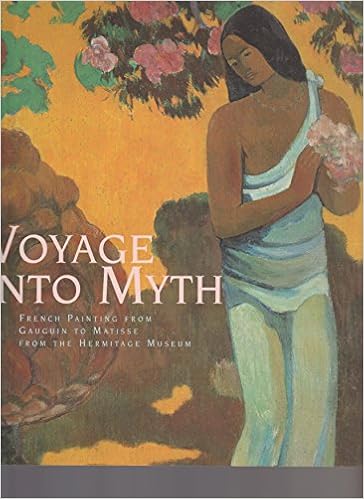


Voyage Into Myth: French Painting from Gauguin to Matisse from the Hermitage Museum 平裝 – 2002
Nathalie & Francine Lavoie (curators) Bondil (Author), Profusely illustrated (Illustrator)


***
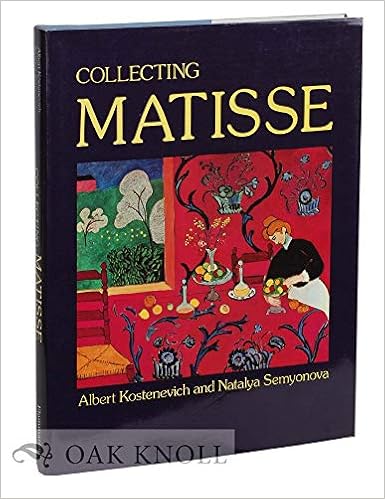


查看該圖像

"The Dessert: Harmony in Red" (The Red Room ) 1908 Matisse’s Fauvist period.🎨🇲🇫️ Oil on canvas 180,5x221 cm Hermitage Museum in St. Petersburg.🏛️️🇷🇺️ In his Paris studio with its windows looking out over a monastery garden, in 1908 Matisse created one of his most important works of the period 1908-1913: "The Red Room". The artist himself called this a "decorative panel" and it was intended for the dining room in the Moscow mansion of the famous Russian collector Sergey Shchukin. Matisse turned to a motif common in the works created that year: a room decorated with vases, fruits and flowers.

Collecting Matisse (English) Hardcover – 三月 17, 1999
Rizzoli (Author)
出版商:Flammarion; First Edition 版本 (1999年3月17日)

The wealthy Moscow merchants Sergei Shchukin and Ivan Morozov were responsible for bringing a remarkable group of impressionist and postimpressionist French paintings to Russia, among them an exemplary collection of the works of Henri Matisse.
Relying on his sensibility and self-confidence, Shchukin confronted a Russian society that ridiculed his eccentricities, and from 1908 to 1914 he assembled an exceptional collection of Matisse's works - thirty-seven paintings - with which he decorated his house in Moscow. Morozov was equally appreciative of the painter and, although a more modest collector, acquired eleven canvases. Between them, these two men made Russia the first foreign country to import Matisse's works.
Collecting Matisse provides a fresh interpretation of a crucial period in the artist's career - the early years of Fauvism, when he decisively turned toward color as the essential element of painting - and one that radically marked the development of modern art as a whole. Matisse's work was known in Russia as early as 1904, and Shchukin's commission for the great decorative panels La Danse and La Musique revolutionized the Moscow art world. A penetrating text and previously unpublished archival material make this book an essential study on Matisse and his 1911 visit to Russia, where he discovered with fascination Russian icons, tasted the delights of the salons, and unleashed the commentaries of a hostile press, which are included here in large extracts. The following year, Matisse left for Tangier and there produced a stunning series of canvases, which the two Russian collectors acquired with enthusiasm. The correspondence published here for the first time, bears eloquent testimony to the ties of friendship and admiration that united painter and collectors.
The beautiful illustrations and rare period photographs of the Shchukin and Morozov mansions and collections complement the impressions Matisse gathered in the Russian capital and demonstrate their importance for the evolution of his art.

***
Sergei Ivanovich Shchukin (RussianСерге́й Ива́нович Щу́кин; 6 July [O.S. 24 June] 1854 – 10 January 1936) was a Russian businessman who became an art collector, mainly of French Impressionist and Post-Impressionist art.


The Morozov Brothers. Great Russian Collectors - Hermitage


The collections of modern art assembled by the Morozov brothers and Sergei Shchukin are among the finest in the world and are today housed in museums in ...
Two Russian art collectors stood out at the beginning of the 20th century: the cloth merchant Sergei Shchukin (1854–1936) and the textile manufacturer Ivan ...

Matisse arrived in Moscow on October 23, 1911. The next day, he visited the Tretyakov Gallery and asked to be shown their collection of Russian icons. Matisse was delighted by the icons and declared that to see them was more than worth the arduous trip. Matisse spent much of his time in Moscow frantically visiting monasteries, churches, convents, and collections of sacred images. Excited by what he saw, he shared it with all who came to interview him during his stay in Moscow. “They are really great art,” Matisse excitedly told an interviewer. “I am in love with their moving simplicity.… In these icons the soul of the artist who painted them opens out like a mystical flower. And from them we ought to learn how to understand art.”

Google 翻譯

馬蒂於1911年10月23日抵達莫斯科。第二天,他訪問了特列季亞科夫畫廊並要求展示他們的俄羅斯偶像。 馬蒂斯對這些圖標感到很高興,並宣稱要看到它們不僅值得進行艱苦的旅行。 馬蒂斯大部分時間都在莫斯科瘋狂地參觀修道院,教堂,修道院和神聖圖像。 他對所看到的一切感到興奮,並與在莫斯科逗留期間前來採訪他的所有人分享。 “他們真是偉大的藝術,”馬蒂斯興奮地告訴採訪者。 “我愛上了他們動人的簡約。......在這些圖標中,畫出它們的藝術家的靈魂就像一朵神秘的花朵。 從他們那裡我們應該學習如何理解藝術。“


icon :聖相(像);畫像;版畫;圖像:尤其指東方教會拜占庭禮天主教所供奉基督或聖人的平面畫像、版畫、聖像。禮儀用的聖像所描繪的是降生成人的基督,經由圖像,讓我們瞻仰主的榮耀;而聖母和其他聖人的聖像也表示基督在聖人身上受到光榮:使人轉化成天主的模樣、肖像。 Icon 又稱 ikon ,源自希臘文。參閱 idolatry 


monastery  (1) 隱修院;修道院:共誦日課、度團體奉獻生活的修院。 (2) 會院:專指與外界隔絕、遵守禁地規則的男女會院。

Church  (1) 教會;教會團體;基督徒團體;教派;會眾:指耶穌建立的信仰團體(集會),亦即天主在世界上的家庭-教友透過洗禮而成為一家人,彼此形同手足。基督教會所有的要素,圓滿地保存在天主教中,而天主教的四個特徵是至一、至聖、至公、從宗徒傳下來的教會。 (2) 教堂;天主堂;禮拜堂(基):為敬禮天主而專用的神聖房屋;指所有信徒都有權利到此參與(舉行)天主的敬禮;其次為聖堂 oratory (拉丁文為 oratorium ),專為某一團體敬禮天主之用;最後為私用小聖堂 private chapel (拉丁文為 sacellum privatum ),經教區教長許可,只為私人或家族之用(法典 1214-1229 )。

convent :會院:尤其指修女會院。


  The Conversation was another picture painted before the trip to Moscow. Shchukin, writing to Matisse on August 22, 1912, said of this picture: "I often think of your blue painting (with two figures)... It reminds me of a Byzantine enamel, its colors are so rich and deep."[5] Matisse's first exposure to Byzantine art may have come through Signac. When the divisionist travelled to Venice and saw the Byzantine mosaics in San Marco, he decided to change his dots to squares. He brought back a number of postcards which he doubtless showed his disciple in St. Tropez. The impression of Byzantine mosaics seems to have stayed with Matisse. After his death, several photographs of the interior of Hagia Sophia were found pinned to the wall of his apartment in Nice.
   Matisse arrived in Moscow on October 23, 1911. The next day, he visited Ilya Ostroukhov, painter and collector and "patron" of the Tretiakov Gallery, whom he had met in Paris, and asked to be shown his collection of Russian Icons. A day later Oustroukhov recounted the incident:
    "Yesterday evening he visited us. And you should have seen his delight at the icons. Literally the whole evening he
     wouldn't leave them alone, relishing and delighting in each one. And with what finesse! ... At length he declared that
    for the icons alone it would have been worth his while coming from a city even further away than Paris, that the icons
    were now nobler for him than Fra Beato... Today Shchukin phoned me to say that Matisse literally could not sleep
    the whole night because of the acuity of his impression."[6]

   "From that moment on, "writes Pierre Schneider, "Matisse spent all his time going around to visit churches, convents, and collections of sacred images, his excitement at the first encounter not having diminished one iota. He shared it with all who came to interview him during his stay in Moscow." [7]
   On Oct. 31, Ilya Ostroukhov wrote to D.J. Tolstoy, the curator of the Hermitage Museum: "Matisse is here. He is deeply affected by the art of the icons. He seems overwhelmed and is spending his days with me frantically visiting monasteries, churches and private collections." [8]
   "They are really great art," Matisse excitedly told an interviewer. "I am in love with their moving simplicity which, to me, is closer and dearer than Fra Angelico. In these icons the soul of the artist who painted them opens out like a mystical flower. And from them we ought to learn how to understand art." [9] What is one to make of this expression of heartfelt admiration for the old Russian icons? From these icons "we ought to learn how to understand art." This is a very strong statement. It sounds exaggerated. Yet, Matisse was habitually reserved and cautious in his statements, not prone to exaggeration. Our endeavor in these pages may be defined as an investigation of the meaning and validity of this assertion.
   "From them we ought to learn how to understand art." Not one particular kind of art, but art in itself. The icons offered Matisse a revelation of what art is. This goes deeper than stylistic "influence." To speak of Matisse imitating or being influenced by icons is to miss the point. His relationship with them is on a deeper level. In them he has recognized, in an especially pure form, the essence of art. Art is, for Matisse, essentially a manifestation of the life in which both nature and the artist participate. Throughout his career Matisse was a truly original artist. This does not mean that one cannot find in his work what are commonly called "influences" of other artists, in this case the Russian iconographers. It means that Matisse's art is directly rooted in the place where art originates, in the wellspring of being which we mentioned at the beginning. Precisely because he strives to be true to nature, Matisse converges with the icon painters.


沒有留言:

網誌存檔