【追書時報 27 】彼得·蓋伊(1923—2015),美國文化史學者《浪漫派為什麼重要》2023: Peter Gay's book 2015, Why the Romantics Matter. 漢清講堂2015 紀念 Peter Gay 三講:談 Peter Gay 的一些著作 (梁永安、鍾漢清) 《威瑪文化》(彭淮棟) 2015
我們漢清講堂在2015年作過3影片來紀念名史家,當時唯一不知道的作品是該年2015年出版的Why the Romantics Matter。這本在2023年中國有翻譯:《浪漫派為什麼重要》
紀念 Peter Gay 三講:談 Peter Gay 的一些著作 (梁永安、鍾漢清);、談《威瑪文化》(彭淮棟)
所以1941年 Peter Gay舉家逃亡美國歸化時1946 (一說1941),將自己姓名Peter Joachim Fröhlich意譯成Peter Gay沒有特別意思。
(The Gay Science (1882 (German: Die fröhliche Wissenschaft/Literally "The Happy Science") ) By Friedrich Nietzsche 1844-1900);Hermann Broch 說1880年代的維也納:"圍繞在1880年代的歡愉的啟示錄 (the gay apocalypse)。" --Peter Gay的Freud: A Life for Our Time, 1988
31:23
紀念 Peter Gay, part I -- 鍾漢清談 Peter Gay 的一些著作
hc iTaiwan forum•
主題:談Peter Gay 的一些著作主持人:梁永安、鍾漢清
30:32
紀念 Peter Gay, part II -- 梁永安談 Peter Gay 的一些著作
hc iTaiwan forum•
266 views2 years ago
主題:談Peter Gay 的一些著作主持人:梁永安、鍾漢清時間:2015年7月1日(星期三) 上午,10-12點地址:漢清講堂:台北市新生南路三 ...
39:35
紀念 Peter Gay, part III-- 彭淮棟 談:《威瑪文化》
hc iTaiwan forum•
紀念Peter Gay, part III-- 彭淮棟談:《威瑪文化》 主題:談Peter Gay 的一些著作主持人:梁永安、鍾漢清時間:2015年7月1日(星期三) ...
Why the Romantics Matter
We are deeply saddened by esteemed historian Peter Gay’s passing. A Sterling Professor of History Emeritus at Yale University and former director of the New York Public Library Center for Scholars and Writers, his eminent scholarship on the Enlightenment, Freud, and a wide range of additional topics in European history will shape our discussions for years to come. In this excerpt from Why the Romantics Matter, Gay enters the long-standing debate over the romantic period and reformulates the definition of romanticism, providing a fresh account of the colossal achievements of romantic writers and artists. Gay argues that we need to accept the complicated nature of romanticism and challenge the traditional historical narrative that has established it as a reaction to the Enlightenment. He demonstrates that romanticism extends well into the twentieth century, where its deep and lasting impact may be measured in the work of writers and artists that continue to influence us today. The following is an excerpt from Why the Romantics Matter.
 [In Introduction to Contemporary Civilization at Columbia University] we could all agree, no matter what specialty we brought with us, that there was, say, roughly covering the eighteenth century, a powerful innovative movement called the Enlightenment, followed by a vehement cultural eruption best known as the romantic Reaction. The two, Enlightenment and romanticism, were consequential intellectual currents fully understandable only after the latter had been securely identified as a response to the former. There was, we believed, a kind of symmetry between the two that could only ease the work of teacher and student alike.
Ease it, so some doubtful participants—including me—held, too much. The summary notion of action and reaction was evidently too simple, even mechanical. There were romantics, we discovered, who did not know that they belonged to a massive act of rejection. There were enlightened philosophes who had as much passion for passion, praised the imagination as highly, as the most romantic of romantics. More, the very notion of a unified cluster of ideas collectively known as romanticism seemed excessive: if there were German romantics and French romantics, they did not start from the same initial impulse, did not develop the same cultural expressions in their literature and their art. Would it be rational, some of us conjectured, that the only sound way to think about romanticism was to consider it as a plural which had, in the hands of great simplifiers, been shorn of its final and necessary multiplicity?
…
However marginal romanticism may have long been, I was naturally awake to its contentious nature; the disputed place of Rousseau in its founding, the astonishing refusal of prominent romantics like Lord Byron to accept the role of romantic; those romantics obviously progressive, even radical, in their political convictions, thus defying the notion of romanticism as necessarily a hostile response to the Enlightenment—all such crosscurrents made every attempt to define it improbable if not unthinkable. And the rapidly growing secondary literature on the subject did nothing to pacify partisans; on the contrary, as positions hardened, the warfare among interpreters grew more embittered. Since conclusions about the very nature of romanticism remained debatable, the issue of just how it mattered—the topic of this series—also remained highly uncertain.
Why X Matters is a series of books that present a concise argument for the continuing relevance of an important person or idea by featuring intriguing pairings of authors with subjects.
------
221 昨日的世界(mit Stefan Zweig,佛洛伊德 und Dali) 2018-02 漢清講堂
14 views1 month ago
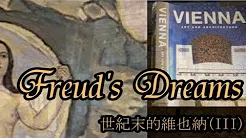
25:13224 世紀末的維也納(III): Freud's Dreams
彼得蓋伊的著作《浪漫主義為何重要》認為,浪漫主義是一場複雜而矛盾的運動,它強調想像力而非理性主義,並對後世藝術家和作家產生了深遠的影響,至今仍在影響著現代文化。蓋伊探討了浪漫主義藝術家在各種媒材上的成就,展現了他們如何「重新賦予」受啟蒙運動影響的世界魅力,以及他們的遺產如何在現代主義作品中得以體現,包括T·S·艾略特和弗吉尼亞·伍爾夫等作家的作品。
一場複雜而至關重要的運動:蓋伊認為,理解浪漫主義的最佳途徑是承認其矛盾之處,而不是尋求單一的統一定義。
對現代主義的影響:本書論證了現代主義藝術和文學如何深受浪漫主義及其對傳統的突破的影響。
關鍵人物和主題:蓋伊考察了貝多芬和奧斯卡·王爾德等人物,探討了浪漫主義對藝術想像力、情感和精神表達以及畫廊主和評論家等文化“中間人”的作用等領域的影響。
涵蓋範圍廣泛:本書涉及文學、繪畫和音樂等多個藝術領域,並探討了德國、英國、法國和瑞士等不同國家的浪漫主義。
浪漫主義為何重要
2015年1月12日 — 《浪漫主義為何重要》是歷史學家彼得蓋伊的著作,探討了浪漫主義時期、其參與者以及…
耶魯大學出版社
《浪漫主義為何重要》—《出版人週刊》
本書承認,要從浪漫主義的各種表現形式中提煉出一個「統一的定義」是一項挑戰…
《出版人週刊》
《浪漫主義為何重要》(《為何X重要》系列)(《為何X重要》特刊)
蓋伊帶領讀者了解浪漫主義運動在英國、法國、德國和瑞士的歷史,並論證了…
亞馬遜英國
顯示全部
在人工智慧模式下深入探索
人工智慧的回答可能包含錯誤。了解更多
浪漫主義為何重要
耶魯大學出版社
https://yalebooks.yale.edu › book › why-the-romantics-...
“彼得·蓋伊以其特有的優雅和博學,在《浪漫主義為何重要》一書中頌揚了從十八世紀末至今的浪漫主義的力量……”
$24.00
浪漫主義為何重要:彼得蓋伊 (作者1923-2015),,
互聯網檔案館
https://archive.org › details › whyromanticsmatt0000gayp
2023年7月19日 — xvi, 141頁;21厘米 “著名歷史學家彼得·蓋伊以其一貫的機智和熱情,參與了關於浪漫主義的長期爭論……”
- A complicated but vital movement: Gay argues that romanticism is best understood by acknowledging its contradictions rather than seeking a single, unified definition.
- Influence on modernism: The book demonstrates how modernist art and literature are indebted to romanticism and its break from tradition.
- Key figures and themes: Gay examines figures like Beethoven and Oscar Wilde, exploring the impact of romanticism on areas such as artistic imagination, emotional and spiritual expression, and the role of cultural "middlemen" like gallerists and critics.
- A broad scope: The book spans various artistic fields, including literature, painting, and music, and covers romanticism across different countries, such as Germany, Britain, France, and Switzerland.


內容簡介
Why the Romantics MatterWith his usual wit and élan, esteemed historian Peter Gay enters the contentious, long-standing debates over the romantic period. Here, in this concise and inviting volume, he reformulates the definition of romanticism and provides a fresh account of the immense achievements of romantic writers and artists in all media. Gay’s scope is wide, his insights sharp. He takes on the recurring questions about how to interpret romantic figures and their works. Who qualifies to be a romantic? What ties together romantic figures who practice in different countries, employ different media, even live in different centuries? How is modernism indebted to romanticism, if at all? Guiding readers through the history of the romantic movement across Britain, France, Germany, and Switzerland, Gay argues that the best way to conceptualize romanticism is to accept its complicated nature and acknowledge that there is no “single basket” to contain it. Gay conceives of romantics in “families,” whose individual members share fundamental values but retain unique qualities. He concludes by demonstrating that romanticism extends well into the twentieth century, where its deep and lasting impact may be measured in the work of writers such as T. S. Eliot and Virginia Woolf. |

沒有留言:
張貼留言