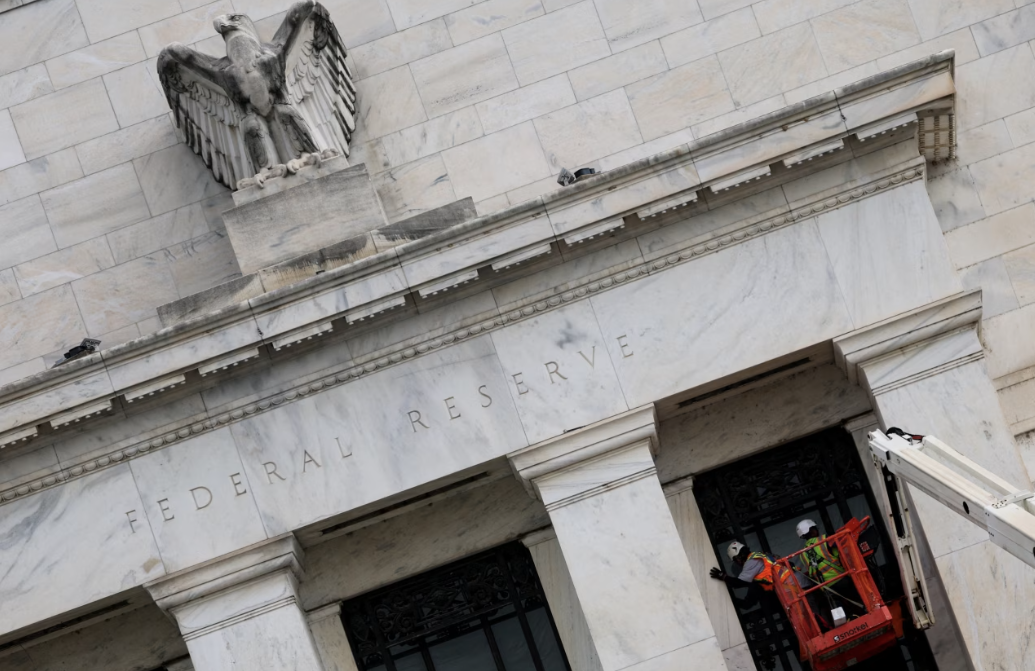
川普(Trump)。 唐納德·川普與美聯儲的鬥爭已經從糟糕變得詭異——而且可能即將適得其反Donald Trump’s fight with the Federal Reserve has gone from bad to weird—and it may be about to backfire 。 川普想讓經濟「熱」起來,他很可能成功。 美國聯準會主席鮑爾(Jerome Powell) 能忍( "Studied silence"),有骨氣,不得已才反擊。鮑威爾對司法部對其展開刑事調查的消息做出了罕見的強硬回應。歷屆主席支持他; 對鮑爾的調查也是川普對下任聯準會主席的警告。針對聯準會主席傑伊鮑威爾的刑事調查,可能是迄今為止對聯準會政治獨立性最具影響力的一次攻擊。「逼宮」美國聯準會主席鮑爾 的核心武器:美國25億美元的聯準會大樓翻新項目。 Marcel Breuer, Brutalist elements.The Robert C. Weaver Federal Building, Robert_C._Weaver_Federal_Building
Donald Trump’s fight with the Federal Reserve has gone from bad to weird—and it may be about to backfire. Find out why on this week’s “Money Talks”
"Studied silence" means intentionally using quietness as a deliberate communication strategy, not just the absence of sound, to achieve a specific goal like encouraging others to speak, showing respect, maintaining harmony, or conveying deep thought. It's a purposeful pause, often used in research, negotiations, or cultural interactions, where silence carries more weight and meaning than words, acting as a tool for influence, reflection, or preserving face.
Key meanings and applications:
Encouraging others: Allowing a pause for someone else to fill it, often to get them to reveal more information or commit to a statement, as seen in negotiation or sales.
Cognitive Processing: Used to allow for deep thinking, absorbing information, or to demonstrate profound engagement, as explored in studies on language learning.
Cultural Nuance: Its interpretation varies greatly; in some contexts, it shows wisdom, while in others, it might imply inferiority, highlighting the importance of cultural understanding in communication, as discussed in an MDPI article.
In essence, studied silence turns non-communication into a powerful form of communication, making the quiet moment an active part of the dialogue.
The Robert C. Weaver Federal Building, the headquarters of the US Department of Housing and Urban Development (HUD), is a significant architectural landmark in Washington, D.C. Designed by modernist architect Marcel Breuer and completed in 1968, the building is named after Robert C. Weaver, the first African American to serve in a cabinet-level position. Its design features Brutalist elements with a distinct curvilinear facade, reflecting Breuer’s vision of functionality and modernism. This building not only symbolizes the federal commitment to urban development but also stands as a testament to the progressive architectural movements of the 20th century. Façade of the ten-story Robert C. Weaver building, home of the Department of Housing and Urban Development.



沒有留言:
張貼留言