大多數人都知道,奧克帕克另一位著名的天才兼風流成性的人物是弗蘭克·勞埃德·賴特。最近我讀了這本新書才知道,賴特的情人瑪瑪·博斯威克(後來在賴特位於威斯康星州的塔里埃森莊園發生的一起駭人聽聞的大屠殺中遇害)竟然與格蕾絲·霍爾·海明威是朋友。她們有很多共同的興趣與嗜好。雖然這本書並非以海明威為主角,但它確實生動地展現了世紀之交奧克帕克的時代風貌。強烈推薦。
Lost Hemingway Story Found
A bullfight, an act of bravado, a brush with death. A newly discovered story by the young Ernest Hemingway has all the elements to delight fans and scholars — but it can't be published.
The late writer's estate hasn't approved publication of the 1924 piece, a gory, over-the-top parody about a bullfight in the Spanish city of Pamplona, the manuscript's owner, Donald Stewart, told The Associated Press on Monday.
People who have seen the story say it's no masterpiece. But it could give important clues about Hemingway's first attempts at trying on different literary styles — especially because most of his early work disappeared when his suitcase was stolen in the early 1920s.
The short story also foreshadows Hemingway's fascination with blood, spectacle and bullfights. Two years later, he published the classic "The Sun Also Rises," about aimless expatriates hanging out in Paris and the bull-running city of Pamplona.
The tone of the tale, written when Hemingway was in his mid-20s, is light and satirical. Its main character is a comic personification of "what later became the Hemingway myth," Stewart said by telephone from his home in Rome. "A heroic man with a lot of hair on his chest."
Hemingway scholar J. Gerald Kennedy, who has a copy, guffawed out loud as he paraphrased the story over the phone. The main character kills the bull with his bare hands. But the hapless hero loses part of his entrails — his duodenum ends up in the sand.
"It's pretty typical of the kind of after-hours parody Hemingway was writing in Paris in the mid-20s," said Kennedy, a professor at Louisiana State University in Baton Rouge, La., and vice president of the Ernest Hemingway Foundation. "It's not great literature. He's still a year away from writing 'The Sun Also Rises.'"
Image
 The book and its inscription to Sister Immaculata.Credit...Curtis DeBerg
Image
 Credit...Curtis DeBerg
The book, which is being turned over Friday in a
1961年,患有妄想症、偏執症、憂鬱症和自殺傾向的歐內斯特·海明威在梅奧診所接受治療,由伊瑪庫拉塔修女帶領的天主教護士團隊負責照顧他。
他們之間的關係細節已湮沒在歷史長河中,但他們的聯繫十分密切,以至於當時已是文學巨匠的海明威將他廣受讚譽的中篇小說《老人與海》贈予伊瑪庫拉塔修女,並在書上題寫了一段充滿希望的親筆題詞,日期為1961年6月16日。
“致伊瑪庫拉塔修女:這本書,希望當我的寫作靈感再次湧現時,能再為她寫出一本同樣精彩的作品。而它終會到來。”
Ernest Hemingway, delusional, paranoid, depressed and suicidal, was treated in 1961 at the Mayo Clinic where he was cared for by a team of Catholic nurses led by Sister Immaculata.
The particulars of their relationship are lost to history, but their connection was close enough to prompt Hemingway, already a literary titan, to give the sister a copy of his acclaimed novella “The Old Man and the Sea,” with a personal, optimistic inscription dated June 16, 1961.
“To Sister Immaculata: this book, hoping to write another one as good for her when my writing luck is running well again. and it will.”
Ernest Hemingway
Biographical
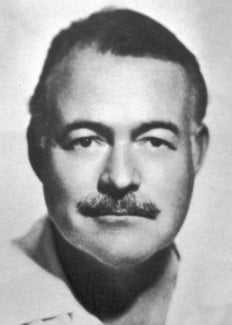
Ernest Hemingway (1899-1961), born in Oak Park, Illinois, started his career as a writer in a newspaper office in Kansas City at the age of seventeen. After the United States entered the First World War, he joined a volunteer ambulance unit in the Italian army. Serving at the front, he was wounded, was decorated by the Italian Government, and spent considerable time in hospitals. After his return to the United States, he became a reporter for Canadian and American newspapers and was soon sent back to Europe to cover such events as the Greek Revolution.
During the twenties, Hemingway became a member of the group of expatriate Americans in Paris, which he described in his first important work, The Sun Also Rises (1926). Equally successful was A Farewell to Arms (1929), the study of an American ambulance officer’s disillusionment in the war and his role as a deserter. Hemingway used his experiences as a reporter during the civil war in Spain as the background for his most ambitious novel, For Whom the Bell Tolls (1940). Among his later works, the most outstanding is the short novel, The Old Man and the Sea (1952), the story of an old fisherman’s journey, his long and lonely struggle with a fish and the sea, and his victory in defeat.
Hemingway – himself a great sportsman – liked to portray soldiers, hunters, bullfighters – tough, at times primitive people whose courage and honesty are set against the brutal ways of modern society, and who in this confrontation lose hope and faith. His straightforward prose, his spare dialogue, and his predilection for understatement are particularly effective in his short stories, some of which are collected in Men Without Women (1927) and The Fifth Column and the First Forty-Nine Stories (1938). Hemingway died in Idaho in 1961.
This autobiography/biography was written at the time of the award and first published in the book series Les Prix Nobel. It was later edited and republished in Nobel Lectures. To cite this document, always state the source as shown above.
傳記
歐內斯特·海明威
歐內斯特·海明威(1899-1961)出生於伊利諾伊州橡樹園,17歲時在堪薩斯城一家報社開始了他的寫作生涯。美國加入第一次世界大戰後,他加入了義大利軍隊的志願救護隊。在前線服役期間,他受傷,被義大利政府授予勳章,並在醫院度過了相當長的時間。回到美國後,他成為加拿大和美國報紙的記者,不久後被派往歐洲報道希臘革命等重大事件。
在1920年代,海明威成為旅居巴黎的美國僑民群體的一員,並在他的第一部重要作品《太陽照常升起》(1926)中對此進行了描述。同樣成功的還有《永別了,武器》(1929),這部作品講述了一位美國救護軍官在戰爭中幻滅以及他最終成為一名逃兵的故事。海明威以他在西班牙內戰期間擔任記者的經歷為背景,創作了他最具雄心的小說《喪鐘為誰而鳴》(1940)。在他後期的作品中,最傑出的是短篇小說《老人與海》(1952),講述了一位老漁夫的旅程,他與魚和大海進行了漫長而孤獨的鬥爭,最終在失敗中獲得了勝利。
海明威本人是一位偉大的運動愛好者,他喜歡刻畫士兵、獵人、鬥牛士——這些堅韌不拔、有時甚至有些原始的人,他們的勇氣和正直與現代社會的殘酷現實形成鮮明對比,並在這種對抗中失去了希望和信念。他直白的文風、簡潔的對話以及對含蓄的偏愛,在他的短篇小說中尤為突出,其中一些短篇小說收錄於《沒有女人的男人們》(1927)和《第五縱隊及前四十九個故事》(1938)中。海明威於1961年逝世於愛達荷州。
摘自《諾貝爾文學獎演講集(1901-1967)》,霍斯特‧弗倫茨主編,愛思唯爾出版社,阿姆斯特丹,1969年。這篇自傳/傳記寫於海明威獲獎之時,最初發表於《諾貝爾獎文集》(Les Prix Nobel)叢書。後經編輯,收錄於《諾貝爾文學獎演講集》。引用此文獻時,請務必註明上述出處。
參考書目
貝克,卡洛斯。 《海明威:作為藝術家的作家》。第四版,普林斯頓大學出版社:新澤西州普林斯頓,1972年。
布魯科利,馬修J.(編)。 《歐內斯特‧海明威的學徒生涯:橡樹園,1916-1917》。 NCR 微縮膠卷版:華盛頓特區,1971 年。
布魯科利,馬修J. 和羅伯特W. 特羅格登(編)。 《唯一重要的事:歐內斯特·海明威與麥克斯韋·珀金斯書信集 1925-1947》。查爾斯‧斯克里布納之子出版社:紐約,1996 年。
克利福德,史蒂芬·P.。 《超越英雄的「我」:解讀勞倫斯、海明威與「男性氣質」》。巴克內爾大學出版社:新澤西州克蘭伯里,1999 年。
海明威,歐內斯特。 《署名:歐內斯特‧海明威》。四十年精選文章與報道。威廉懷特編輯,菲利普楊評註。柯林斯出版社:倫敦,1968 年。
——《全集詩集》。尼古拉斯·格羅吉安尼斯編輯,並作導言和註釋。修訂版,內布拉斯加大學出版社:林肯,1992年。
——《海明威短篇小說全集》。維吉亞莊園版。查爾斯‧斯克里布納之子出版社:紐約,1998年。
——《午後之死》。喬納森凱普出版社:倫敦,1932年。
——《歐內斯特‧海明威:書信選集,1917-1961》。卡洛斯·貝克編。查爾斯‧斯克里布納之子出版社:紐約,1981年。
——《永別了,武器》。查爾斯‧斯克里布納之子出版社:紐約,1929年。
——《節日》。喬納森凱普出版社:倫敦,1927年。
——《喪鐘為誰而鳴》。查爾斯‧斯克里布納之子出版社:紐約,1940年。
——《伊甸園》。查爾斯‧斯克里布納之子出版社:紐約,1986年。
——《非洲的青山》。查爾斯‧斯克里布納之子出版社:紐約,1935年。
——《在我們這個時代》。博尼和利弗賴特出版社:紐約,1925年。
——《海流中的島嶼》。查爾斯‧斯克里布納之子出版社:紐約,1970年。
——《流動的盛宴》。喬納森凱普出版社:倫敦,1964年。
——《尼克亞當斯故事集》。菲利普·楊作序。查爾斯‧斯克里布納之子出版社:紐約,1972年。
——《老人與海》。查爾斯‧斯克里布納之子出版社:紐約,1952年。
——《精選書信集 1917-1961》。卡洛斯·貝克編。黑豹出版社/格拉納達出版社:倫敦,1985年(1981年)。
——《乞力馬札羅的雪及其他故事》。查爾斯‧斯克里布納之子出版社:紐約,1961年。
——《太陽照常升起》。查爾斯·斯克里布納之子出版社:紐約,1928(1926)。
——《春之洪流:一部紀念偉大種族逝去的浪漫小說》。查爾斯·斯克里布納之子出版社:紐約,1926。
——《三個故事與十首詩:歐內斯特‧海明威的第一本書》。 1923年巴黎原版影印本。布魯科利克拉克出版社:密西根州布魯姆菲爾德山,1977。
——《黎明前的真相》。派崔克·海明威編輯並作序。箭牌出版社/蘭登書屋:倫敦,1999。
——《勝者為零》。查爾斯·斯克里布納之子出版社:紐約,1933。
約瑟夫斯,艾倫。 《喪鐘為誰而鳴:歐內斯特‧海明威的未知國度》。特溫出版社:紐約,1994。
拉卡斯,魯道夫。海明威與馬爾羅:人類的命運。簡介; 6,蒙特利爾,1972 年。
林恩。肯尼斯·S·海明威。西蒙和舒斯特:倫敦,1987 年。
曼德爾、米里亞姆.讀海明威:事實
| Selected Bibliography |
| Baker, Carlos. Hemingway: The Writer as Artist. Fourth edition, Princeton University Press: Princeton, NJ, 1972. |
| Bruccoli, Matthew J. (Ed.). Ernest Hemingway’s apprenticeship: Oak Park, 1916-1917. NCR Microcard Editions: Washington, D.C., 1971. |
| Bruccoli, Matthew J., and Robert W. Trogdon (Eds.). The Only Thing That Counts: The Ernest Hemingway-Maxwell Perkins Correspondence 1925-1947. Charles Scribner’s Sons: New York, 1996. |
| Clifford, Stephen P. Beyond the Heroic “I”: Reading Lawrence, Hemingway, and “masculinity”. Bucknell Univ. Press: Cranbury, NJ, 1999. |
| Hemingway, Ernest. By-Line: Ernest Hemingway. Selected articles and dispatches of four decades. Edited by William White, with commentaries by Philip Young. Collins: London, 1968. |
| – Complete poems. Edited with an introduction and notes by Nicholas Gerogiannis. Rev. ed., University of Nebraska Press: Lincoln, 1992. |
| – The Complete Short Stories. The Finca Vigía ed. Charles Scribner’s Sons: New York, 1998. |
| – Death in the Afternoon. Jonathan Cape: London, 1932. |
| – Ernest Hemingway: Selected Letters, 1917-1961. Ed. Carlos Baker. Charles Scribner’s Sons: New York, 1981. |
| – A Farewell to Arms. Charles Scribner’s Sons: New York, 1929. |
| – Fiesta. Jonathan Cape: London, 1927. |
| – For Whom the Bell Tolls. Charles Scribner’s Sons: New York 1940. |
| – The Garden of Eden. Charles Scribner’s Sons: New York, 1986. |
| – Green Hills of Africa. Charles Scribner’s Sons: New York 1935. |
| – In Our Time. Boni and Liveright: New York, 1925. |
| – Islands in the Stream. Charles Scribner’s Sons: New York, 1970. |
| – A Moveable Feast. Jonathan Cape: London, 1964. |
| – The Nick Adams Stories. Preface by Philip Young. Charles Scribner’s Sons: New York, 1972. |
| – The Old Man and the Sea. Charles Scribner’s Sons: New York, 1952. |
| – Selected Letters 1917-1961. Ed. Carlos Baker. Panther Books/Granada Publishing: London 1985(1981). |
| – The Snows of Kilimanjaro and other stories, Charles Scribner’s Sons: New York, 1961. |
| – The Sun also rises. Charles Scribner’s Sons: New York, 1928(1926). |
| – The Torrents of Spring: A Romantic Novel in Honor of the Passing of a Great Race. Charles Scribner’s Sons: New York, 1926. |
| – Three Stories & Ten Poems: Ernest Hemingway’s First Book. A facsimile of the original Paris Edition published in 1923. Bruccoli Clark Books: Bloomfield Hills, Michigan, 1977. |
| – True at First Light. Edited with an Introduction by Patrick Hemingway. Arrow Books/Random House: London 1999. |
| – Winner Take Nothing. Charles Scribner’s Sons: New York, 1933. |
| Josephs, Allen. For Whom the Bell Tolls: Ernest Hemingway’s Undiscovered Country. Twayne: New York, 1994. |
| Lacasse, Rodolphe. Hemingway et Malraux: destins de l’homme. Profils; 6, Montréal 1972. |
| Lynn. Kenneth S. Hemingway. Simon and Schuster: London, 1987. |
| Mandel, Miriam. Reading Hemingway: The Facts in the Fictions. Scarecrow Press: Metuchen, NJ and London, 1995. |
| Meyers, Jeffrey. Hemingway: A Biography. New York, 1985 (Macmillan: London, 1986 (Harper & Row: New York 1985). |
| Nelson, Gerald B. & Glory Jones. Hemingway: Life and Works. Facts On File Publications: New York, 1984. |
| Palin, Michael. Hemingway’s Travels. Weidenfeld & Nicolson: London, 1999. |
| Phillips, Larry W (Ed). Ernest Hemingway on Writing. Grafton Books: London, 1986 (1984). |
| Reynolds, Michael S. Hemingway: an Annotated Chronology: an Outline of the Author’s Life and Career Detailing Significant Events, Friendships, Travels, and Achievements. Omni chronology series, 1 Omnigraphics, Inc: Detroit, MI, 1991. |
| Reynolds, Michael S. Hemingway: The Final Years. W.W. Norton: New York 1999. |
| Reynolds, Michael S. Hemingway: the Homecoming. W.W. Norton: New York, 1999. |
| Reynolds, Michael S. Hemingway: the Paris years. W.W. Norton: New York 1999. |
| Reynolds, Michael S. The Young Hemingway. W.W. Norton: New York, 1998. |
| Reynolds, Michael S. Hemingway’s First War: The Making of A Farewell to Arms. Basil Blackwell: New York and Oxford, 1987 (Princeton U.P. 1976). |
| Trogdon, Robert W. (Ed.). Ernest Hemingway: A Documentary Volume. In: Dictionary of Literary Biography (series) Vol. 210. Gale Research Inc.: Detroit, Michigan, 1999. |
| Wagner-Martin, Linda (Ed.). A Historical Guide to Ernest Hemingway. Oxford University Press: New York and Oxford, 2000 |
| The John F. Kennedy Library in Boston, Massachusetts, has an extensive collection of books and manuscripts, and holds more than 10,000 photos of Ernest Hemingway. |
Ernest Hemingway died on July 2, 1961.
'You have youth, confidence, and a job, ' the older waiter said. 'You have everything.'
'And what do you lack?''Everything but work.''You have everything I have.''No. I have never had confidence and I am not young.''I am those who like to stay late in the cafe', the older waiter said. 'With all those who do not want to go to bed. With all those who need a light for the night.'---A Clean Well-Lighted Place,Ernest HemingwayI still remember in the Creative Writing Program from the University of Iowa this was the first story we need to read and analyze.The sheer brilliance of Hemingway's art of stripping language to the bare minimum with all details reaching the depth. The use of dialogues and to portray pictures of the night with the shadow of the leaves on the table in contrast to the light that the waiters speak of.I perhaps read this fifteen times. Yesterday I read it again in this marvelous Vintage Hemingway edition of "The Essential Hemingway."I rank this story as Hemingway's best after a near novella "The Snows of Kilimanjaro."

漢清講堂:反思:張清吉先生的事業:新潮文庫(1967~;新潮叢書;新潮新思潮......)與志文出版...
忘記跟曹永洋老師拍照。他提醒許多插圖可觀。羅曼·羅蘭原著《約翰·克利斯朵夫》(傅雷譯)是我初二讀的第一本大河小說。約45年過去,看到《約翰·克利斯朵夫》(濃縮本),梁祥美譯,台北:志文,2004(49幅由 F. 馬塞瑞爾畫的插圖)。
原插畫竟然有666幅呢。 ⋯⋯更多
忘記跟曹永洋老師拍照。他提醒許多插圖可觀。
原插畫竟然有666幅呢。
海明威/著 志文出版社
Ernest Hemingway: A Life Story: Carlos Baker:
258 洛斯·貝克( Carlos Baker )著,楊耐冬譯,《海明威傳》,臺北:志文出版社 ,1981
本書對第3任太太Martha Gellhorn的記載,約只2頁篇幅 ,pp.305~06:
385 《海明威短篇傑作選》,作者:海明威,出版社:,志文,1997/2000
人工智慧概述
歐內斯特·海明威在1939年至1960年間選擇居住在古巴,因為那裡寧靜祥和、充滿靈感,且文化底蘊深厚,完美地滋養了他的寫作、對垂釣的熱愛以及遠離美國喧囂的私密生活。他深愛古巴人民,自稱“Cubano sato”(一個普通的古巴人),並在哈瓦那輕鬆而充滿活力的氛圍以及科希馬爾漁村感到賓至如歸。
他選擇古巴的主要原因包括:
創作效率與氛圍:他發現自己的家-維希亞莊園(Finca Vigía)-是個完美的靜謐寫作之地,使他得以創作出《老人與海》等傑作。
對釣魚的熱愛:靠近大海的地理位置讓他可以駕駛著他的漁船「皮拉爾號」(Pilar)出海釣魚馬林魚,這艘船是他古巴生活的重要組成部分。
文化連結:他很享受當地的文化,包括弗洛里迪塔酒吧(El Floridita)的代基里酒以及與當地人民的友誼,他非常敬佩他們。
與美國主流生活方式的疏離:古巴為他提供了一個必要的避風港,讓他得以逃離童年、美國生活,以及有時被名利所左右的生活,體驗一種截然不同、更為簡單的生活方式。
一種「本土」感受:與他在歐洲的時光不同,他完全融入了古巴的自然風光,與這座島嶼及其人民建立了一種深刻而持久的聯繫。
- Productivity and Atmosphere: He found his home, Finca Vigía, to be a perfect, quiet place to write, allowing him to produce masterpieces like The Old Man and the Sea.
- Passion for Fishing: The proximity to the sea allowed him to spend days fishing for marlin on his boat, the Pilar, which was central to his life in Cuba.
- Cultural Connection: He enjoyed the local culture, including the daiquiris at El Floridita and the camaraderie with the local people, whom he admired greatly.
- Distance from U.S. Norms: Cuba provided a necessary escape from his childhood, American, and, at times, celebrity-driven life, offering a different, simpler way of life.
- A "Native" Feel: Unlike his time in Europe, he fully immersed himself in the Cuban landscape, feeling a profound, lasting bond with the island and its people.
-----
At the ceremony in Sweden on Friday, DeBerg is scheduled to discuss the inscription’s significance, and a professional actor, Isa Aouifia, will read from “The Old Man and the Sea.”
Larsson, of the museum, said the inscription in the book “captures Hemingway at the end of his life — still hopeful, still writing, still reaching for one more story. It is an intimate piece of literary history, made even more meaningful by the compassion shown by the Franciscan Sisters.”
For more than 60 years, the Sisters of Saint Francis of Rochester in Minnesota have shepherded the book, which contains what are thought to be among the last words Hemingway wrote. Now they are donating it to the Nobel Prize Museum in Stockholm, which uses items to animate “the work and the ideas of more than 900 creative minds” of past Nobel Prize recipients, like Hemingway.


週五在瑞典舉行的儀式上,德伯格將探討題詞的意義,專業演員伊薩·奧伊菲亞將朗讀《老人與海》的節選。
博物館的拉爾森表示,書中的題詞“捕捉到了海明威生命盡頭的神韻——依然充滿希望,依然筆耕不輟學,依然渴望創作出下一個故事。這是一段私密的文學史,而方濟各會修女們的善舉更使其意義非凡。”
六十多年來,明尼蘇達州羅徹斯特的聖方濟會修女會一直守護著這本書,書中收錄了據信是海明威生前最後寫下的文字。如今,她們將這本書捐贈給了位於斯德哥爾摩的諾貝爾獎博物館。博物館利用各種物品展現「900多位諾貝爾獎得主(包括海明威)的創作與想法」。
圖片
一本封面褪色的藍色書。
這本書及其題獻給伊瑪庫拉塔修女的題詞。圖片來源:柯蒂斯·德伯格
圖片
圖片來源:柯蒂斯·德伯格
兩張護士及其所在醫院的照片。
右側的伊瑪庫拉塔修女(原名海倫·海斯)曾在海明威就診的醫院工作和教學。該醫院隸屬於位於明尼蘇達州羅徹斯特市的梅奧診所。圖片來源:阿西西高地檔案館;聖方濟各修女會檔案館,經明尼蘇達州羅徹斯特市聖方濟各修女會提供。
海明威 莫忘記自己也同樣特別"...you are special too.”。老人討海八十四天無所……


- Setting: The Left Bank of Paris in the 1920s, a hub for expatriate writers and artists.
- Content: Recollections of daily life, relationships (especially with Hadley), financial struggles, and the process of writing.
- Notable Figures: Features vivid portraits and anecdotes involving James Joyce, Ezra Pound, and F. Scott Fitzgerald.
- Themes: The essence of Paris, the challenges of writing, love and loss, and the search for meaning.
- Publication: Published in 1964, three years after Hemingway's death, from manuscripts he'd prepared.
- Evocative Prose: Hemingway's direct, masterful style brings Paris and its characters to life, notes YouTube and Amazon.com.
- Insight into Hemingway: Offers a personal look at the man behind the legend, revealing his vulnerabilities and dedication, say YouTube and YouTube.
- Enduring Appeal: Captures a specific, magical time in literary history, making Paris seem like a magical, ever-present experience, writes YouTube and Reddit.
In the years following World War I, a group of young writers and artists gathered in Paris, bound by shared disillusionment and a hunger for experience. Dubbed the “Lost Generation” by Gertrude Stein, they spent their days writing and arguing and their nights drifting between cafés, bars, and apartments along the Left Bank. Cheap rent, strong opinions, and long afternoons at places like Shakespeare and Company made Paris the ideal incubator for a new kind of literary life.
At the center of this circle was Ernest Hemingway, alongside friends and fellow writers F. Scott Fitzgerald, Ezra Pound, John Dos Passos, and James Joyce. They passed the time boxing in makeshift gyms, attending bullfights in Spain, fishing, traveling by train across Europe, and drinking endless cafés crèmes and bottles of wine at spots like the Closerie des Lilas and the Dôme. Conversations moved easily from art and politics to money, women, and the next place to go.
What bound them together was not just friendship, but a shared way of living. They read each other’s work aloud, edited manuscripts over drinks, quarreled fiercely, and reconciled just as quickly. Out of these routines of work, wandering, sport, and social ritual came a body of writing that captured the restless spirit of the era. Nearly a century later, the image of the Lost Generation still conjures cafés at dusk, pages covered in pencil marks, and a group of friends trying to make sense of a changed world—led, unmistakably, by Hemingway.
人工智慧概覽
福山雅治創作的「長崎樟樹」(Kusunoki)歌曲是連接原子彈倖存樹木與子孫後代的和平計畫的核心。 NHK WORLD-JAPAN 曾播出「與樟樹同行」等節目,其中播放了福山雅治的歌曲《KUSUNOKI》,由合唱團演唱,象徵著長崎頑強生命力與和平。該計畫旨在培育這些倖存樹木的幼苗,這個主題也貫穿福山雅治為《長崎-閃光之影》等電影創作的配樂中,旨在傳遞希望和生命不可替代的價值。
關鍵要素:
歌曲《KUSUNOKI》:這首由福山雅治創作的主題曲是與樟樹相關的和平努力的核心。
樟樹計畫:福山與長崎市共同發起此計劃,旨在保護原子彈爆炸後倖存的樟樹,並透過樹苗傳播和平教育。
NHK 的角色:NHK WORLD-JAPAN 播出相關節目,例如《與樟樹同行:KUSUNOKI - 五千人齊聲祈禱和平》,向全球傳遞這一信息。
象徵意義:在原子彈爆炸中存活下來的堅韌樟樹象徵著生命不屈的力量,這個主題也貫穿音樂和整個計畫之中。
您可以在 NHK WORLD-JAPAN 的網站上找到更多關於此計劃的資訊和相關新聞。
五千人齊聲祈禱和平 | NHK WORLD-JAPAN
2026年1月17日 — 與樟樹同行:KUSUNOKI - 五千人齊聲祈禱和平。 8月,福山雅治與...演唱《KUSUNOKI》


- The Song "KUSUNOKI": A theme song by Masaharu Fukuyama, it's central to the peace efforts linked to the camphor trees.
- The Camphor Tree Project: Fukuyama initiated this project with Nagasaki City to conserve atomic bomb-surviving camphor trees and spread peace education through seedlings.
- NHK's Role: NHK WORLD-JAPAN broadcasts related programs, such as "Together with the Camphor Trees: KUSUNOKI - 5,000 Souls Sing a Prayer for Peace," to share this message globally.
- Symbolism: The resilient camphor trees, surviving the atomic bomb, symbolize life's enduring strength, a theme echoed in the music and project.

沒有留言:
張貼留言