台湾訪問の中国人活動家、立法院で演説
TBS News
Published on Jun 25, 2013
中国の人権侵害の実態を訴えるため台湾を訪れている中国人活動家、陳光誠氏が25日、
陳光誠iPhone被安裝間諜軟件
2013年06月24日
中國境內的異見人士早已習慣了缺乏隱私的日常生活。人權活動者的電話被監聽,電子郵件被監視,當他們冒險走出家門時,也有公安人員尾隨其後。
但是據紐約大學校方官員說,中國法律維權人士陳光誠去年抵達美國後不久,就收到了幾部電子設備,這些設備上安裝了間諜軟件,旨在跟蹤陳光誠一家人的行動和網上活動。
其中的一部iPhone和一部iPad,是德克薩斯州基督教團體對華援助協會(China
Aid)贈送給陳光誠的;該協會的目標是提高中國的宗教自由度,會長傅希秋(Bob
Fu)說,陳光誠抵達紐約時,他本人不在美國,所以這些設備由他妻子海蒂(Heidi)遞送。他說,這些設備中安裝有跟蹤軟件實在出人意料。
「這事兒太過分了。」傅希秋說,他是流亡美國的中國異見者,在陳光誠因為反對強制流產而遭受迫害的歲月里,他曾給予大力支持。
最早由路透社報道出來的間諜軟件一事,有可能讓混亂的狀況變得更加複雜:圍繞陳光誠在紐約大學的停留期限問題,情況已經是一團糟,有人指責校方官員屈從中國政府的壓力,試圖減少他的公眾宣傳活動,然後又逼迫陳光誠早於他預期的時間離開紐約大學的格林威治村校園。
校方官員以及陳光誠(他是一位盲人)認識的人強烈反對這種說法,他們堅稱,紐約大學本來就只給陳光誠提供了為期一年的獎學金。
陳光誠上周日發表了一份簡短聲明,宣稱北京給紐約大學施加壓力,要校方終止對他的幫助,但他拒絕提供支持這一說法的證據。陳光誠承認紐約大學對他的資助很慷慨,為他、他妻子,以及兩個孩子提供了導師、保安和住房。
雖然陳光誠近日保持了緘默,傅希秋卻變成了他的支持者中較
為高調的一位。傅希秋熱切地告訴記者,紐約大學試圖限制陳光誠接觸保守派政界人士和反對墮胎的倡導者,他說這些就是支持陳光誠說法的例證。新澤西州的共和
黨眾議員克里斯托弗·H·史密斯(Christopher H.
Smith)經常就中國人權問題跟傅希秋交換看法,他揚言要針對陳光誠留在紐約大學的這段經歷召開國會聽證會。
了解間諜軟件一事的人說,傅希秋的妻子把兩部蘋果設備交給了紐約大學法學教授傑羅姆·科恩(Jerome Cohen)的一名助手。陳光誠逃離軟禁後,曾到美國駐北京大使館尋求庇護,科恩在安排陳光誠離開使館方面起了重大作用。
這些禮物,以及一起交給那名助理的至少其他兩部手機,在陳光誠和他家人抵達紐約的當天到達,情形很混亂。紐約大學的技術人員對這些設備進行了檢查,發現每一部都安裝有間諜軟件。透露這一情況的相關人士要求隱去姓名,因為他沒有獲得向新聞媒體發言的授權。
間諜軟件包括全球定位軟件,第三方人員可以用它來跟蹤設備的下落,從而獲知機主位置,另一個程序則可以把設備內容複製到一個遠程服務器上。技術人員移除間諜軟件之後,把蘋果設備返還給了獲悉這件事的陳家人。其他兩部手機的出處是一個謎,校方沒有把它們交給陳光誠。
「他很煩心,但他更擔心留在中國的那些親戚,他們受到了當局的不公正對待。」上述人士表示。
大家沒有告訴傅希秋設備上裝有間諜軟件的事,多方消息顯示,在此後的幾個月里,他與陳家人的關係變得更加密切。
紐約大學發言人約翰·H·貝克曼(John H.
Beckman)證實了這件事的大致情況,但表示他沒有進一步的信息。科恩教授告訴路透社記者,他認為這些有問題的設備旨在遠程監視陳光誠。
「這些人說是來幫助他的,結果卻給了他一些木馬程序,方便他們暗中監視他的通訊活動。」他說。
科恩教授上周五去了亞洲,因而無法聯繫到他就此事置評。
在接受記者採訪時,傅希秋說,他周四從路透社的報道中獲知,他妻子在德克薩斯州AT&T商店購買的設備出了問題。他說他雇的一名技術人員激活了這些設備,安裝了Skype,別的什麼也沒有裝。
他認為,這些設備是在他妻子送到學校之後,在陳家人拿到手之前,被安裝上間諜軟件的,這之間至少有一天的時間差。
「我們比任何人都更希望把這件事查個水落石出,」他補充說,他已要求聯邦調查局(FBI)就此事展開調查。 「我們將全力配合任何調查,希望紐約大學也是一樣。」
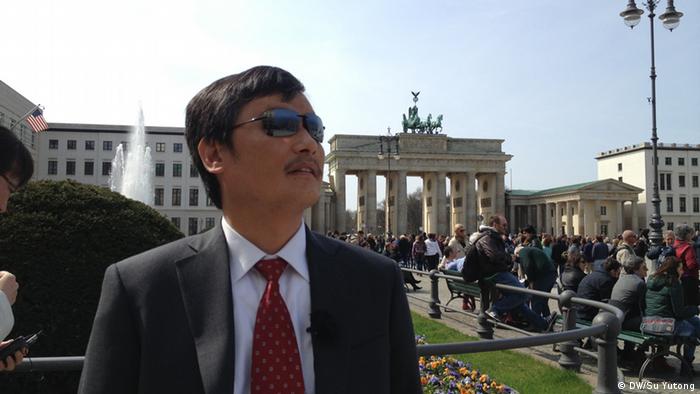
A year ago, the blind Chinese dissident Chen Guangcheng made a dramatic
escape from house arrest and sought refuge at the US embassy in Beijing.
He now lives in New York but just visited Berlin.
Chen Guangcheng spent the most part of 10 years behind walls - in jail
or at home under strict house arrest in the eastern province of
Shandong.
The blind dissident who exposed forced abortions and campaigned for land rights was charged with "damaging property and organizing a mob to disturb traffic."
He then scaled the wall around his home, injuring himself in the process, and took a getaway car to the US embassy where he requested asylum. He now lives in New York.
Visibly moved by the past
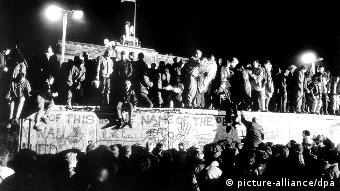 Chen said it was important not to forget the past
On a four-day visit to Berlin, the 42-year-old was visibly
moved at Brandenburg Gate. Out of respect for the victims of the former
East German dictatorship, he crossed the line where the wall used to be
several times. "No wall that is built against the will of the people can
stand for a long time," he said. "No dictatorship can suppress people's
longing for freedom forever."
Chen said it was important not to forget the past
On a four-day visit to Berlin, the 42-year-old was visibly
moved at Brandenburg Gate. Out of respect for the victims of the former
East German dictatorship, he crossed the line where the wall used to be
several times. "No wall that is built against the will of the people can
stand for a long time," he said. "No dictatorship can suppress people's
longing for freedom forever."
Chen said it was important not to forget the past and the victims of the GDR even though the Berlin Wall now belongs to history.
"There are many visible and invisible 'Berlin Walls' in China," he pointed out, referring in particular to the Great Firewall, but he was optimistic they would soon collapse.
"The times when rulers could control everything and silence the people are over," he said. "Social and technological progress are unstoppable."
He also added that the fact so many party functionaries were sending their children abroad was a sign that China's rulers themselves did not have so much faith in the system.
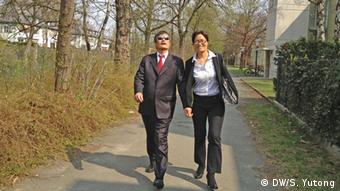 Chen Guangcheng and his wife in Berlin
Moral support is essential
Chen Guangcheng and his wife in Berlin
Moral support is essential
Apart from visiting the Berlin Wall, Chen met many German politicians during his stay, including the government's commissioner for human rights policy Markus Löning.
He warned the government against neglecting China's human rights in favor of economic interests and said there could be no long-term profits with a dictatorship.
"I escaped so I could tell the world about the situation in China," he pointed out.
"Although in the end, only the Chinese themselves can change the country, the moral support of the West is essential."
The blind dissident who exposed forced abortions and campaigned for land rights was charged with "damaging property and organizing a mob to disturb traffic."
He then scaled the wall around his home, injuring himself in the process, and took a getaway car to the US embassy where he requested asylum. He now lives in New York.
Visibly moved by the past
Chen said it was important not to forget the past
Chen said it was important not to forget the past and the victims of the GDR even though the Berlin Wall now belongs to history.
"There are many visible and invisible 'Berlin Walls' in China," he pointed out, referring in particular to the Great Firewall, but he was optimistic they would soon collapse.
"The times when rulers could control everything and silence the people are over," he said. "Social and technological progress are unstoppable."
He also added that the fact so many party functionaries were sending their children abroad was a sign that China's rulers themselves did not have so much faith in the system.
Chen Guangcheng and his wife in Berlin
Apart from visiting the Berlin Wall, Chen met many German politicians during his stay, including the government's commissioner for human rights policy Markus Löning.
He warned the government against neglecting China's human rights in favor of economic interests and said there could be no long-term profits with a dictatorship.
"I escaped so I could tell the world about the situation in China," he pointed out.
"Although in the end, only the Chinese themselves can change the country, the moral support of the West is essential."
DW.DE
Human rights in China - 'a downward spiral'
Two years ago, the Nobel Peace Prize was awarded to the Chinese author Liu Xiaobo. Activists and rights organizations have not seen any improvements in the country's rights situation since then. (10.12.2012)Blind Chinese activist says likely to visit China rival Taiwan
Chicago Tribune
BEIJING (Reuters) - Blind Chinese legal activist Chen Guangcheng, whose escape from house arrest sparked a diplomatic crisis between Beijing and Washington, said on Tuesday he will "most likely" accept an invitation to visit Taiwan, a move likely to ...
0518
陳光誠赴美 「感慨萬千」
陳突被帶往機場 搭飛紐約班機
陳 光誠向華盛頓郵報表示,早上中國官員打電話給他,叫他開始打包行李後,在十一點左右官員就到達病房,「這是一個驚喜」。在當局安排下,他們躲過在醫院外的 媒體悄悄前往首都機場,下午兩點左右抵達機場,此時官員才送上護照。陳光誠一家等到飛機快起飛前,才搭乘一輛類似迷你巴士的車輛前往登機,陳光誠下車後被 人用輪椅推上機場跑道,再搭上一部連結空橋的電梯直接登機。他們被安排乘坐商務艙。
隨機採訪的紐約時報記者說,空服員在陳家人座位四周拉起簾子,同時在飛機還停在跑道時,禁止其他乘客使用商務艙廁所,陳家的機票是由美國大使館代購,費用將由紐約大學支付。
中國官方媒體新華社則在十九日傍晚,撰發了一條連標題共僅五十九字的新聞短稿指出,陳是依法透過正常途徑辦理出國手續赴美學習。美國務院發言人努蘭隨後也發表聲明,在未提及中國政府的狀況下,感謝能解決此事並支持陳在美留學目標的相關安排。
陳光誠十九日下午在機場接受各家媒體電話訪問表示,對於離開祖國他心中「感慨萬千」,並說已跟山東的親人用電話道別。陳光誠也對支持者及其他運動人士表達感激,同樣暗示希望日後能回到中國,「我要跟大家請假,我希望他們能夠理解。」
中國民運人士王丹十九日在個人臉書帳號上貼文轉述與陳光誠通話內容,他曾向陳表示「替你高興」,但陳光誠卻回答,「其實我高興不起來。」冒險開車協助陳光誠前往北京的南京女網友珍珠何培蓉也表示,希望這是個好的開始。
陳光誠心情無法輕鬆,顯然是擔心山東家人遭到報復。據香港明報報導說,當局要求陳出國後保持低調,以換取對其侄兒陳克貴從輕處罰。
孔傑榮迎陳 缺席馬就職典禮
原 本要前來台灣參加總統就職大典的紐約大學法學院教授暨亞美法研究所共同主任孔傑榮表示,他在準備前往機場前十五分鐘接到緊急電話,告知他陳光誠已獲准離開 中國,希望他留下來處理,使他不得不臨時取消台灣之行。他已經和馬總統通過電話,表示他的祝賀之意和歉意,馬表示理解。
陳能否返中國 還有許多變數
據了解,陳光誠和中美兩方的協議是他循正常公民的手續申請出國,來美國紐約大學就讀後還可以再返回中國,因此陳光誠無意在機場和流亡美國的民運人士會面,在美國的言行也會保持低調,不直接挑戰中國政府。不過未來事情的發展能否讓陳光誠再返回中國還有許多變數。
又一名異議人士因煽動顛覆罪被捕中國當局並未因陳光誠逃館事件引起的國內外高度關注而停止對異議人士的打壓。近日,陳光誠的一名支持者遊明磊被以煽動顛覆罪拘押。維權律師江天勇被毆打後被迫離京。
人權組織2011年8月在香港舉行抗議活動(德國之聲中文網)據總部位於美國的組織"中國人權"的消息,江西南昌的銀行職員遊明磊近日被南昌警方拘押,罪名是煽動顛覆國家政權罪。德新社10日在報導中說,遊明磊的父親週四表示,警方通知他週四晚些時候與國家安全部門的官員會面,並告知他將在會面時向他出具正式的對遊明磊的刑拘通知書。網名為“屠夫”的活動人士吳淦在周四傍晚接受德國之聲電話採訪時證實,遊明磊的家人周四下午已經接到刑拘通知單,上面寫道,遊明磊以煽動顛覆國家政權罪被刑事拘留。當天探望了遊明磊父母的吳淦說,遊明磊的父母非常著急,準備聘請律師。他說:“遊明磊屬於比較單純,比較陽光的一個男孩子,他覺得我把自己的一些想法製作成傳單去發,沒什麼事。家裡就他一個獨生子,家里人現在確實比較擔心。”江西獨立參選人劉萍和李思華告訴中國人權,4月27日,遊明磊在江西師範大學散發傳單,上面寫有“愛國反共,恢復中華,天賦人權,民主自由”的字樣,還附有今年2月被判刑7年的浙江異議人士朱虞夫的詩《中國人,是時候了》。這首詩被中國當局作為對朱虞夫定罪的罪證之一。吳淦認為,不能僅以這樣的傳單就將游明磊定罪:“又不是用武裝,用暴力,只是表達自己的一個訴求,一個看法。”遊明磊是一名退役軍人,熱心公益,關注艾滋病患者權益,長期呼籲政治改革。 2011年曾因在牆上塗寫“平反六四”被拘留一周。他還曾在南昌街頭散發支持陳光誠,呼籲人們關注陳光誠的傳單。盲人維權人士陳光誠奇蹟般逃脫軟禁並逃入美國駐華使館的事件震驚了海內外。陳光誠離開使館住院後,維權律師江天勇在前往醫院探望時被國保強行帶離並遭到毒打,導致耳膜穿孔,右耳聽力下降。次日被釋放回家後,江天勇想到醫院就醫,又遭到住所外10餘名便衣阻截。據希望之聲等媒體報導,5月8日,江天勇離開北京去唐山辦案,以換取國保從他家門口撤人。江天勇在推文中說,跟國保談好的5點包括在可控情況下看病;不擅自去看陳光誠;近期不接受外媒面訪;近期離京和國保從他家門口撤走人。陳光誠進入朝陽醫院至今,他的朋友中沒有一個獲准與他見面。維權人士胡佳和妻子曾金燕目前都在當局的壓力下離京。作者:樂然責編:李魚
新聞報導陳光誠:地方政府的報復已開始據法學學者滕彪在微博上發布消息,沂南官員稱陳光誠侄子陳克貴涉嫌“故意殺人罪”,而陳克貴母親也被以“包庇”罪名取保候審。陳光誠向德國之聲表示,地方政府對他的報復已經開始。(德國之聲中文網)公眾在關注陳光誠赴美進展的同時,亦關注其侄子陳克貴的命運,目前陳克貴被警方刑事拘留,關押在沂南看守所中。 5月10日,中國知名維權律師、法學學者滕彪在微博上發布消息:"陳克貴的媽媽被以包庇克貴的罪名取保候審,當地姓馬的官員說陳克貴犯的是故意殺人罪。真是豈有此理!犯罪的是張健等一夥夜闖民宅行凶作惡的暴徒!值得稱讚的是面對歹徒敢於自衛的陳克貴!"在發現陳光誠逃亡後,4月26日深夜11時多,陳光誠所在的山東臨沂雙堠鎮鎮長張健帶領多名不明人士闖入陳光誠大哥陳光福家中,陳光福之子陳克貴在遭到來人攻擊時持刀將張健和其他人砍傷,陳克貴報警後,警察遲遲不出警;他與美國網友雅學曾通話15分鐘。雅學曾授權德國之聲在報導時發布該錄音。陳光誠:地方政府的報復已開始(音頻)後擔心遭到警方報復,陳克貴被迫流落在外並打通外界電話告知,遭一黑車中多名人士的追殺,當地警方也對其發出"通緝令"。隨後山東律師劉衛國和廣州律師陳武權接受陳克貴妻子劉芳的委託,成為陳克貴的代理律師,上海律師衣鐵軍,北京律師騰彪、王誓華、梁小軍等13人組成律師團。北京公盟就陳克貴一案向網友公開賬號籌集法律援助費用。公盟員工宋澤於5月6日被以"尋釁滋事罪"刑拘,目前關押在北京丰台看守所,網友疑和當局欲阻止公盟介入陳克貴事件有關。"他們的報復已經明顯地開始了"目前依然在苦等中國官方赴美護照及手續的陳光誠,在接受德國之聲採訪時介紹了陳克貴及家人的現狀: "我聽說沂南警方找到克貴的爸爸媽媽,說要找克貴愛人簽字,究竟簽什麼字也不知道,但是克貴的愛人已經失踪好幾天了。前幾天他們把我的大嫂也抓起來了,說是'包庇',關了幾天后以取保候審的形式給放出來了,警方威脅她說隨時可以抓回去。他們對我的報復已經非常明顯的開始了。"陳光誠認為,臨沂政府派人深夜闖入民宅,並對其兄嫂大打出手,及暴打陳克貴,在此背景下,陳克貴的行為根本無罪:"他們又不是執法機關,隨隨便便翻牆進入別人家裡算什麼?他們還拿著凶器-木棍,他們爬進家里後對我大哥大打出手,克貴聽到聲音從另一個屋子裡出來,張健吩咐把他控制住,那幫人拿著木棍打克貴,把木棍都打折了。這幫人多狠啊。太可惡了。"陳光誠曾要求中央派來的官員關注陳克貴一事,目前政府方面從三天前起再未派人與陳光誠溝通,包括辦理護照及赴美手續,也包括對陳克貴事件沒有任何回音。陳光誠呼籲外界關注陳克貴及其一家人的命運。律師:應該屬於正當防衛德國之聲與陳克貴案的代理律師劉衛國取得聯繫。據他透露,目前他被當局威脅和警告不得離開濟南,之前他還曾短暫被控不得自由行動。所以他還沒有能夠到沂南看守所與陳克貴見面。而另外一位代理律師陳武權也遭遇阻礙:"廣州的陳武權律師要趕過去會見陳克貴,但昨天他告訴我,他的律師證被扣了,這樣他就去不了。現在我也去不了,壓力更大一些。"對於滕彪所發微博內容,劉衛國表示沒有見到官方文書之前,當地官員所稱的並沒有法律依據。而他也認為據早前網友發布的錄音等情況來梳理、還原案件經過,陳克貴的行為當屬正當防衛:"那個15分鐘的錄音我聽到了,按照克貴的描述肯定屬於正當防衛行為。"作者:吳雨責編:李魚

新聞報導德國之聲專訪院中陳光誠陳光誠已經委託中國官員代辦出國手續,但此事還未有最新的進展。他在接受德國之聲專訪時回顧了被軟禁經歷:山東政府為他修建一座“特殊監獄”,政府曾組織十四人“五毛團”對他進行遊說。德國之聲:您在醫院診治的情況怎麼樣?陳光誠:還行,查了以後沒有太大的問題,腸胃也查了,還是慢性腸炎,出血基本得到控制,腳上有三塊骨頭斷裂,打著石膏呢,現在在床上躺著,基本不能行走。德國之聲:護照的事情辦得如何了?陳光誠:我已經委託中央派來的人,我說:我現在躺在床上也不能動,請你們幫忙辦理一下,他答應了,他說:中央都明確表態了,肯定會辦的,儘管放心。但是並沒有告訴我時間。德國之聲:有中國網友反映,您在醫院還是"被封閉"的,他們也不能探望,如果您的身體健康無大礙的話,是不是會回美國使館等護照?陳光誠:我想他們不會讓我回到使館等吧,因為現在美國大使館的人來看我他們都不讓看。德國之聲:我們看到美國副總統拜登等官員都已表態,一旦中方辦好手續,將盡快幫助您赴美,但美國對華援助協會傅希秋牧師也說,只要你沒有安全在美國落地,都擔心有變數,您擔心嗎?陳光誠:我真的不知道,我覺得什麼都可能有,我想也可能有變數,但總的來說他們還是要履行這個條約的,履行雙方協議,如果有變數,即使我有麻煩,他們的麻煩更大。德國之聲:您是否了解您的侄子陳克貴的現狀?是否擔心家人的安全?陳光誠:我聽說他被拘留了,但具體的情況還不了解,我還是很擔心家人的安全,大哥他們都被威脅得很厲害,我走了以後,大哥被抓去關了很長時間。你想想這樣的事情多麼的無恥,他們半夜翻牆跑到別人家裡,把人打急了,人家反抗;他們打人無罪,反抗卻有罪?這是什麼邏輯,聽說他們打克貴打得很狠,請的律師也被限制自由,還講不講理?我昨天和中央派來和我接觸的官員也提到這件事情,我說:"實在太無法無天了",他說要記下來,並且表示要匯報,我不知道他們匯報後會有什麼結果。德國之聲:這兩天媒體也曝出在您被軟禁期間,去年12月份,政府曾組織司馬平邦等14個人到您的家中,他們和您見面的情況是怎樣的?陳光誠:對,他們在地方政府組織下,曾經到過我家,我一見面就知道他們是一幫"憤青、五毛",他們前期拍了幾張我們家人笑的照片發到網上,我就特別提高警惕,在眼鏡片上貼了紙,用畫筆在一個眼鏡片上寫的"非法拘禁老幼病殘"、另一隻眼鏡片上寫的是"入室強打慘無人道",自從他們到達一直到走出來,我就戴著這個眼鏡,他們也沒有辦法利用我,我想別的事我做不了,至少不能被他們利用了。如果再被利用就像我們在欺騙網民,我們當時和他們也有激烈的爭辯,他們說中國有時候一加一不等於二,我問他們等於幾,他也回答不上來;他們說:"你的事情還是解決了好,不要留在這兒讓外國人利用,八國聯軍對我們的侵害還少嗎?"德國之聲專訪院中陳光誠 (音頻)我當時問他們:"怎麼解決?得在講理的情況下解決,你們告訴我中國還有哪裡是講理的地方?最高人民法院和最高人民檢察院都幹什麼去了。我們可以請國際公信力的機構來調查嗎?請聯合國調查行不行?"他們說:"聯合國還真不行,聯合國反華!"他們錄了我一個多小時的錄像,但他們回去後一點也沒透露。我在講我們家人受到當地看守一系列毒打的過程,他們無動於衷,我現在完全可以確定,當時他們就是想利用我想欺騙公眾。最重要的是,他們還告訴我,你的四個哥哥我都見到了,他們都說得很好,後來我了解到他們僅僅見到了我四哥和二哥,我大哥和三哥他們都沒見到,他們找了兩個人臨時扮演我大哥和三哥,他們無恥到何等程度。德國之聲:您當時知道中國網友發起的營救和聲援您的活動嗎?陳光誠:我非常感謝這麼多網友對我的關注,而且從去年下半年以來,一次次的到東師古去挨打,如果沒有他們的付出,我的處境會非常的艱難,其實當時他們專門建了給我的"牢房",從地板到房頂全部是鋼筋編起來的,安裝了特製的門,他們從去年8月份開始建這個"牢房",就是打算把我家狠狠的折磨,他們說:"你這個事情,領導換一屆換一屆就這樣下去了。"沒想到在中國網民的廣泛關注下,在11月份,他們把這個"牢房"拆了,監獄是國家的象徵,國家才擁有監獄,沒想到我們山東地方黨委政府就有這樣的權力,可能山東想獨立吧。請你們轉達我的感謝,我非常感謝中國網友,他們非常有良知,他們才是這個國家的希望,也是公平正義的希望。也請你們告訴他們,只要他們想做,他們的能力比陳光誠不知強出多少倍。德國之聲:您說是暫時到美國休養和學習,您想過未來還會回到中國嗎?陳光誠:七年了,我連一個週末沒有過,每時每刻都在他們的折磨中,我真的需要一段時間休養,中央派來的人也說中央承諾保障你享有憲法賦予你的權利和自由,我想我的出入自由都應該受到保障,尤其是在兩國有協議的情況下,也期待大家共同監督。採訪記者:吳雨責編:李魚
From China, Activist Pleads for Help in Call to U.S. Hearing
By JANE PERLEZ and STEVEN LEE MYERS 6:54 PM ET
“I want to come to the U.S. to rest,” said the dissident lawyer Chen Guangcheng, speaking from Beijing to members of Congress by way of a cellphone held up to a microphone.
 Post a Comment | Read (410)
 In China, Talk of Case Is Guarded
By MICHAEL WINES and SHARON LaFRANIERE 11 minutes ago
Chinese citizens have to refer to Chen Guangcheng in a coded way.
Activist, Out of Embassy, Now Says He Wants to Leave China
By JANE PERLEZ 10 minutes ago
An American official said that the lawyer Chen Guangcheng, who gave varying reasons for leaving American protection, had changed his position and now wanted to leave China.
China's Chen Guangcheng 'unable to meet US officials'
 Chen Guangcheng has appealed to the US president for help leaving China
Chinese dissident Chen Guangcheng says he has been unable to meet US officials to discuss his desire to leave the country.
After he escaped house arrest last week, Mr Chen spent six days in the US embassy before emerging on Wednesday.
The issue continues to overshadow key talks between the US and China.
US Secretary of State Hillary Clinton is in Beijing to attend talks focusing on North Korea and Syria.
As the talks opened, Mrs Clinton did not mention Mr Chen by name but addressed the topic of human rights.
'Threats to family' Earlier, the US ambassador to China, Gary Locke, rejected the suggestion that Mr Chen had been pressured into leaving the US embassy.
Analysis

Previously, Mr Chen had always insisted he wanted to stay in China. But at the hospital he apparently changed his mind.
According to one report, this was after his wife told him that she had been tied to a chair and beaten by Chinese guards while he was in the American embassy.
The US now finds itself in a very difficult situation. American officials now say they will have further conversations with Mr Chen to obtain a "fuller picture" of what he is thinking.
They know they must strike a balance between protecting Mr Chen without antagonising Beijing further.
"I can tell you unequivocally that he was never pressured to leave. He was excited and eager about leaving," he said.
However, the activist told the BBC by telephone from his
hospital bed that since he left he has been made aware of threats made
to his wife and family while he was in the embassy. "She told me our house has been installed with seven CCTV cameras inside the courtyard. There are people in and outside of our house and on the roof...They just eat and stay in our house, and they plan to build up electric wires around my house," he told the BBC.
Although he initially said he wanted to stay in China, he changed his mind because he believes China has reneged on an agreement to guarantee his safety.
There is no official confirmation about the nature of any such agreement, but media reports from the US suggest that Mr Chen had been promised safety in a university town elsewhere in China.
Mr Chen also said that US officials had been to the hospital where he is currently receiving treatment, but he had not seen them. He believes Chinese foreign ministry officials are not letting them in.
" Yesterday afternoon I thought they [US officials ] left. I looked for them, but couldn't find them...Today I got to know that they were prevented from coming in, not that they are not coming in," he said.
A Chinese foreign ministry spokesman said he had "no information" on Mr Chen's request to leave China.
'Universal rights' Both Mrs Clinton and US Treasury Secretary Timothy Geithner are attending the annual two-day talks, which had been expected to focus on North Korea and Syria.
Mrs Clinton has previously expressed her support for Mr Chen, who has been held under house arrest for almost two years.
As the talks opened, she addressed the topic of human rights.
Chen Guangcheng

- Born 12 Nov 1971
- Nicknamed the "Barefoot Lawyer"
- Went blind as a child
- Campaigned for women forced to have abortions or sterilisation under China's one child per family policy
- Jailed for four years in 2006 for disrupting traffic and damaging property
- Released from jail in 2010 and placed under house arrest
- Daughter barred from school during much of 2011, reports say
- Escapes house arrest, April 2012
"The United States believes that
no state can legitimately deny the universal rights that belong to every
human being - or punish those who exercise them," the top US diplomat
said.
President Hu Jintao, also speaking at the start of the talks,
said it was not possible for China and the US to see "eye to eye on
every issue". Chinese officials on Wednesday accused the US of interference in their domestic affairs and demanded an apology for housing Mr Chen at the embassy.
Mr Chen had been at the US embassy for almost a week after escaping from house arrest in his home village in the eastern province of Shandong.
Mr Chen had planned his escape from house arrest for months. On 27 April, he scaled the wall the authorities had built around his house and was then driven hundreds of miles to Beijing.
The activist spent seven years in prison or under house arrest after he exposed human rights abuses, including the way thousands of women were forced to have abortions under China's "one-child-policy".
Several people involved in Mr Chen's escape have been detained or have disappeared in recent days.
The blind lawyer Chen Guangcheng left the American Embassy in Beijing on Wednesday, but his future safety and the reasons for his agreeing to go remained uncertain.
Dissident Says China Used Death Threat To Broker Deal
Only hours after the U.S. trumpeted an apparent end to the diplomatic standoff, Chen Guangcheng says he wants to leave China after all. | Posted Wednesday, May 2, 2012, at 12:15 PM ET


This undated photo shows outspoken government critic Hu Jia (right)
sharing a light moment with blind lawyer Chen Guangcheng after his
escape, at an undisclosed location in BeijingPhoto by STR/AFP/GettyImages.
UPDATE: So much for the official story from both U.S. and Chinese officials about Wednesday's deal over dissident Chen Guangcheng.
Chen tells the Associated Press
that he agreed to the U.S.-brokered deal only because he was told that
Chinese officials had threatened to beat his wife to death had he not
left the American Embassy in Beijing, where he had been holed up for
much of the past week.
The blind legal activist says that he now has fears for safety and wants to leave China.
A U.S. official denied knowledge of the threats to the AP.
As the BBC
notes, Chen's lawyer had previously said that Chen was "happy" about
the reported deal that reunited him with his family in China and
guaranteed their safety.
Chen Guangcheng left US embassy 'after family threats'

Chinese
dissident Chen Guangcheng says he gave up his refuge in the US embassy
in Beijing after Chinese authorities made threats to family members.
The US said it had no knowledge of Chinese threats and that Mr Chen had at no point asked for asylum.
US Secretary of State Hillary Clinton is in Beijing for high-level talks.
Mr Chen had been at the US embassy for a week after escaping from house arrest in his home village in Shandong province.
The blind activist's case has threatened to overshadow the bilateral talks, which are due to focus on issues like Syria and trade.
Earlier Mr Chen's lawyer said the activist was "happy" after receiving "clear assurances" from Beijing.
But Associated Press quoted Mr Chen, 40, as saying he had been told by US officials of the threat from the Chinese authorities and "got the feeling that the US government and the embassy was quite supportive of me leaving as well".
US officials had accompanied Mr Chen to a Beijing hospital, where he was reunited with his wife and two children.
US state department spokesperson Victoria Nuland later said: "At no time did any US officials speak to Chen about physical or legal threats to his wife and children. Nor did Chinese officials make any such threats to us."
Analysis

And the US will have limited scope to ensure China abides by any promises it has made.
This incident still has the potential to turn into a crisis and the timing could not have been worse.
China and the US are about to start the fourth round of the Strategic and Economic Dialogue on Thursday.
As far as the Americans are concerned, they seem convinced they have negotiated a deal that is good for them and Mr Chen.
But the ruling communist party tolerates little dissent. Activists are harassed, kept quiet and occasionally sent to prison.
But she added: "Chinese officials
had indicated to us that his family would be returned to Shandong, and
they would lose their opportunity to negotiate for reunification."
CNN said it had spoken to Mr Chen and he said he felt let
down by the US and wanted to leave China with his family as soon as
possible."I would like to say to President Obama - please do everything you can to get our family out," CNN quoted him as saying.
'Please help me'
The BBC's Michael Bristow in Beijing says both US and Chinese officials initially said Mr Chen had left the embassy of his own volition, but a more complicated story soon began to emerge.
A close friend of Mr Chen, Zeng Jinyan, herself an activist in Beijing, told the BBC she had spoken to Mr Chen and confirmed he had opted to stay in China to protect his family.
Ms Zeng said that Mr Chen "had no choice" because "thugs with sticks" were waiting for him and his family in their home village in Shandong.
She said: "It's impossible, he couldn't do anything. He said, 'please help me'."
Bob Fu, of Texas-based rights advocacy group ChinaAid, said reliable sources had also told it that Mr Chen had left the embassy because serious threats to his immediate family members were made by the Chinese government.
"We are deeply concerned about this sad development if the report about Chen's involuntary departure is true," Mr Fu said.
Hillary Clinton had earlier issued a statement saying: "I am pleased that we were able to facilitate Chen Guangcheng's stay and departure from the US embassy in a way that reflected his choices and our values.
"Mr Chen has a number of understandings with the Chinese government about his future, including the opportunity to pursue higher education in a safe environment," she said.
"Making these commitments a reality is the next crucial task. The United States government and the American people are committed to remaining engaged with Mr Chen and his family in the days, weeks, and years ahead."
Ms Nuland later said that "at no point during his time in the embassy did Chen ever request political asylum in the US. At every opportunity, he expressed his desire to stay in China, reunify with his family, continue his education and work for reform in his country".
Continue reading the main story
Chen Guangcheng
- Born 12 Nov 1971
- Nicknamed the 'Barefoot Lawyer'
- Went blind as a child
- Campaigned for women forced to have abortions or sterilisation under China's one child per family policy
- Jailed for four years in 2006 for disrupting traffic and damaging property
- Released from jail in 2010 placed under house arrest
- Daughter barred from school during much of 2011, reports say
- Escapes house arrest, April 2012
But AP quoted Mr Chen as appealing to the US to "help my family and me leave [China] safely".
She said: "If past indications are anything to go by, can you for a minute think China will guarantee Chen Guangcheng's safety? Is the state department kidding?"
'Free citizen'
Mr Chen had been driven from the US embassy to a VIP section of Chaoyang Hospital for a check-up.
He was accompanied by US officials, but Mr Chen later told Britain's Channel 4 News: "Nobody from the [US] Embassy is here. I don't understand why. They promised to be here."
Some 20 police officers ordered journalists to leave the hospital and detained one protester carrying a banner reading "Free Guangcheng. Democracy for China", Agence France-Presse news agency reported.
Earlier, Mr Chen's lawyer, Li Jinsong, said he had spoken to his client on the phone. He said Mr Chen was "very happy and wants to hug all his friends".
Mr Li said the dissident had told him he now had "true freedom", his rights were now protected by the national law and he was "a free citizen".
The affair has strained US-China relations at a delicate time.
Chinese foreign ministry spokesman Liu Weimin said: "What the US needs to do is to stop misleading the public and stop making every excuse to shift responsibility and conceal its own wrongdoing."
Mr Liu earlier said China was "strongly dissatisfied" and that the US should apologise.
Mr Chen had planned his escape for months, scaling the wall the authorities had built around his house and then being driven hundreds of miles to Beijing, where activists say he stayed in safe houses before fleeing to the embassy.
Several people involved in Mr Chen's escape have been detained or have disappeared in recent days.
Dissident Exits Embassy After China Agrees to Deal, U.S. Says
By JANE PERLEZ
Chen Guangcheng, a blind lawyer who escaped from house arrest, was at a
medical facility in Beijing, American officials said, as Secretary of
State Hillary Rodham Clinton arrived in Beijing for talks.

Jordan Pouille/Agence France-Presse — Getty Images
Chen Guangcheng was wheeled through a hospital in Beijing on Wednesday after leaving the American Embassy compound.
陳光誠大事記4月27日,山東盲人維權律師陳光誠被證實逃離被監視的住所德國之聲盤點圍繞這位維權律師的大事記。陳光誠,眼盲心亮的維權者陳光誠1971年出生於山東臨沂沂南縣雙堠鎮東師古村,因幼時生病導致雙眼失明,曾就讀於南京中醫藥大學,後靠自學法律知識幫助當地村民、殘疾人士等維權。他最早的維權行動起於上世紀90年代。1996年就臨沂政府向殘疾人徵稅一事,他到北京上訪,後當地政府表態停止向殘疾人徵稅;1998年就東師古實行的與中央政府明令禁止的"兩田制",他再到北京上訪,使該村取消了"兩田制"2000年到2001年,陳光誠發起"殘疾人維權項目",2003年7月至8月,陳光誠夫婦作為訪問學者,前往美國訪問,與美國的殘疾人機構進行交流。2003年9月,陳光誠因在北京乘坐地鐵被要求買票一事,讓北京地鐵運營公司告上法庭,並獲勝訴。中國多家媒體曾予以報導,也促成北京地鐵公司修改其固有作法,外地盲人也可免費乘坐北京地鐵。陳光誠最為公眾熟悉的維權經歷為,是對臨沂地方政府執行中國國策之一的"計生政策"過程中,任意抓捕違反相關規定者及強迫孕婦墮胎、引產、抄家等,向媒體揭露當地政府的"計生黑幕"並為受害者提供法律援助。 2005年9月6日,陳光誠在北京接受美國"時代周刊"採訪後,被山東警方帶回老家並進行軟禁。在2007年被中國當局判刑四年零三個月。 2010年9月9日陳光誠刑滿出獄後,當局對陳光誠及全家進行嚴控,在他的村莊有三十幾位政府僱傭的看守人員,張健曾多次到陳光誠家中對陳光誠夫婦二人進行毆打。在陳光誠被囚期間,先後有二百多名網友前往探望和營救,大多被當地政府和警方暴打及攔截。網友"珍珠"為最早前往營救人士之一,曾於2011年1月10日駕車前往東師古村試圖看望陳光誠,遭攔截。2011年2月10日,對華援助協會(CHINAaid)公佈陳光誠遭軟禁的視頻,他的遭遇再次引起國際輿論的關注。2011年2月13日、14日、16日分別有法國《世界報》、美國《紐約時報》、CNN記者試圖看望陳光誠,均遭到看守人員暴力阻撓。2011年10月,上百名網友自發進行探望光誠行動。2011年12月14日,好萊塢演員克里斯蒂安·貝爾在北京為影片《金陵十三釵》作宣傳期間隨美國記者前往東師古村,在村口遭攔截,未能見到陳光誠。2012年4月27日,法新社、美聯社、路透社、德國明鏡在線均報導,陳光誠成功逃離受嚴密監視的住所。當天,博訊新聞網發布陳光誠視頻,視頻中陳光誠向溫家寶提出"依法懲治罪犯"、"依法保障家人安全"、"依法懲治腐敗"三個請求。(以上部分內容來源為維基百科"陳光誠"詞條)
| 陈光诚逃出后视频现网络,喊话温家宝(音频来源博讯) |
|
| 4月27日, |
Challenge for U.S. After Escape by China Activist
By ANDREW JACOBS and JONATHAN ANSFIELD
A human rights lawyer’s escape from house arrest dealt an embarrassment
to China and left the United States, which may be sheltering him, with a
diplomatic quandary.
China dissident 'in US embassy'
China dissident Chen Guangcheng has fled to the US embassy in
Beijing after a dramatic escape from house arrest, says fellow activist
Hu Jia.
- Escape ignites Chinese microblogs
- Video: Chen's demands
- Profile: Chen Guangcheng
- China's voices of dissent
- Activist isolated but remembered
China | 12.01.2012
Prominent Chinese dissident tells of raids and interrogation
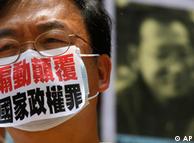
Hu Jia, 38, is one of the most prominent Chinese dissidents active in the country’s repressed democracy movement. He is also a campaigner for environmental protection and an advocate for rural victims of AIDS. He was imprisoned in 2008 as part of a crackdown on dissents ahead of the Beijing Olympics and served a three and a half year sentence for "inciting subversion of state power," charges to which he did not plead guilty.
Upon Hu's release from prison on June 26 last year, he was told not to accept interviews from foreign reporters. He was also banned from protesting, publishing his comments online and speaking out in any way. Sharon Hom, executive director at international NGO Human Rights in China, told Deutsche Welle that following his release, Hu was subjected to a year-long deprivation of political rights (DPR), a measure sanctioned under Chinese law.
While the actions of police may have been authorized under Chinese DPR legislation, they nonetheless "undermine rights protected by China's international human rights obligations to respect fundamental rights and freedoms," said Hom.
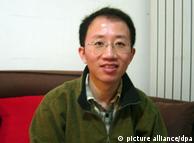
Mouth to be gagged
Hu spoke to Deutsche Welle on Thursday, one day after an eight-hour ordeal in which police raided his apartment and interrogated him at a district police headquarters in Beijing. He said authorities grilled him over three separate issues they took issue with.
"First of all, US Congressman Chris Smith planned to visit the blind Chinese rights lawyer Chen Guangcheng but the government refused his entry to the country. I commended his move and his care for Chen on [social media tool] Twitter," said Hu.
He appealed to the public to travel to Dongshigu village in Shangdong province, where Chen was under house arrest. Hu said this could leverage pressure on the local government to free Chen.
The second matter police wanted to speak with Hu about was a call he made to Twitter users to send postcards to a remote prison in Xinjiang, where the outspoken rights lawyer Gao Zhisheng was jailed. He said there was a chance that conditions for Gao could improve if authorities knew that the public were keeping track of him.
The third issue related to Hu’s confirmation to the international community that Nobel Peace laureate Liu Xiaobo’s wife Liu Xia was currently under illegal detention by the government. "Actually I’ve published quite a lot of comments recently but the policemen only pinpointed these three issues. So we can see these dissidents’ names are the most sensitive and threatening to the government at the moment," said Hu, adding that he has been warned by police that he faces further detention if he continued to be so outspoken.
Sensitive times
Hu said he was surprised by the police raid late Wednesday: "In the past, policemen have entered my house, but on those occasions they weren’t wearing uniforms. They came in stealthily. But last night, eight uniformed policemen descended upon my house at around 8 o’clock with a police car and stayed for around one and a half hours. That means this time they based their raid on a legitimate procedure with a search warrant," said Hu. The policemen claimed they had found data on his laptop which showed his violation of DPR laws, prompting them to confiscate his and his wife’s computers for further investigation.
Chinese authorities are expected to keep a tighter lid on dissidents and rights defenders before the upcoming Communist Party National Congress and power transitions expected to take place in China later this year. However, "recent mass protests, such as a villagers’ protest in Wukan and the influential rise of microblogs and [Chinese Twitter equivalent] Weibo are pressuring the authorities to respond to demands and problems," said Hom. "They cannot continue to silence or intimidate these voices successfully."
Author: Miriam Wong
Editor: Darren Mara
文化人生 | 2012.01.11
中国知识分子的空间
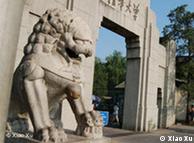
与权力走得太近
司马涛认为,中国的许多知识分子没有自觉地与权力保持距离。实际上共产党在试图拉拢学者和教授,让他们在委员会、智库和政府机构中中担任重要职务。这些知 识分子由于担心自己的乌纱帽,当然不会毫无顾忌地批评政府。而面对来自外国的批评,许多人则以爱国主义甚至民族主义相回应。
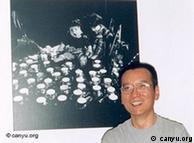 自由作家刘晓波不 过,中国也有独立的、具有批判精神和公众影响力的知识分子。司马涛特别提到了艺术家艾未未和2010年获得诺贝尔和平奖的作家刘晓波。他指出,刘晓波长期 以来就批评中国知识分子缺乏独立性:"毫无疑问,他是一个真正的知识分子,一个应受到重视的知识分子,因为他不隐瞒自己。他明确地提出自己的批评,这让他 显得诚实、具有说服力。而且他愿意为此付出高昂的代价。"
刘晓波是《零八宪章》的发起人之一,这份宪章呼吁当局实施民主改革,保障公民的言论自由。2009年,刘晓波以"煽动颠覆国家政权"的罪名被判刑11年。 司马涛表示能够理解,并不是所有人都愿意像刘晓波那样付出沉重的代价,"我们要想到,鉴于这几十年发展的经验,人们有理由感到害怕。"
网络一代
司马涛认为,目前中国知识分子最新和最重要的活动空间是互联网。通过微搏可以找到庞大的读者群体。在论坛中进行着各种各样的讨论。在互联网用户和审查部门 之间正进行着一场猫捉老鼠的游戏:网络审查员删除敏感文章,用户再接再厉继续发表。网上还不断出现讽刺中共意识形态的新概念、新词。例如通过使用谐音字, 可以逃避对"敏感词"的筛检。
司马涛说,中国的年轻一代网民在交流中大量使用这样讽刺性的新词汇,"现在成长起来的年轻人,没有经历过物质匮乏、政治高压的年代。"而这些全球联网的年轻人拥有不同于前辈的自信。司马涛认为,他们将对中国社会的发展产生关键影响。
作者:Christoph Ricking 编译:叶宣
责编:李鱼


