Directed by Zhu Yunyi, Transparent joins original series Poetic License, as Tilda Swinton takes a slow, meditative journey into Derek Jarman’s poem Chroma during a visit to Beijing. A lyrical voyage through the color spectrum, written as he began to lose his sight, Swinton reads Jarman’s words through the tapestry of memories and desires carried in its verses, reminiscing on their friendship and the lasting legacy of Jarman’s poetry and image-making over an afternoon in the Chinese city.
我覺得可以說中國這個文化有一個特色,我在我的新書《論天
人之際》裡面講到這個。德國哲學家卡爾·雅斯貝爾斯(Karl Theodor
Jaspers)認為,人類各大文明大約在公元前800年到400年之間有一個精神的覺醒,使得人類社會超脫於原始的宗教信仰,各自建立了哲學或者宗教的
傾向。他提到了最重要的四個文明,以色列文明、希臘文明、印度文明和中國文明。它們都各有特色,且在一段時間內都得以保存,這就是軸心時代。
All of us share this world for but a brief moment in time. The question is whether we spend that time focused on what pushes us apart, or whether we commit ourselves to an effort – a sustained effort – to find common ground, to focus on the future we seek for our children, and to respect the dignity of all human beings.
1983年(民72年),我服務的單位是「工業技術研究院 (ITRI)的電子工業研究所 (ERSO)」。 當時,ERSO是ITRI中的「大明星」──事實上,我們可能眼中沒有ITRI, 而只有ERSO──不知道有沒有明眼人注意到,「電子工業研究所 」 與ERSO (Electronics Research and Service Organization)之間,字眼不同 : Service是「工業」嗎?”電子工業”是ELECTRONICS嗎?
我們當然知道,我們多以「開發」為主,「研究」為輔 (Big Development, Small Research)這些說法,並無損於ERSO對台灣電子和資訊產業的貢獻,我深以為曾經是電子所人為榮。
譬如說 ,我可能在中華民國品質管制學會的「品質改善講座」開6小時介紹W. A. Shewhart 之著作(根據Deming1980(?)年6月在書前 Dedication的建議)─這本書,我知道是我推薦的,它在1983/9/15由電子工業研究所圖書館收到 : Quality, Productivity and Competitive Position (1981) by W. Edwards Deming─這位先生的學說,多少改變我1995年以後之發展。 我列一下當年發表在《品質管制月刊》的文章 :「自動製程檢驗與品質保證」、「高手的小集活動法寶及品管圈經驗談(上)(下)」「品質績效衡量法」 、「RPQ經營法」、 「軟體品質改進」。 在《營建世界》發表 「TQC與營建業」等等。 在《電子發展月刊》發表「淺說軟體測試 」,「IBM公司半導體製造之品質與可靠性保證系統」(李楊廉、鍾漢清合譯)等等。
我可能在1983年隔年春節前去一趟美國加州。當時參訪諸如Signetics半導體公司(這是飛利浦公司關係企業,當年大搞 Philips Crosby那一套品管)。我又花一整天在 IBM (San Jose)的廠區,與其品館經理JamesHarrington談品管。他隔年選美國ASQC的 President,竟然選成。由於ASQC有”會長選出先見習一年”之制度,所以他的任期是(1985-86)。
幾年前,我寫一篇 「職場雜憶:我所不知道的哈靈頓(H. James Harrington)先生」 : 『我至少半年沒逛Quality Digest雜誌的網站。2004/11/22訪它,在專欄區看到H. James Harrington先生的消息。根據簡介,他現在是哈靈頓學院公司(Harrington Institute Inc.)的執行長兼哈靈頓集團(Harrington Group)的董事長。他在品管的專業經驗達45年以上,並出版過22本書。可以參觀他公司的網站 www.harrington-institute.com.(現在,只要你有心又有點能力,你可以架設網站,成立一「虛擬王國」,而且可以比絕大多數的國家更精彩…….) 大約22年前,我曾經與他在聖荷西的IBM公司詳談一整天,做了三四小時的錄音(不過我沒在聽過)。那時候,他還沒出版過一本書。所以,我與他分別之後,他平均一年出版一本。這不算什麼了不起的本事,不過,與他同一資質的人,很少人做得到。他是老美中認真苦幹的典型。 對於我來說,他是「美國現象」,代表天資普通的人,仍然可以經營出他的人際和國際關係網絡,並將它們化成利益。幾年前,台灣的品質學會要開慶祝年會,必須付他機票等費用(該學會國際關係組平常不燒香,只好抱此佛腳;或許在經營:『我們也有「前美國品質協會會長」來共襄盛舉』之名)。其實也沒做什麼事。
我只講他不太屑來的台灣之故事(招攬顧問生意無成)。其實,我相信中國的「禮遇」情形,也會差不多的。可是現在中國有某品質獎是以他為名的。我們經常可以從這種主客的水平來了解其政治。 中華民國品質學會關於他的間接笑話還有一樁(他自己都不知情):某秘書長要求翻譯哈靈頓(H. James Harrington)的書 Business Process Improvement: The Breakthrough Strategy for Total Quality, Productivity, and Competitiveness. Manufacturer, McGraw-Hill(他早期的書多是這家出版社所出版的。不過,這家出版社近十年來,也成三流的。讀者可以從hc上周末讀一下就找出招牌書Juran Quality Handbook的兩處錯誤可知一斑)。據悉,翻譯完成,付出十幾萬稿費給譯者,然而,「我們打算拿它來看看可能出版否」的時候,卻不知道稿子藏到那兒去—換句話說,帳目上有,實體丟掉…..) 他的22本書都與process/ improvement/ performance/ benchmarking等等有關,我們可以從現在他網站上的課程了解一些:(有些書兼為研習手冊,或多或少以下述課程為中心):
Business Process Improvement Organizational Change Mgt. Capacity Building Project Management Knowledge Management Total Six Sigma E-business Technology Total Improvement Mgt. 印象最深刻的是;我們當年談的「全面品質管理」(Total Quality Management ),已改成「全面六標準差」 (Total Six Sigma) –真是先進,虧他還當過一屆的美國品質協會之會長(ASQC在1986改為ASQ,把C(Control)拿掉)。』
Francis Fukuyama’s ‘Political Order and Political Decay’
By David Runciman
The triumph of liberal freedoms looks far from assured in this grand survey of political change since the Industrial Revolution – and the US is no exception
An Afghan election worker reads a ballot paper during an audit of the presidential run-off in Kabul, August 2014
Political Order and Political Decay: From the Industrial Revolution to the Globalisation of Democracy, by Francis Fukuyama, Profile, RRP£25/ Farrar, Straus and Giroux, RRP$35, 672 pages
It is not often that a 600-page work of political science ends with a cliffhanger. But the first volume of Francis Fukuyama’s epic two-part account of what makes political societies work, published three years ago, left the big question unanswered. That book took the story of political order from prehistoric times to the dawn of modern democracy in the aftermath of the French Revolution. Fukuyama is still best known as the man who announced in 1989 that the birth of liberal democracy represented the end of history: there were simply no better ideas available. But here he hinted that liberal democracies were not immune to the pattern of stagnation and decay that afflicted all other political societies. They too might need to be replaced by something better. So which was it: are our current political arrangements part of the solution, or part of the problem?
The explosive growth in industrial capacity and wealth that the world has experienced in the past 200 years has vastly expanded the range of political possibilities available, for better and for worse (just look at the terrifying gap between the world’s best functioning societies – such as Denmark – and the worst – such as the Democratic Republic of Congo). There are now multiple different ways state capacity, legal systems and forms of government can interact with each other, and in an age of globalisation multiple different ways states can interact with each other as well. Modernity has speeded up the process of political development and it has complicated it. It has just not made it any easier.
What matters most of all is getting the sequence right. Democracy doesn’t come first. A strong state does. States that democratise before they acquire the capacity to rule effectively will invariably fail. This is what has gone wrong in many parts of Africa. Democracy has exacerbated existing failings rather than correcting for them because it eats away at the capacity of government to exert its authority, by subjecting it to too many conflicting demands. By contrast, in east Asia – in places such as Japan and South Korea – a tradition of strong central government preceded democracy, which meant the state could survive the empowerment of the people.
This is an explanation of how we have got to where we are but it is not a recipe for making the world a better place. Telling people who want democracy to hold off in order to strengthen their state won’t wash, because having to live under a strong state in the absence of democracy is often a miserable experience: that’s why the Arab spring erupted in the first place. It is the basic tension in Fukuyama’s oeuvre: if we live in an age where democracy is the best idea but discover that democracy will only work if we defer it, then politics is going to be a horribly messy business.
A widespread attempt to achieve leaner and more efficient government has only succeeded in bloating it and making it more bureaucratically oppressive
The other problem is that getting the right sequence often takes a shock to the system. War remains the great engine of political development because it can empower the state, so making it fit for democracy once the fighting is over. This is what happened in the aftermath of the first and second world wars. Peace comes at a price, however. Fukuyama argues that Latin American politics is often so dysfunctional because that continent has been spared the worst of global conflict. Fewer wars meant weaker states and weaker states means political instability. It doesn’t follow that violence always helps, though – the wrong kind of violence can be even worse than no violence at all. Colonial rule in Africa was bloody but it was also destabilising because the imperial powers used violence as a substitute for building local administrative capacity. That pattern has repeated itself today in Afghanistan and Iraq. Peace is dangerous and war is hell. There are few consolations in this story.
. . .
Fukuyama’s analysis provides a neat checklist for assessing the political health of the world’s rising powers. India, for instance, thanks to its colonial history, has the rule of law (albeit bureaucratic and inefficient) and democratic accountability (albeit chaotic and cumbersome) but the authority of its central state is relatively weak (something Narendra Modi is trying to change). Two out of three isn’t bad, but it’s far from being a done deal. China, by contrast, thanks to its own history as an imperial power, has a strong central state (dating back thousands of years) but relatively weak legal and democratic accountability. Its score is more like one and a half out of three, though it has the advantage that the sequence is the right way round were it to choose to democratise. Fukuyama doesn’t say if it will or it won’t – the present signs are not encouraging – but the possibility remains open.
The really interesting case study, however, is the US. America’s success over the past 200 years bucks the trend of Fukuyama’s story because the sequence was wrong: the country was a democracy long before it had a central state with any real authority. It took a civil war to change that, plus decades of hard-fought reform. Among the heroes of Fukuyama’s book are the late-19th and early-20th-century American progressives who dragged the US into the modern age by giving it a workable bureaucracy, tax system and federal infrastructure. On this account, Teddy Roosevelt is as much the father of his nation as Washington or Lincoln.
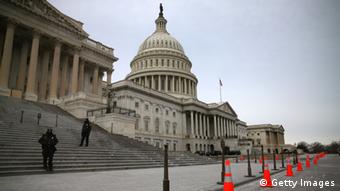
But even this story doesn’t have a happy ending. Just as it can take a major shock to achieve political order, so in the absence of shocks a well-ordered political society can get stuck. That is what has happened to the US. In the long peace since the end of the second world war (and the shorter but deeper peace since the end of the cold war), American society has drifted back towards a condition of relative ungovernability. Its historic faults have come back to haunt it. American politics is what Fukuyama calls a system of “courts and parties”: legal and democratic redress are valued more than administrative competence. Without some external trigger to reinvigorate state power (war with China?), partisanship and legalistic wrangling will continue to corrode it. Meanwhile, the US is also suffering the curse of all stable societies: capture by elites. Fukuyama’s ugly word for this is “repatrimonialisation”. It means that small groups and networks – families, corporations, select universities – use their inside knowledge of how power works to work it to their own advantage. It might sound like social science jargon, but it’s all too real: if the next presidential election is Clinton v Bush again we’ll see it happening right before our eyes.
True political stability comes when the positive and negative sides of democracy cohere: when people who control the power of their governments also come to value them
Fukuyama is keen to emphasise that a strong state doesn’t have to mean a large one: he tries not to take sides in the argument between the proponents of big and small government. Stable societies can operate with a lean welfare system (Singapore) as well as a far more extensive one (the Netherlands). But his argument does have one counterintuitive insight that is deeply pertinent to our present democratic discontents. If strong central authority is needed to make politics work, then even people who want to shrink the state need to be careful they don’t shrink its capacity to govern at the same time. This is the paradox of mature political development: if you want a less controlling state you need strong state control to achieve it. Otherwise you get what has been happening in the US (and to a lesser extent in Britain) over the past generation: a widespread attempt to achieve leaner and more efficient government has only succeeded in bloating it and making it more bureaucratically oppressive. The only thing that can rein in the state is a more powerful state. The politics of austerity is a very precarious balancing act.
So what happened to the end of history? At the heart of this book is a tension that Fukuyama never quite resolves between democracy as a positive value and democracy as a negative one. The positive value is dignity: people who rule themselves have a greater sense of self-worth. The negative value is constraint: people who rule themselves have far greater opportunities to complain about governments they don’t like. True political stability comes when the positive and negative sides of democracy cohere: when people who control the power of their governments also come to value them. That is not true at present. Where democracy has come to mean dignity – in Egypt, for example – constraint is chaotic and counter-productive. Where constraint is fully functional – as in the US – dignity is in short supply. In its place is a politics of resentment and complaint, manifested as deep-seated partisan intolerance. Fukuyama points out the irony that the US institutions that currently poll best with the American people – the armed forces, Nasa – are the ones that experience the least democratic oversight. The institutions Americans really hate – such as Congress – are the ones they control themselves.
This book offers the best account I have read of how we reached this point. Its slightly flat academic style hides a wealth of insights worthy of the greatest writers about democracy. It is not all doom and gloom. Fukuyama retains faith in the capacity of smart leaders to find a path out of the cave. He insists that geography is not destiny and history is not fate. Countries continue to do well or badly according to the political choices they make. Costa Rica is a relative success story because during the 20th century its politicians got the big decisions right. Argentina has squandered many of its advantages because its politicians got them wrong. All this takes time to play out, however. Even the US needed the best part of a century to get its house in order. And time may no longer be on anyone’s side.
The pace of technological change along with rising ecological risks means that the shocks will keep coming, though it’s far from clear that states will acquire the capacity to deal with them. Twenty-first-century wars – such as the one against Isis that is just getting going – are increasingly bitty and piecemeal, fought at one remove by drones and proxy armies. They are as likely to erode government authority as to enhance it. The politics of complaint is on the rise almost everywhere. In a coda to the 1989 essay that made him an intellectual superstar, Fukuyama wrote that “the end of history will be a very sad time”. He was more right than he knew.
David Runciman is professor of politics at Cambridge university and author of ‘The Confidence Trap: A History of Democracy in Crisis from World War I to the Present’ (Princeton)
果不是“時間簡史”(A Brief History of Time)這個詞已經被人用作書籍標題的話,它或許可以用來描述法蘭西斯•福山(Francis Fukuyama)最新作品《政治秩序與政治衰敗》(Political Order and Political Decay)及其前篇《政治秩序的起源》(The Origins of Political Order)。這兩本書橫跨了很漫長的有記錄歷史(以及有記錄之前的歷史),挖掘了一些有關“社會組織起來的基礎規則”的教訓,福山希望以此為其導師塞繆爾•亨廷頓(Samuel Huntington)在1968年出版的政治社會學經典著作《變化社會中的政治秩序》(Political Order in Changing Societies)提供補充。
《政治秩序的起源》談論了直到拿破侖1806年在耶拿凱旋的全部人類歷史,而《政治秩序與政治衰敗》這本新書的內容則更加適度地局限在了自那之后直至現在這個時間段內。這個時間上的劃分標志著一套特定政治制度——現代國家、法治和負責制政府——發展(速度越來越快)成為全球社會政治組織主要模型這一時期的開始。福山意簡言賅地把這一全球歷史進程總結為“到達丹麥”(getting to Denmark)。
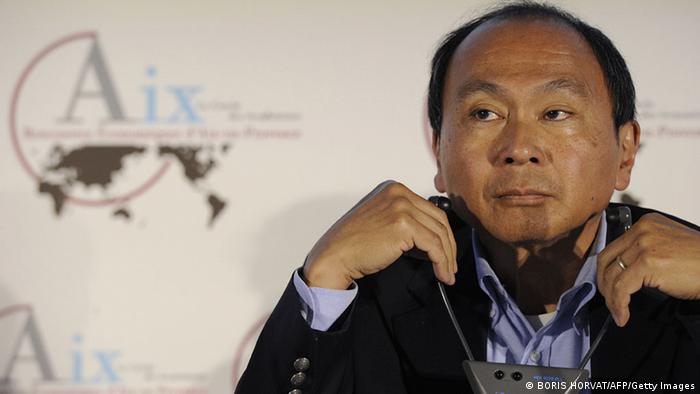
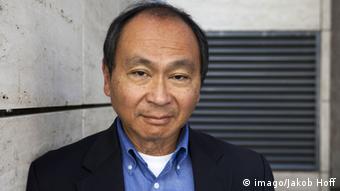
(德國之聲中文網)在四分之一世紀前出版的《歷史的終結與最後一人》(The End of History and the Last Man)一著中,福山(Francis Fukuyama)教授論證說,西方自由民主制的成功標誌著社會文明演進的終點。日前在接受德國之聲駐華盛頓記者採訪時,這位斯坦福大學政治學家指出,地緣政治雖是一種穩定現象,但從長遠角度看,他依然認為,只有一種關於全球公民的重要組織理念真正具備全球意義。這一理念便是自由民主制。