2013年1月22日 星期二

Lance Armstrong: When A Hero Confesses


阿姆斯壯演砸了
英國《金融時報》中文網專欄作家 顏強

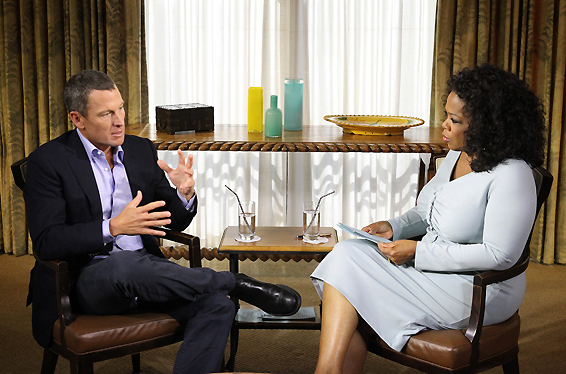
一直以來中國媒體和受眾都不太關心蘭斯·阿姆斯壯。但過去一周,這位已從職業生涯巔峰墜落至穀底的前自行車明星與奧普拉的對話,成了世界體育界的頭條新聞。阿姆斯壯這次處心積慮的公共行動,最終招來一片罵聲,體育歷史上曾經包裝得最成功的勵志英雄傳奇,如今成了市場行銷和危機公關的反面案例。

對於阿姆斯壯的競技,中國體育迷們或許興趣不大,自行車本來也不是靄深毒重的中國城市能進行的運動。不過他最新的觸電表現,倒是能給市場行銷者提供各種參考。

在因為服用違禁藥品被蓋棺定論為騙子、七個環法自行車冠軍頭銜被剝奪, 2000年悉尼奧運會銅牌被取消之後,“壯哥”沉寂了幾個月,突然選擇以對話脫口秀女王的方式,第一次面對公眾。他有著顯而易見的目的:利用一次高光露面機會,低調溫情地講述他那一面的故事,讓人看到他不僅是一個鐵骨錚錚的硬漢——儘管那是他自己長久以來努力包裝成的樣子,他還想讓世界看到他的痛苦、他無法自拔的窘迫、和在不知情狀況下犯的錯誤。這樣博同情的路數雖然老套,但通常管用,因為看到阿姆斯壯,人們很容易能回想起他七次贏取環法的輝煌,他戰勝癌症的堅強,以及LIVESTRONG這個黃手環對全世界抗擊癌症的人們以及青少年的激勵。

阿姆斯壯就是要將自己打扮成一個好人,一個犯了錯誤幡然悔悟,但內裏仍然品質優良的好人。他知道他不可能再贏回已經失去的世界,他那1.25億美元的財產大部分也將在官司中失散,但他倔強地想要堅守住哪怕最後一寸陣地。他骨子裏不會認輸,即便在宣佈他是個騙子,而他無從辯解時,他已經輸了。

然而阿姆斯壯實在是一個“單一類型”演員。我收看了他和奧普拉的對話,只有在講述到不久前耶誕節,他13歲的兒子向他詢問真像,促使他決心面對公眾時,阿姆斯壯才有些動情,而整體上,他表現得強硬頑固,和他依舊分明的面部輪廓一樣堅實。

他只能演英雄,他只能扮演勝利者。他不會博同情。哪怕他像鐘斯那樣痛哭流涕一番,多少也會讓人覺得是真情流露,但阿姆斯壯做不到。他的確真實,真實得讓人感覺到,從他內心深處,他根本沒覺得自己做錯了什麼。

在這次公關活動的最初設計中,低調與溫情可能是主線索,阿姆斯壯原本是來道歉、來挽回損失的。但強梁如“壯哥”者,做不到低調溫情。過去十幾年,他裹挾媒體、裹挾國際自行車聯合會,對所有懷疑他成就的媒體、管理者、隊友、對手、車隊經理、贊助商,都手段鐵腕毫不留情。他代表著“美國夢”刻骨的另一面。如今要他放下身段,他就算有這樣的意識,行為上卻根本做不到。

所以和奧普拉的對話,不但沒有起到危機公關的作用,反倒坐實了阿姆斯壯的完整敗局。這段長時間對話還不是直播,更讓人懷疑其誠意。錄影結束後,奧普拉第一時間在Twitter上言簡意賅地說:“阿姆斯壯有備而來”。個中深意,值得品味。

我越看這些對話,越覺得阿姆斯壯就是“美國夢”的代言人——他將自己洗腦洗得無比徹底乾淨,轉身就能給其他人洗腦。這樣的告白,如果是肥皂劇,也只會是最低劣的肥皂劇。

遺憾的是,這樣的肥皂劇,不論中西,每天都充斥在我們的生活中。

(注:本文僅代表作者個人觀點。本文編輯王昉 fang.wang@ftchinese.com

阿姆斯特朗演砸了


SPORTS

Armstrong stripped of Tour de France titles

Cyclist Lance Armstrong has been stripped of his seven Tour de France titles and banned from cycling for life, in a much-anticipated ruling by the sport's international governing body.
Monday's announcement by Pat McQuaid, the president of the International Cycling Union, ratified recommendations in an October report from the U.S. Anti-Doping Agency (USADA), which ordered Armstrong's Tour de France titles be wiped out.
"Lance Armstrong has no place in cycling," said McQuaid.
Addressing his remarks to cyclists, McQuaid said the fight against doping was his priority.
"UCI is listening and is on your side. We’ve come too far in the fight against doping to return to our past. Cycling has a future and something like this must not happen again."

UCI upholds ban on Lance Armstrong

The scathing USADA report included testimony from 11 former teammates, accusing Armstrong of running the "most sophisticated" doping program in the sport's history. The USADA said it had collected evidence to prove the seven-time Tour de France winner had engaged in the biggest doping conspiracy to date.
Effect on cycling and sponsorship
Monday's decision comes as the sport of cycling reels from Armstrong's well-documented fall from grace. Organizers of the Tour de France will be trying to move on from the scandal as the race prepares to celebrate its centenary next year.
Sponsors have been deserting Armstrong and the sport in general. Last week, Nike - one of Armstrong's main corporate sponsors - said it was terminating its relationship with the cyclist and accused him of deception.
Trek, the company that made the bicycles Armstrong rode to seven titles, announced on the same day it would terminate its sponsorship contract - as did the beer maker Anheuser-Busch.
The Dutch institution Rabobank ended its association with professional cycling after the doping allegations came to light, leaving 17 riders in need of a sponsor.
Last week Armstrong also announced he would step down from his own charity, the Lance Armstrong Foundation, also known as Livestrong, a move believed to have been intended to limit the damage to the organization from the USADA report.
Armstrong appears
Lance Armstrong spoke briefly to thousands of riders in Texas at a benefit organized by his charity, the day before UCI's decision.
"I've been better, but I've also been worse," he said. "Obviously it has been an interesting and difficult couple of weeks."
jr/rc (Reuters, AFP, AP)

Lance Armstrong: When A Hero Lets Us Down
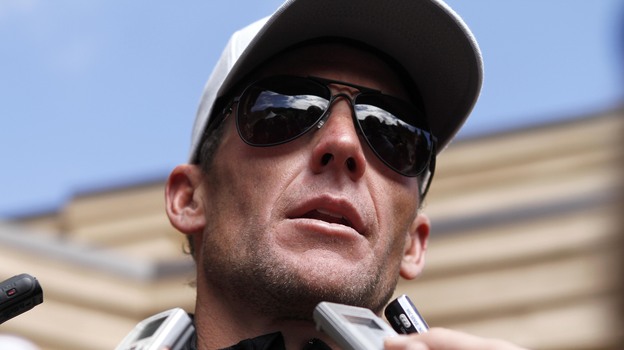
Lance Armstrong speaks to the media after the February 2011 Xterra Nationals triathlon. On Friday, the cyclist said he would no longer fight doping allegations.
Enlarge Jim Urquhart/AP Lance Armstrong speaks to the media after the February 2011 Xterra Nationals triathlon. On Friday, the cyclist said he would no longer fight doping allegations.
text size A A A
August 24, 2012
Lance Armstrong. He has a superhero's name, right out of the comic books. He moved from conquering stages of one kind — bike racing — to stages of another kind — cancer. He's chiseled and driven and known all over the world.
But now we learn that the superhero has given up in one of his biggest battles. He says he will no longer continue to fight charges by the United States Anti-Doping Agency that he used performance enhancing drugs to win bicycle races.
Because of the charges — and the subsequent stripping away of seven Tour De France titles — the popular image of Armstrong may be forever tarnished.
"We are all going to be let down by this news," says Harvey Shapiro, professor emeritus at the University of California, San Diego, medical school and an avid cyclist. "Those people who believe that he couldn't possibly dope are still going to believe it. And those who staunchly believe that he did dope are still going to believe it."
To some, Armstrong will be seen as a fallen idol. To others he remains a powerful symbol of someone who battled against the odds. The simplicity of loving him as a winner, however, has grown very complicated.
But in early 21st century America, we are accustomed to complex heroes — people thought to be good who ultimately disappoint. Our popular culture is teeming with conflicted champions and superheroes who discover their dark sides and turn out to be mirror images of archenemies.
So how are we supposed to feel about Lance Armstrong?
Shadow Over Everything
Tom Stokes, co-owner of Plum Grove Cyclery in Leesburg, Va., says his feelings about the conflicted superhero Armstrong are, well, conflicted
"When I was following Lance's tour victories," Stokes says, "I kind of knew in my heart of hearts that he was getting some help."
As a purveyor of high-end bikes, Stokes knows well the world of high-level professional biking. "It's dog eat dog," he says.
But Armstrong's apparent straight-from-the-lab advantage was OK with Stokes because he sensed that many other professional cyclists were pumped up on performance enhancing drugs as well. "I sort of knew that everybody was doing it," he says.
After all, bicycle racers have been trying to improve their endurance and speed for decades. "They were taking strychnine in the '20s and '30s," Stokes says. Enhancement was "always sort of a given."
Stokes is especially bitter that the Anti-Doping Agency continued to pursue Armstrong. Going after, and finally triumphing over Armstrong, Stokes says, comes at a great cost for biking. "There won't be positive fallout from this."
They are, he says, "making everybody look bad."
On one hand, Stokes says, Armstrong is still a winner. He has battled cancer. He has started the Lance Armstrong Foundation that employs a lot of people and raises piles of money for cancer research. Countless bicyclists and other people wear — and are inspired by — the foundation's bright yellow Livestrong wristbands. Stokes worries what might happen to those heroic efforts.
But Stokes also takes the news somewhat personally. He pauses and recalls magical moments — watching Armstrong break away on mountains and cross the finish lines first, time and time again.
"I don't think I'll ever get that feeling back," he says with a sigh. "There's a shadow over everything now. But that's just life."
Marred Masterpieces
The Hall of Fallen American Heroes is long and wide. There is a portrait of Bill Clinton. Over there is a sculpture of Tiger Woods. Toppled from that pedestal is Gary Hart. Watch out for the broken busts of Richard Nixon, John Edwards, Pete Rose, Mark McGwire and many, many others.
Should the curators now make room for Armstrong?
If Armstrong did what he's been accused of — and no longer officially refutes — does he belong in the museum of marred masterpieces?
As Shapiro points out, our society is already addicted to performance enhancement technology for ourselves. We use drugs and machines and other boosters to work and play in more advanced ways than our ancestors.
Such behavior creates tacit acceptance of performance enhancing in sports as we cheer on athletes to break one record after another, says Shapiro, who wrote a novel, Morphed, about doping athletes. The result is a demand for ever greater, often drug-supported, superheroic feats.
Rather than fight against the evidence, Shapiro says, Armstrong should have taken the opportunity "to commit himself to helping to wipe out doping, especially for young kids and young athletes, because he is a hero to them."
Heroics, Not Heroes
Maybe our adoration is misplaced. Perhaps we should all be focusing on the feats and not the performers. Heroes let us down; heroics don't.
In a 2009 Psychology Today piece about our fascination with the destruction of heroes, Lawrence Rubin, a psychology professor at St. Thomas University in Miami, posited that rather than focus on our fascination with fallen heroes, "we should turn attention from them to ourselves, and search for real and tangible ways to be heroic in our own lives."
Following the Armstrong news, Rubin says in an interview, "Heroes are part of both popular and the broader culture as well."
They "are the rarefied and purified elements of the best of humanity," Rubin says. They are "the distilled essence of our hopes, dreams, strength and desire for immortality."
Ultimately, Rubin says, sullied superheroes do teach us something about ourselves. Fallen heroes "don't let us down. Their 'fall' merely reflects the inevitability of our mortality — the inescapable awareness of our fragility and transience."

2013年1月20日 星期日

Inaugural Poet Richard Blanco


人物

他為總統獻上一首精神流亡者的詩

Craig Dilger for The New York Times
理乍得·布蘭科被選中在2013年的總統就職典禮上獻詩。

華盛頓——詩人理乍得·布蘭科(Richard Blanco)是古巴流亡者的兒子,他說,從巴拉克·奧巴馬躍上政治舞台的那一刻,他就感到與這個人有一種“精神上的聯繫”,奧巴馬成為美國的第44任總統。
奧巴馬在暢銷自傳《我父親的夢想》(Dreams From My Father)中,講述了他受到的多元文化熏陶。現在布蘭科也在努力通過寫作尋找自己的身份。他說自己處於多種文化之中的親身感受,令他對奧巴馬感到格外 親切。他是拉丁美洲裔、同性戀、是土木工程師,同時也是詩人。他的詩中滿懷憧憬地描繪了父母所離開的那片故土的風景與氣味。
現在,奧巴馬打算把布蘭科從相對安靜、不為人知的詩歌世界裡拉出來,讓他在全世界面前亮相。本周三(1月9日——譯註),總統就職典禮的策劃人將宣 布布蘭科將在2013年的就職典禮上獻詩,就像羅伯特·弗羅斯特(Robert Frost)和瑪雅·安吉羅(Maya Angelou)等著名詩人曾經做過的那樣。
“從大選之初,我就完全理解他的人生故事,以及他談論自己家庭的方式,當然還有他的多元文化背景,”布蘭科在電話採訪中說;他和伴侶住在緬因州貝塞爾的農村,“從這種意義上講,我們一直都有一種精神聯繫。我覺得從某些方面來說,當我在寫自己的家庭時,也是在寫他的家庭。”
1月21日,新總統將在國會大廈的台階上舉行就職典禮。布蘭科先生現在需要為這個場合創作一首新詩(根據憲法的要求,奧巴馬先生將於1月20日在白 宮宣誓就職)。就職典禮委員會的發言人艾迪·維森南特(Addie Whisenant)說,奧巴馬先生選擇布蘭科先生,是因為這位詩人“非常個人化的詩歌植根於身為美國人的意義這個概念”。
布蘭科的朋友們和其他詩人們說,總統不可能找到比他更合適的人了。
“我認為他被選中是因為他眼中的美國與總統眼中的美國非常相似,”利茲·巴爾馬塞達(Liz Balmaseda)這樣說;她在20世紀90年代中期與布蘭科相遇,當時他在詩歌界剛剛嶄露頭角,而她是《邁阿密先驅報》的專欄作家:“即使你不是流亡 者,不是拉美裔,不是同性戀,你也能理解理乍得詩歌中的渴望。”
布蘭科今年44歲,他在古巴受孕,在西班牙出生,在邁阿密長大並接受教育。他的母親是銀行出納,父親是會計。他的祖母在詩中被稱為 “abuela”,是個揮之不去,具有強大影響力的人物。家裡一直傳說他是以理乍得·M·尼克松(Richard M. Nixon)命名的,尼克松堅決反對菲德爾·卡斯特羅(Fidel Castro),所以是他父親最喜愛的總統。
布蘭科家境一般,感恩節他們吃豬肉(在他發表的第一首詩《美國》[América]中,他寫道有一年他堅持要吃火雞),在節日和過生日的時候,家裡播放拉丁音樂。他們生活的重心是食物和家庭,就像布蘭科在另一首詩《芒果,第61號》(Mango, Number 61)中寫的那樣,“櫃檯上覆蓋著西班牙文報紙,祖母和我蜷縮在櫃檯邊大快朵頤,芒果剖開的果肉,在手指間滑動,像融化了的金子。”
像很多移民家庭一樣,布蘭科先生的父母想讓兒子過上更好的生活。“最重要的是要生存下去,”他說。家人讓他在三個職業中選一個:醫生、律師或工程 師。他說他是個“數學奇才”,所以選擇了工程學,壓抑了自己創造性的那一面(以及他的同性戀取向),以贏得祖母的讚賞,祖母認為他太女性化了。
作為工程師,布蘭科曾參與橋樑設計、道路改良,以及南邁阿密市政廳的建設規劃。他說,但是到了25歲左右的時候,他開始問自己一些“身份與文化融 合”方面的問題,比如“我是誰,我屬於哪裡,我父母一直談論的古巴到底有什麼特別之處”,突然之間,他感到一種“強烈的”寫作“衝動”。
布蘭科決定再拿一個藝術和創意寫作方面的碩士學位,所以在佛羅里達國際大學上了夜校,他的工程學學位也是在這裡獲得的。他的導師坎貝爾·麥格拉思 (Campbell McGrath,他碰巧是給奧巴馬第一次就職典禮獻詩的伊麗莎白·亞歷山大[Elizabeth Alexander]兒時的朋友)說,布蘭科在數字和結構設計方面的特長,貫穿於他寫作的始終。
“理乍得永遠都是詩歌界的一位技藝高超的工程師,”麥格拉思教授說,“如果你跟他說這裡或者那裡需要改動一點兒,那你會看到一首完全不同的詩。他理解修改不只是修修補補,而是徹底重新構思,重新寫作。我知道這跟他的工程學技巧有關。”
布蘭科的第一本詩集《一百個火焰的城市》(City of a Hundred Fires)源自他的畢業論文,這本詩集贏得了1997年“阿格尼絲·林奇·斯塔雷特(Agnes Lynch Starrett)詩歌獎”,這是一個專門頒給處女詩集的文學獎項,享有盛譽。該詩集第二年在匹茲堡大學出版社出版。很快,請他任教的邀請紛至沓來。他曾 在新不列顛的中康涅狄格州立大學、喬治城大學、華盛頓的美國大學教過一段時間書,同時繼續工程師工作。直到最近才開始全職寫作。
《一百個火焰的城市》和布蘭科先生的第二本詩集《死亡沙灘指南》(Directions to the Beach of the Dead,亞利桑那大學出版社2005年出版)探討了他的古巴淵源,而他去年出版的最新詩集《尋找海灣汽車旅館》(Looking for the Gulf Motel)把他作為同性戀的生活與非常保守的古巴文化結合了起來。
“這本詩集努力想表達我如何適應這個世界,如何在主流同性戀者和古巴同性戀者之間找到自己的位置,”他說。
他的同事們說,現在布蘭科在寫回憶錄的同時,還在致力於一個全新的、極其困難的工作:為慶祝某個特定活動而寫詩,業內稱之為“應景詩”。在12月 12日得知自己被選中之後,他開始起草三首詩。他對此一直保密,甚至沒告訴他的母親。奧巴馬的團隊將從中選一首供他在就職典禮上朗誦。
“挑戰在於,”他說,“如何在詩中保持自我,保持親切的語調,但同時又能涵蓋‘美國是什麼’這個命題的大部分內容。”
布蘭科將成為美國的第5位為就職典禮獻詩的詩人;這個傳統始於約翰·F·肯尼迪,後被比爾·克林頓沿用,又在奧巴馬先生這裡延續。有些憤世嫉俗的人 可能會說,奧巴馬先生選擇一位拉美裔同性戀詩人是為了鞏固他的政治基礎,因為他選擇反對同性婚姻的里克·沃倫牧師(Rev. Rick Warren)在他2009年的就職典禮上祈禱,遭到一些同性戀者的反對。
但是布蘭科說,奧巴馬先生就職演講的主題“我們的人民,我們的未來”,與他產生了共鳴。他說,他想寫一寫“我認為全體美國人所擁有的社會中堅意識,以及努力工作、共創未來的理念,這種偉大的美國精神在200多年之後依然存在”。
本文最初發表於2013年1月9日。
翻譯:王艷


Poet’s Kinship With the President


WASHINGTON — From the moment Barack Obama burst onto the political scene, the poet Richard Blanco, a son of Cuban exiles, says he felt “a spiritual connection” with the man who would become the nation’s 44th president.Like Mr. Obama, who chronicled his multicultural upbringing in a best-selling autobiography, “Dreams From My Father,” Mr. Blanco has been on a quest for personal identity through the written word. He said his affinity for Mr. Obama springs from his own feeling of straddling different worlds; he is Latino and gay (and worked as a civil engineer while pursuing poetry). His poems are laden with longing for the sights and smells of the land his parents left behind.
 Now Mr. Obama is about to pluck Mr. Blanco out of the relatively obscure and quiet world of poetry and put him on display before the entire world. On Wednesday the president’s inaugural planners will announce that Mr. Blanco is to be the 2013 inaugural poet, joining the ranks of notables like Robert Frost and Maya Angelou.
“Since the beginning of the campaign, I totally related to his life story and the way he speaks of his family, and of course his multicultural background,” Mr. Blanco said in a telephone interview from the rural village of Bethel, Me., where he lives with his partner. “There has always been a spiritual connection in that sense. I feel in some ways that when I’m writing about my family, I’m writing about him.”
Mr. Blanco must now compose an original poem for the president’s ceremonial swearing-in on the steps of the Capitol on Jan. 21. (Mr. Obama will take the official oath at the White House on Jan. 20, as required by the Constitution.) Addie Whisenant, the inaugural committee’s spokeswoman, said Mr. Obama picked Mr. Blanco because the poet’s “deeply personal poems are rooted in the idea of what it means to be an American.”
Friends of Mr. Blanco’s, and fellow poets, say the president could not have found a more perfect fit.
“I think he was chosen because his America is very similar to the president’s America,” said Liz Balmaseda, who met Mr. Blanco in the mid-1990s when he was just emerging as a poet, and she was working as a columnist for The Miami Herald. “You don’t have to be an exile, you don’t have to be Latino or gay to get the yearning in Richard’s poetry.”
Mr. Blanco, 44, was conceived in Cuba, born in Spain and raised and educated in Miami, where his mother was a bank teller, his father a bookkeeper, and his grandmother — “abuela” in his poems — was a looming, powerful presence. Family folklore has it that he was named for Richard M. Nixon, his father’s favorite president, who took a strong stand against Fidel Castro.
The Blanco home was a modest place where pork was served on Thanksgiving (in his first published poem, “América,” Mr. Blanco writes that he insisted one year on having turkey), and Latin music played on holidays and birthdays. Theirs was a world dominated by food and family, where “mango,” as Mr. Blanco writes in another poem, “Mango, Number 61,” “was abuela and I hunched over the counter covered with the Spanish newspaper, devouring the dissected flesh of the fruit slithering like molten gold through our fingers.”
Like many immigrant families, Mr. Blanco’s parents wanted a better life for their son. “The business was survival,” he said. He was instructed that he had three career choices: doctor, lawyer or engineer. He was “a whiz at math,” he said, so he chose engineering, suppressing his creative side (and his homosexuality) to win the approval of his grandmother, who thought he was too feminine.
As an engineer, Mr. Blanco helped design bridges, road improvements and an architectural site plan for City Hall in South Miami. But in his mid-20s, he said, he began asking himself questions about “identity and cultural negotiations and who am I, where do I belong, what is this stuff about Cuba my parents keep talking about?” Suddenly he felt “a deep need” to write.
Mr. Blanco decided to pursue a master’s degree in fine arts and creative writing, taking courses at night at Florida International University, where he had earned his engineering degree. His mentor there, Campbell McGrath (who also happens to be a childhood friend of Elizabeth Alexander, Mr. Obama’s first inaugural poet), said Mr. Blanco’s facility with numbers and structural design shines through in his writing.
“Richard was always a complete engineer within poetry,” Professor McGrath said. “If you said it needs a little work here or there, a whole transfiguration of a poem emerged. He understood revision not to be just a touch-up job but a complete reimagining, a reworking. I know that’s connected to his engineering skill.”
Mr. Blanco’s first collection, “City of a Hundred Fires,” which grew out of his graduate thesis, won the 1997 Agnes Lynch Starrett Poetry Prize, a prestigious literary award for a first full-length book of poetry, and was published the next year by the University of Pittsburgh Press. Soon he was flooded with teaching offers; he taught for a time at Central Connecticut State University in New Britain, and Georgetown University and American University in Washington while continuing his engineering work. Only recently did he give up engineering to write full time.
While “City of a Hundred Fires” and Mr. Blanco’s second book, “Directions to the Beach of the Dead” (University of Arizona Press, 2005) explore his Cuban heritage, Mr. Blanco’s most recent collection, “Looking for the Gulf Motel,” published last year, incorporates his life as a gay man in the very conservative Cuban culture.
“It’s trying to understand how I fit between negotiating the world, between being mainstream gay and being Cuban gay,” he said.
Now Mr. Blanco, who is also at work on a memoir, is focused on an entirely new and, colleagues say, exceedingly difficult endeavor: composing what is known in his trade as an “occasional poem,” written to commemorate a specific event. After learning of his selection on Dec. 12 — he has kept it a secret even from his mother — he began drafting three poems; the Obama team will pick one for him to read at the inaugural ceremony.
“The challenge,” he said, “is how to be me in the poem, to have a voice that’s still intimate but yet can encompass a multitude of what America is.”
Mr. Blanco will be the nation’s fifth inaugural poet; the practice was begun by John F. Kennedy, picked up by Bill Clinton and continued by Mr. Obama. Cynics might say that in picking a Latino gay poet, Mr. Obama is covering his political bases; some gay people objected to his selection of the Rev. Rick Warren, an opponent of same-sex marriage, to deliver the invocation at his 2009 inauguration.
But Mr. Blanco says Mr. Obama’s inaugural theme, “Our People, Our Future,” resonates with him. He wants to write, he said, about “the salt-of-the-earth sense that I think all Americans have, of hard work, we can work it out together, that incredible American spirit that after 200-plus years is still there.”

2013年1月13日 星期日

杜紀川 (John Tu) 與孫大衛 (David Sun)

 杜紀川 (John Tu) 與孫大衛 (David Sun) 兩位是美國科技產業的奇人.


Andew Hsu指揮大師都聽什麼流行樂 à讓我想起71歲的企業奇人Tu先生在接受TVBS專訪時的末了拿束修去請教太平洋交響樂團指揮請教指揮之道的神情: 杜紀川 (John Tu) 與孫大衛 (David Sun)  片中很少露面的孫說他扮演太陽的角色 他姓Sun
1996 8  15 日,日本 Softbank® 公司以 15 億美元收購Kingston 80% 的股份。 (美國Sun跟日本Sun 缺的3億可以不用付啦!)
1999 7 月時,杜紀川與孫大衛先生以 4  5,000 萬美元,買回 Softback 公司擁有的 80% Kingston股份。
2011 Kingston 2010 年的營收為 65 億美元,是公司創立以來的最高紀錄。

林世堂:
大學同班同學問:留給後人寬廣的道路和榮景可期的未來而不是一個讓人懷念的光輝歷史。有何區別?您認為呢? 請表達您的意見,謝謝!
HC: 剛看完Vidal 的訪談 主持人問他自認為legacy 是什麼 他重複說:我一生沒殺人 Gore Vidal, iconoclastic author, 我看戈爾.維達爾(莊信正)


2013年年初Tu 接受台灣TVBS訪問 可參考

「最佳雇主」杜紀川 30億台幣分員工


1996年有2位華人老闆發了1億元現金,給員工當年終獎金,轟動全球,他們就是杜紀川和孫大衛,來自台灣,在洛杉磯創業,以善待員工出名,多年蟬聯美國「財星」的「最佳雇主」,而且是其中唯一的華人企業,他們在1987年經歷破產後,如何絕地重生,聽杜紀川娓娓道來。很多人提到全球最大記憶體模組製造商Kingston都會想到1億美元獎金的傳奇,TVBS新聞團隊飛到美國南加州,帶您一起了解「最佳雇主」的背後故事。

杜紀川的辦公桌,就在業務部正中央,沒有隔間、沒有獨立辦公室,跟大家一模一樣,總裁打個電話,同事全都聽得見。

金士頓總裁杜紀川:「我們都是一家人沒有什麼,你要是在家裡面你也不會跟你的兒子,噓噓噓不要跟他說,你知道你不能這樣,這就是我們,這就是我們。」

下班後和員工組搖滾樂團,打鼓、唱歌一起來,杜紀川說,對員工好,比對顧客好來得重要,因為對員工好,就有資深的員工,可以快速反應面對瞬息萬變的市場,記憶體模組市佔率全球第一,代表是全面稱霸的6成,而苦苦追趕的第2名,只有8%。

其實杜紀川和孫大衛兩人創業之初碰上了1987年,史上最可怕的黑色星期一股災,500萬美金一夕成空,還倒賠幾百萬,2人破產後身無分文,面對人生最大的挫折,在絕望中被迫中年創業。

杜紀川:「我會做一個流浪人,就是說我做一個失敗者,那一直是我最大的恐懼,即使到了現在也一樣,我是覺得相信就是,那是一股力量,當初給我就是說,你不能失敗,你不能成為一個失敗的人,你必須要再試一次,然後一定會成功的。」

走過1/4個世紀,來自台灣的杜紀川與孫大衛堅守成功信念,維持彈性與適應力,他們說重要的是,你到最後手上有幾袋豆子,而不是中途去算幾顆豆子。


今日的Kingston
Kingston已發展為全球最大的記憶體產品獨立製造商。 Kingston 全球總部設在美國加州的芳泉谷市,全球員工超過 4,000 人。 Kingston 被《財富》(Fortune) 雜誌評為「美國最佳任職公司」(Best Companies to Work for in America),其富含尊重、忠誠、彈性與正直的信條內容建立了企業文化典範。 Kingston相信投資在員工身上是非常重要的,並相信每位員工均是公司成功的主因之一。
Kingston的銷售夥伴遍及全球六大洲,包括代理商、經銷商、零售商與 OEM 客戶。 亦為半導體製造商與系統 OEM 廠商,提供合約製造與供應鏈管理服務。


1987 年時,Kingston® 以單一產品進軍市場。 創辦人杜紀川 (John Tu) 與孫大衛 (David Sun) 先生以一種能重新定義未來幾年業界標準的記憶體模組,來補足表面貼裝記憶體晶片嚴重短缺的情形。

Kingston採行了記憶體產業中最廣泛且嚴苛的測試流程、提供免費技術支援服務中心,以及始終如一的創新技術推展,自成立以來豎立了始終符合業界標準的高品質與可靠性標竿。


Kingston的歷史沿革。
1987 – 起源
1980年代時,高科技市場的表面貼裝記憶體晶片嚴重短缺,Kingston在此情況下發展成長。 創辦人杜紀川與孫大衛先生決心尋找出解決方案,於是結合其獨特的工程專業技術,設計出革命性的全新單一內嵌記憶體模組 (SIMM),而且它能運用可輕易取得的舊通孔元件。 這種意念上的一致遂創造出全新技術和產業標準,新公司也於 1987 年 10 月 17 日成立。
1989
Kingston與競爭者的差異,在於實行了百分之百的測試,並提供穩定的品質,進而在市場上位居領導地位。
1990
Kingston將其業務拓展至第一個非記憶體產品線,即處理器升級。
1992
Kingston獲 Inc. 雜誌評定為美國成長最快的私人公司之首。
1993
Kingston將業務拓展至網路與儲存裝置產品線。
1994
Kingston推出 DataTraveler® 與 DataPak 可攜式產品。
Kingston首次接受評估便通過 ISO 9000 認證,此等佳績實屬難得。
《富比士》(Forbes) 雜誌在其「美國 500 大私人公司」(The 500 Largest Private Companies in the U.S.) 名單當中,將Kingston列為第 367 名。Kingston 以 4 億 8,900 萬美元的營收上榜。
1995
隨著 1995 年的銷售額超過 13 億美元,Kingston成為了「十億元俱樂部」的一員。 以「十億分感謝!」(Thanks a Billion!) 為標題,在《華爾街日報》(The Wall Street Journal)、《橘郡紀事報》(Orange County Register) 與《洛杉磯時報》(Los Angeles Times) 刊登廣告,並列出Kingston全體員工的名單以作答謝。
1996
8 月 15 日,日本 Softbank® 公司以 15 億美元收購Kingston 80% 的股份。
Kingston 與 Toshiba 公司共同行銷 Toshiba 電腦的記憶體升級事宜。這是電腦 OEM 廠商與記憶體製造商首次合作建立共同品牌模組。
12 月時,杜紀川與孫大衛先生因為這次的收購,提撥了1 億美元做為員工紅利。
1997
Kingston在英國開設歐洲總部。
1998
Kingston被《財富》(Fortune) 雜誌評定為「美國 100 大最佳任職公司」(100 Best Companies to Work for in America) 第二名。
1999
7 月時,杜紀川與孫大衛先生以 4 億 5,000 萬美元,買回 Softback 公司擁有的 80% Kingston股份。
2000
《富比士》(Forbes) 雜誌在其「美國 500 大私人公司」(The 500 Largest Private Companies in the U.S.) 名單當中,將Kingston列為第 141 名。Kingston以 1999 年的 15 億美元營收上榜。
2001
Kingston榮獲《產業週刊》(IndustryWeek) 選為「全球前 5 大製造公司」(Top 5 Global Manufacturing Company)
2002
1 月時,Kingston連續第五年榮登《財富》(Fortune) 雜誌的「100 大最佳任職公司」(100 Best Companies to Work For) 排行榜。
7 月時,Kingston推出領先業界的專利記憶體測試器。
2003
4 月時,Kingston榮獲 Dell 公司頒發「最佳整體績效的多元供應商獎」(Diverse Supplier Award for Best Overall Performance)。
6 月時,Kingston榮獲「優良工作環境評選機構」(Great Place to Work Institute) 頒發「傑出公正」(Excellence in Fairness) 獎項。
10 月時,Kingston推出有關模組製造的「環保先導計畫」(Green Initiative)。
2004
iSuppli 機構將Kingston列為第三方記憶體市場的全球記憶體模組製造商之首。
8 月時,Kingston將快閃記憶卡保固期限延長為「終身」保固。
2005
iSuppli 機構連續第二年,將Kingston列為第三方記憶體市場的全球記憶體模組製造商之首。
7 月時,Kingston在伺服器記憶體的動態超負荷測試器方面,取得了美國專利。
9 月時,Kingston在中國上海開設世界最大的記憶體模組製造廠。
2006
iSuppli 機構連續第三年,將Kingston列為第三方記憶體市場的全球記憶體模組製造商之首。
3 月時,Kingston推出第一個完全安全、百分之百保護隱私的 USB 隨身碟,它具有 128 位元的硬體型加密功能,同年稍晚推出了 256 位元硬體加密功能版本。
4 月時,Kingston推出全緩衝 Dimm (FBDIMM),突破 16GB 的障礙。
9 月時,Kingston因 FB-DIMM 產品的卓越支援、品質與及時交付榮獲 Intel 公司的「傑出供應商獎」(Outstanding Supplier Award)
2007
iSuppli 機構連續第四年,將Kingston列為第三方記憶體市場的全球記憶體模組製造商之首。
富比士 (Forbes) 在其「美國 500 大私人公司」(The 500 Largest Private Companies in the U.S.) 名單當中,將 Kingston 列為第 83 名。
Inc. 雜誌根據營收表現,將 Kingston 評定為「最快速成長私人公司」的第一名。
2008
iSuppli 機構連續第五年,將Kingston列為第三方記憶體市場的全球記憶體模組製造商之首。
8 月時,Inc.com 的「100 大 Inc.5000 公司」(Top 100 Inc.5000 Companies) 在「成長總金額」(Gross Dollars of Growth) 與「整體營收」(Overall Revenue) 兩項,均將Kingston列為第二名。
11 月時,富比士 (Forbes) 在其「美國 500 大私人公司」(The 500 Largest Private Companies in the U.S.) 名單當中,將Kingston列為第 79 名。
2009
Kingston 2008 年的營收為 40 億美元,是公司創立以來第三高。 自 2007 年起,記憶體產品的出貨量增加了 41%。 
iSuppli 機構連續第六年,將Kingston列為第三方記憶體市場的全球記憶體模組製造商之首。
8 月時,Inc.com 的「100 大 Inc.5000 公司」(Top 100 Inc.5000 Companies) 項目根據營收表現,將Kingston評定為「私人公司」(Private Companies) 第五名。
10 月時,富比士 (Forbes) 在其「美國 500 大私人公司」(The 500 Largest Private Companies in the U.S.) 名單當中,將Kingston列為第 97 名,同時在電腦硬體類別方面,將 Kingston 列為第一名。
2010
Kingston 2009 年的營收為 41 億美元,是公司創立以來第二高。
iSuppli 機構以Kingston從 2007 年的 27.5%、2008 年的 32.8%,到升至 40.3% 的市場佔有率,將其列為第三方記憶體市場的全球記憶體模組製造商之首。
2011
Kingston 2010 年的營收為 65 億美元,是公司創立以來的最高紀錄。


網誌存檔