NHK的 DIVE IN TOKYO系列節目
Join us on a journey to discover the real
Tokyo as we
dive into its historic old towns and encounter many fun surprises along the way.
Read moreYouTube · NHK WORLD-JAPAN
YouTube · NHK WORLD-JAPAN
YouTube · NHK WORLD-JAPAN
YouTube · NHK WORLD-JAPAN
Tokyo: where both tradition and the latest trends coexist. Join us on a journey to discover the real
Tokyo as we
dive into its historic old towns and ...
Read more Oct 28, 2025 — Hinohara is a mountain village located along the border between Tokyo and Yamanashi Prefecture. We explore its ridge trails, which served as ...
Dive in Tokyo ... We visit Okutama, a town nestled in a mountain range on
Tokyo's western edge, and learn about the complex history behind a large reservoir that ...
Read more Kagurazaka is a neighborhood in central
Tokyo that retains an old-school charm. We explore cobblestone side streets, meet a geisha community, and see how locals ...
Read moreDec 9, 2025 — Join us for a hike up Mt. Takao in western Tokyo, said to be the most visited peak in the world. Along the way we'll learn about its samurai ...
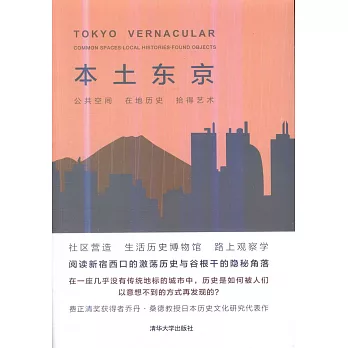
【#Place 國際週報】002: 本土東京:公共空間: 在地歷史 拾得藝術 Tokyo Vernacular: Common Spaces, Local Histories, Found Objects. Tokyo’s best restaurants for power dining
本書考察了從20世紀60年代開始對東京本土歷史的利用和動員所發生的四個場所:公共廣場、居住社區、道路和博物館。這四個場所中的每一個都代表了一種類型的活動,都與城市所有權以及市民們圍繞著這些所有權提出的基本訴求相關聯,也象徵了對於城市空間的一種態度。這四者一起構成了一組關於空間和物品的所有權的分類模型:屬於所有人,屬於對它進行共同佔有的一部分人,屬於那些對它進行改造的人,屬於被官方界定的遺產範圍之內。
作者:喬丹·桑德,在美國喬治城大學教授日本歷史。他在東亞都市生活和物質文化等領域著述廣泛。其著作《現代日本的住宅與家庭》(House and Home in Modern Japan)曾獲得2004年的費正清獎。
Tokyo Vernacular: Common Spaces, Local Histories, Found Objects ハードカバー – 2013/7/19
内容紹介
Preserved buildings and historic districts, museums and reconstructions have become an important part of the landscape of cities around the world. Beginning in the 1970s, Tokyo participated in this trend. However, repeated destruction and rapid redevelopment left the city with little building stock of recognized historical value. Late twentieth-century Tokyo thus presents an illuminating case of the emergence of a new sense of history in the city’s physical environment, since it required both a shift in perceptions of value and a search for history in the margins and interstices of a rapidly modernizing cityscape. Scholarship to date has tended to view historicism in the postindustrial context as either a genuine response to loss, or as a cynical commodification of the past. The historical process of Tokyo’s historicization suggests other interpretations. Moving from the politics of the public square to the invention of neighborhood community, to oddities found and appropriated in the streets, to the consecration of everyday scenes and artifacts as heritage in museums, Tokyo Vernacular traces the rediscovery of the past—sometimes in unlikely forms—in a city with few traditional landmarks. Tokyo's rediscovered past was mobilized as part of a new politics of the everyday after the failure of mass politics in the 1960s. Rather than conceiving the city as national center and claiming public space as national citizens, the post-1960s generation came to value the local places and things that embodied the vernacular language of the city, and to seek what could be claimed as common property outside the spaces of corporate capitalism and the state.
レビュー
"Sand has succeeded in producing a nuanced and historicized account of preservation in Tokyo and relating preservation to the politics of creating a usable urban past."--Sally A. Hastings"Journal of Japanese Studies 41, no. 1" (03/01/2015)
"Written with grace and acuity, Tokyo Vernacular offers valuable reflections on the meanings of community, citizenship, rights, property, history, and materiality for urbanites faced with the rapid transformations of Japan's postindustrial consumer society."--David R. Ambaras"American Historical Review" (12/01/2014)
"[The book] fills an important gap in the English-language literature about Japanese heritage and preservation . . . a rich and ambitious work that achieves what it set out to do."-- (03/01/2015)
"Tokyo Vernacular has a fascinating and highly-convincing story to tell . . . a powerful historical narrative of the reconstitution of Tokyo's spatial politics."-- (11/01/2014)
"Tokyo Vernacular . . . is a treasure trove of valuable information, insights, and perspectives on a vast topic and a work that merits reading several times over so that its nuances and subtleties can begin to sink in."-- (10/01/2014)
商品の説明をすべて表示する
登録情報- ハードカバー: 208ページ
- 出版社: Univ of California Pr (2013/7/19)
- 言語: 英語
- ISBN-10: 0520275667
- ISBN-13: 978-0520275669
|
---
Tokyo has more Michelin star restaurants than any other city in the world.
Joel來談日本
//......從現存最早期的東京默片《深川》開始,鏡頭把木造房舍密集的街道、江戶時代開鑿的運河、甚至老店招牌都一併收進畫面:少女沿街叫賣納豆,為一家人的生計奔走,那種貼近地面、貼近日常的呼吸,讓人明白東京的底色並非霓虹,而是庶民的韌性。
這樣的視角也牽出一位後來定義「東京影像」的人物:小津安二郎,小津就在《深川》上映不久,約莫在 1923 年回到深川,進入蒲田攝影所從助理做起,抱著「沒有大學文憑也要做出一番事業」的倔強個性,準備在光影中把他熟悉的下町世界講述出來。
就在他踏入片廠的下一個月,關東大地震把整片街區燒成灰燼,城市的「失落」從此不再是抽象形容,而是具體到每一條巷弄、每一戶人家;也正因為如此,東京往後的電影史,幾乎等同於一部關於毀滅與再生的長篇報告。
震災過後不久,電影製作竟迅速復甦,彷彿城市需要一種新的方式把傷口說出來,也把「活下去」的理由重新拼回來。這時候出品的一齣默片中,以失親少女與扒手少年的相遇為主線,讓少年在東京車站丸之內廣場賣報、賣納豆,將都市復興與人性再生交織在一起;更細碎卻同樣有力的,是神田廢墟上棚屋再起、菜單寫著「咖哩飯」的景象。
許多失去店鋪的餐飲業者把咖哩飯當作新生活的入口,這道料理後來在全城普及,連小津自己都在回憶裡提到:有一次在片廠為了吃不到咖哩飯而憤而抗議,竟意外被長官認為「有魄力」,成了他獲得執導機會的轉捩點。
到了1931年的《東京合唱》,世界經濟大蕭條讓失業者塞滿街頭,主角被解雇後到咖哩飯店幫忙,電影把「奪回失去的東西」拍得克制卻倔強,像是在告訴觀眾:東京的力量不在於不受傷,而在於受傷後還能再站起來。
只是,城市的命運很快被另一股更沉重的力量拖入陰影。1925年《治安維持法》實施之後,審查成為常態,連接吻鏡頭都可能被剪掉;1937 年日中戰爭爆發後,電影界被捲入動員,小津等創作者被徵召,片場與戰場的界線變得模糊。戰局惡化時,銀幕上卻仍出現輕快音樂劇,用「高唱愛國歌曲」的口號製造虛假的明亮,甚至把防空演習拍得像日常遊戲,等到空襲真正頻繁,這種粉飾反而顯出毒性,讓人看見影像如何被權力挪用。
即便如此,仍有人用更微妙的方式抵抗:木下惠介在《陸軍》的結尾讓母親追著出征兒子的背影落淚,那滴眼淚沒有推翻體制,卻把人的真實情感留在了鏡頭裡,不過,木下也因此付出被質疑、被限制創作的代價。東京在戰火下被逼著學會沉默,而電影則在沉默裡替城市保留了一點良知的回聲。
1945年東京化為焦土,廢墟不只是背景,更成了戰後價值觀重寫的舞台。有音樂劇在澀谷殘骸間取景,拍人們從零開始搭起生活:疏散到鄉下的孩子回城團聚,澡堂裡不同身份的人在同一池熱水裡並肩而坐,那一幕像是在宣告「新的社會」要從平等與共處開始。盟軍佔領時期的GHQ也深度介入電影,甜美情節劇與接吻場景被刻意推向主流,審查者甚至覺得「沒有接吻很不自然」,於是銀幕上的親密變成一種被導入的現代性;連「宮城廣場」都改稱「皇居前廣場」,象徵性的空間被轉化為情侶約會的場所,東京的公共記憶在語言與影像中被重新命名。
小津在1946年自戰俘營返國後選擇不直接拍戰爭,卻在《長屋紳士錄》裡把創傷放進下町長屋:女人阿種收留走失孩子,從厭煩到依戀,再到孩子離開後的巨大失落,結尾上野公園的尋找與鏡頭裡真實的戰爭孤兒,讓溫情與傷痕同時存在。到了 1952 年日本重新恢復主權,東京帶頭奔向經濟自立,電影開始記錄另一種「重建」:工廠黑煙被當成繁榮象徵,千住火力發電廠的「鬼怪煙囪」在《煙突的見える場所》裡成了信念的圖騰,被解讀為和平、自由、平等與愛的支柱。
同一年《東京物語》也以煙囪開場,卻把鏡頭轉向家庭內部的裂縫。老夫婦從尾道到東京探望子女,忙碌的醫生兒子與經營美容院的女兒把父母當成行程裡的一段插曲,「核心家庭」的興起讓傳統羈絆慢慢鬆動;反倒是戰死次子的遺孀細心照料,帶他們坐觀光巴士、逛銀座松屋百貨,讓觀眾在冷靜的畫面裡感到刺痛。
1960年代高度成長期的樂觀也被捕捉下來,《いつでも夢を》把東京鐵塔當作眺望新時代的窗口,同時又拍到汽車暴增引發的「交通戰爭」,提醒繁榮並非純粹光亮。而小津的遺作《秋刀魚の味》更把變遷推到眼前:為迎接奧運而大規模開發的東京實景穿插其間,角色飲酒談起「如果日本打贏了會怎樣」,輕描淡寫卻像低語般吐出一代人的戰爭陰影;最後留下的是父親獨坐家中的寂寞,像為戰後家庭的鬆散畫下長長的停頓。
當東京一路衝向泡沫經濟,外來者的目光提供了另一面鏡子。德國導演溫德斯因爲迷戀小津的作品而來到東京,卻在街頭看到與下町世界截然不同的都會:年輕人在雨中模仿美國文化跳舞,城市充滿「模仿與慾望」的躁動,彷彿連自我認同都在高速複製中變形。
泡沫破滅後,東京進入漫長停滯,電影又把焦點拉回人的內部裂縫。1998 年庵野秀明的作品讓澀谷成為迷惘的縮影:少女在街頭徘徊、以「援助交際」貼近慾望深淵,呼叫器與手機帶來新的連結方式,人際關係卻更像碎片;片末的澀谷川長鏡頭讓暗渠化的河流短暫露出地面,像把被城市掩埋的情緒也一併翻到光下。
當時間推進到了 2020 年疫情期間,完全改變了全球生活節奏,溫德斯再訪東京,看到的不是泡沫時代的喧囂,而是公共空間依然井然有序,人們對公園與公共廁所等場所抱持尊重,讓他感覺「有重要的事必須在這裡完成」。
這份觀察促成他拍出《我的完美日常》,讓役所廣司飾演澀谷公共廁所清潔工「平山」,溫德斯刻意讓這個名字與小津電影反覆出現的主角同名,像是一條跨越世代的隱形線索,把東京從戰後家庭的解體、泡沫年代的迷失,一路牽回到疫情後對日常秩序與謙遜生活的重新凝視。
現在回望東京依舊是一座為了「維持某種不變」而持續更新的城市,但電影讓那些被拆除、被改名、被遺忘的層次仍可被看見。小津說自己像豆腐匠,只會做豆腐,旁人看來都差不多,他卻在每一部作品裡投入新的興趣;也正是這種近乎固執的專注,使東京的百年記憶沒有被重建工程完全覆蓋。
電影不只是藝術與娛樂,更像一座不會倒塌的城市檔案館:當街道改向、建築更迭、世代輪替,仍有人能透過光影把東京的過去與今天接在一起,繼續把這座城市的靈魂講出來,而這就是有歷史的社會與歷史被強制中斷過的社會最大的不同。





沒有留言:
張貼留言