"The Soviet Mind: Russian Culture Under Communism" by Isaiah. Berlin《苏联的心灵》 作者:(英)以赛亚·伯林

,版本:译林出版社,2010年7月版,定价:28.00元 《苏联的心灵》收录了以赛亚·伯林关于苏联 的一些从未发表过的文章。既有对二战后他与帕斯捷尔纳克和阿赫玛托娃等苏联作家的几次著名会晤的记叙,也有他呈交给英国外交部的关于斯大林统治下 苏联艺术状况的公文。以赛亚·伯林对俄国知识阶层有深刻的同情与了解,他为我们描述了一段知识分子的心路。
The Soviet Mind: Russian Culture Under Communism
Isaiah Berlin, Henry Hardy, Strobe Talbott - 2004 - 296 pages
books.google.com
glam·our glam·or (glăm'ər) 
also
n.
- An air of compelling charm, romance, and excitement, especially when delusively alluring.
- Archaic. A magic spell; enchantment.
[Scots, magic spell, alteration of GRAMMAR (from the association of learning with magic).]
USAGE NOTE Many words, such as honor, vapor, and labor, are usually spelled with an -or ending in American English but with an -our ending in British English. The preferred spelling of glamour, however, is -our, making it an exception to the usual American practice. The adjective is more often spelled glamorous in both American and British usage.
Outis or Utis or Utisz or ουτις or OYTIΣ (pronounced: "outis") – means Nobody is an often used pseudonym. Artists, writers and others in public life use this pseudonym in order to hide their identity.
Contents [hide] |
Origin of the name

"OYTIΣ" was used as a pseudonym by the Homeric hero Odysseus, who fought Polyphemus Cyclops, and had put out the monster's eye. Polyphemus shouted in pain to the other Cyclopes of the island that "Nobody" was trying to kill him, so no one came to his rescue. The story of the Cyclops can be found in the song of the Odyssey, chapter 9 (in the Cyclopeia). The name Nobody can be found in five different lines of Chapter 9. First of all in line 366:
- "'Cyclops, you asked my noble name, and I will tell it; but do you give the stranger's gift, just as you promised. My name is Nobody. Nobody I am called by mother, father, and by all my comrades.'
Then in line 369:
- "So I spoke, and from a ruthless heart he straightway answered: 'Nobody I eat up last, after his comrades; all the rest first; and that shall be the stranger's gift for you.'
Then in line 408:
- "Then in his turn from out the cave big Polyphemus answered: 'Friends, Nobody is murdering me by craft. Force there is none. But answering him in winged words they said: If nobody harms you when you are left alone, illness which comes from mighty Zeus you cannot fly. But make your prayer to your father, lord Poseidon".
In line 455:
- "Are you sorry because that wicked Nobody brought your master down with drink and blinded him?".
And in line 460:
- "I should thus have some revenge for the harm that no-good Nobody has done me".
People with this pseudonym

- Edgar Allan Poe (1809 - 1849) In the New York Evening Mirror (January 14, 1845), Edgar Allan Poe launched an article denouncing the well-known poet Henry Wadsworth Longfellow as a plagiarist. Longfellow remained silent on the matter, but a defender for Longfellow did appear, an anonymous writer who signed his letters only as "Outis," meaning "nobody." A great deal of speculation has centered around the identity of Outis, several scholars agree that he was none other than Poe himself. They believe that Poe himself wrote the defense of Longfellow, so Poe and Outis are the same person.
- Henry Stevens of Vermont (1845 - 1886) American rare book dealer in England. He graduated from Yale. In 1845 he went to London 'on a book-hunting expedition' and remained there until his death. As an antiquarian he helped to build up several great American libraries. In 1877 under the pseudonym of ' Mr. Secretary Outis,' he projected and initiated a literary Association entitled The Hercules Club.

- Hablot Knight Browne (1815 – 1882) British graphic artist, well known as Charles Dickens's illustrator. Among others he illustrated The Pickwick Papers, David Copperfield and Martin Chuzzlewit. Browne adopted the pseudonym "N. E. M. O." (Latin for "Nobody." Soon, however, he became "Phiz," this artistic pseudonym well suited for the creator of "phizzes"—delightful caricatures, as seen in his illustrations.

- Camille Claudel (1864 –1943) French sculptor and graphic artist (she was Auguste Rodin's model, student and lover) had a domesticated canary (Serinus canaria) with this name: Nemo. The small songbird was mentioned as alter ego of Camille Claudel in some personal letters by Rodin.

- István Orosz (1951-) Hungarian visual artist often used pseudonym is Utisz (the Hungarian spelling of the Greek name "ουτις," or "OYTIΣ", pronounced: "outis") The hidden meaning of the ancient tale is very close to the visual pitfalls created by István Orosz. He likes to use visual paradox, double meaning images and optical illusion – all of them are some kind of attack upon the eye, an Odysseus' gesture in a symbolic way.
"Orosz doubles even himself: from time to time, he signs his works as Utisz, the pseudonym borrowed from Cyclopeia. The most artful Greek, Odysseus, also used as a pseudonym the word meaning No-man, and as we know, with that exchange of names, then Polyphemos the Cyclops’ eye came into the world. The gouging out of the eye, or deception to the eye, also accompanied the works of Orosz/Utisz, if only metaphorically. Trompe l’oeil – we refer with an art historical expression to those images in which illusion guides the gaze. Orosz often uses such artifice, though he is completely aware of the danger of these deceptive procedures. He put it this way at a symposium a few years back: I hope my intentions are clear, in the ambitions of a Hungarian artist at the turn of the century, who does not tell the truth only to be caught in the act." (Introduction by Guy d'Obonner)
- No One is a nu metal music group from Chicago, Illinois. The original name of the four-piece band was Black Talon. They are active from 1994.
- Nobody (band), a Japanese rock duo consisting of Yukio Aizawa (相沢 行夫) and Toshio Kihara (木原 俊雄)
- Noname is a penname of Harold Cohen (1854-1927) American author. He wrote science fiction novels under the pseudonyms Harry Enton and "Noname." After some titles his well known series Frank Reade was continued by Luis Senarens (1865-1939) who used "Noname" as well.

- Captain Nemo is a fictional character of Jules Verne's novels Twenty Thousand Leagues Under the Sea and The Mysterious Island . "Nemo" is Latin for "no-one". Captain Nemo is a mysterious hero and a scientific genius who roams the depths of the sea in his submarine, the Nautilus, which he built on a deserted island.

- Little Nemo is the main character in a series of the comic strips by Winsor McCay (1871-1934). The weekly comic strips appeared in the New York Herald between 1905 and 1913. The strip related the surreal dreams of a little boy: Nemo (meaning "no one" in Latin.
- My Name is Nobody (also known as Il mio nome è Nessuno and Lonesome Gun) is a 1973 spaghetti western comedy film. The film was directed by Tonino Valerii and by Sergio Leone.
See also

External links
戈巴契夫為蘇聯帶來了開放和變革,卻沒能阻止它解體。
他沒有理解的是,放鬆一個建立在脅迫、權力和恐懼之上的制度等於是在摧毀它。
戈巴契夫的改革曾令西方過度樂觀,認為歷史將朝著自由主義的道路直線前進。但復興帝國的想法深植於俄羅斯的民族心理,一個和平統一的歐洲大陸的理想也愈發遙遠。
在西方大部分國家,戈巴契夫被視為有遠見的領導人。
但對習近平來說,蘇聯解體正是他畢生致力於避免的政治衝擊波。2013年,他把蘇聯的崩潰稱為「深刻教訓」。
普丁將蘇聯解體視為災難和恥辱,歸咎於戈巴契夫屈從於西方的要求。他以恢復對俄羅斯領土的統治為名發動了對烏克蘭的戰爭,還延伸到對個人自由和政治自由的控制。
米哈伊爾·戈爾巴喬夫,根本上而言,他是蘇聯人
google 翻譯:
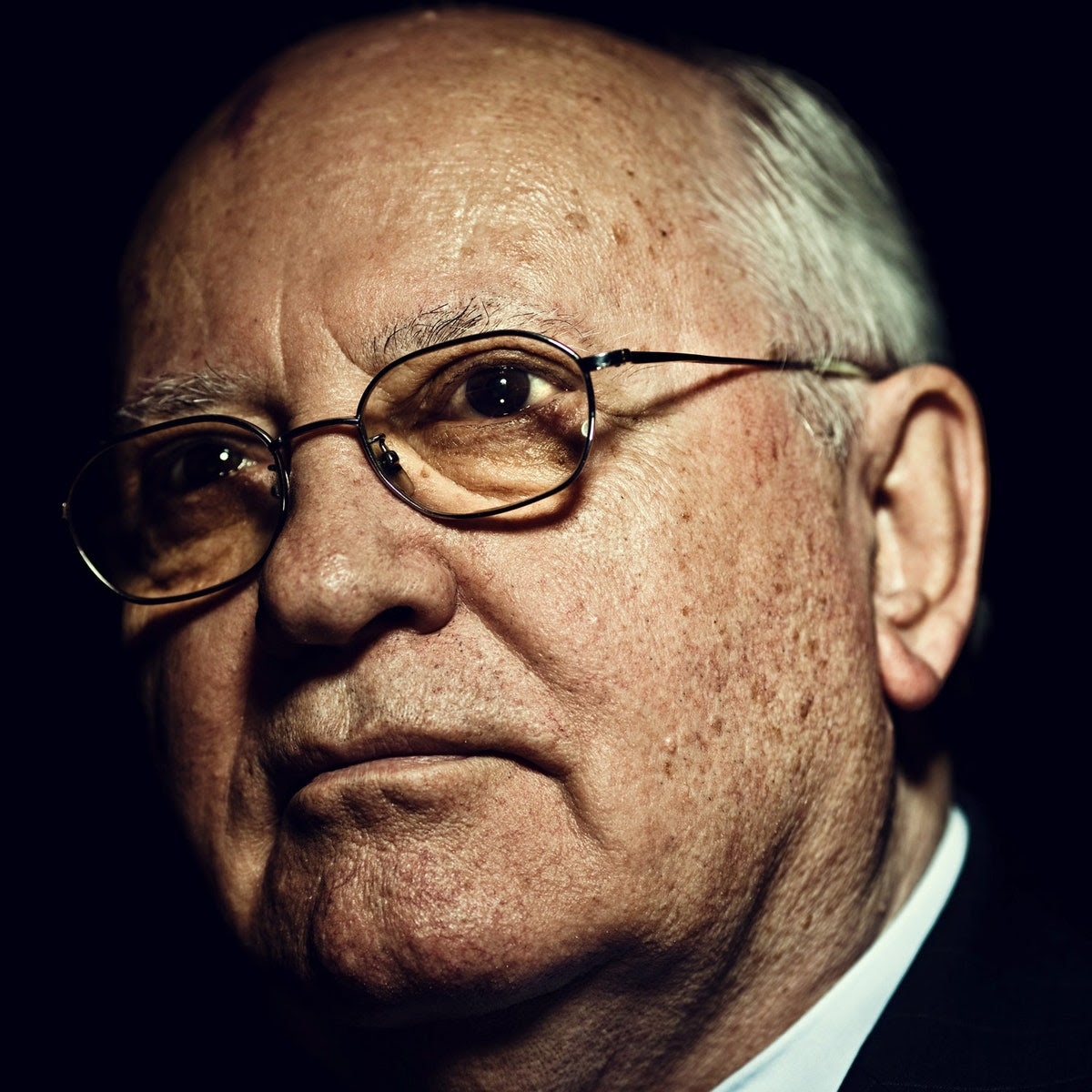
蘇聯的最後一位領導人試圖使他的國家現代化和改革——儘管他沒有把它想像成一個帝國。2009 年 3 月 19 日,米哈伊爾·戈爾巴喬夫在華盛頓特區。
斯蒂芬·沃斯 / Redux 攝
米哈伊爾·戈爾巴喬夫(Mikhail Gorbachev)比蘇聯活了 30 多年——這足以讓俄羅斯放棄過去的許多改革、現代化努力和誠實的對抗,這些都標誌著他成為最後的中央委員會總書記。在對戈爾巴喬夫歷史地位的全面評價中,馬沙·格森也寫到,他看到自己成為俄羅斯知識界鄙視的對象,以及大多數將他與“不穩定、混亂,以及曾經熟悉的一切的終結。”格森指出,戈爾巴喬夫最大的成就源於他“動搖”的能力,他的“世界觀可能會受到挑戰和改變”。 “戈爾巴喬夫是那種罕見的政治家,他相信世界和其中的人們——包括他自己——可以比他們通常看起來的更好,”格森寫道。 “他政治生涯的最大悲劇是,在過去的二十三年裡,俄羅斯一直被相反的政治家統治。”——伊恩·克勞奇,時事通訊編輯
池田大作( Daisaku Ikeda)對話錄文集:Dawn After Dark with René Huyghe, (1991/2008),
- Dawn After Dark with René Huyghe, (1991), Weatherhill, ISBN 978-0-8348-0238-4; London and New York: I. B. Tauris, Reprint edition, 2008; ISBN 978-1-84511-596-8
20世紀的精神教訓:戈爾巴喬夫與池田大作對話錄
32開,36萬字,520頁;1996日文/2005中文:注意日文書名。
我一翻開,兩人大談歌德/漸進革命等等,因為採筆談,所以"引用"可以很淵博

https://hcbooks.blogspot.com/2007/10/20.html
2016
池田大作( Daisaku Ikeda)與世界賢人、學者的對話錄,可能有數十本了。台灣早期的出版者有遠流等。
台北市的正因文化出版社出了十幾本對談集。有意思的是,下述博客來網站似乎未包括這些書。
| |||||
|


沒有留言:
張貼留言