問: why camus essay book titled " Noces"
AI Overview
Albert Camus titled his 1938 collection of lyrical essays Noces (translated as Nuptials or Weddings) to signify an intense, physical, and spiritual union between himself and the natural beauty of the Algerian landscape.
The title represents a celebration of life and a "marriage" to the world, rejecting the need for religious afterlife in favor of a passionate engagement with the present moment, sea, and sun.
Key Reasons for the Title "Noces"
- The Marriage of Man and Nature: The essays, particularly "Nuptials at Tipasa," depict a sensory, almost mystical, communion where the human body merges with the Mediterranean surroundings.
- Embracing the Present Moment: The "nuptials" are with the "now." Camus advocates for fully experiencing life’s beauty without looking for external meaning or transcendental hope.
- The Union of Opposites (Absurdism): The collection contrasts the immense joy of life (the Mediterranean sun) with the certainty of death, merging these two contradictory forces into a single, cohesive experience of living.
- Symbolic "Sacred Union": Similar to the ancient Eleusinian mysteries, Camus explores a hieros gamos (sacred marriage) between human consciousness and the natural world, even acknowledging the "dark" or silent aspects of that union.
The essays, including "Nuptials at Tipasa" and "The Desert," explore this intense, fleeting union as a direct experience rather than an abstract concept.
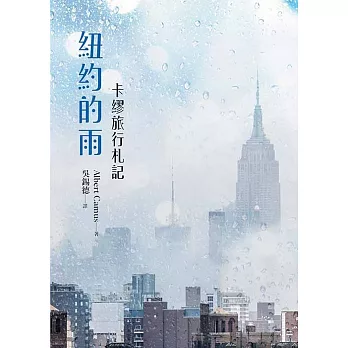
吳錫德譯《紐約的雨 -卡繆旅行札記》最開始收的是
《婚禮集》 (1939)
※ 提帕薩的婚禮
※ 傑米拉的風
※ 阿爾及爾的夏天
※ 孤寂
Albert Camus 1947的“流放之雨 "a rain of exile,"” "《紐約的雨》The Rains of New York" (written after a 1946 trip) as "a rain of exile," 。紐約市2026年前三個月的謀殺和槍擊事件數量創下了歷史新低。全市重大犯罪率下降了5.3%,其中布朗克斯區的重大犯罪率下降了9.4%。入室竊盜案下降了20.6%,創歷史新低。公共住宅也迎來了有史以來最安全的開年,謀殺、槍擊、槍擊受害者和搶劫案數量都創歷史新低......社區安全計畫、預防措施、住房保障、青少年計畫和有針對性的警務策略比政治恐嚇宣傳更有效。。送給紐約市的康定怡夫婦 雖然他們不見得看得到這 13 年前 Hanching Chung 2013年3月5日 ;2026 The Met Opera’s Desperate Hunt for Money
《紐約的雨》
阿爾貝·加繆在1947年發表的散文《紐約的雨》(寫於1946年紐約之行之後)中,將紐約的雨描述為“流放之雨”,並形容其“充沛、粘稠、濃重”。他描繪了雨水傾瀉在高聳的混凝土建築之間,為城市街道帶來憂鬱的氣氛,並構成了一種黑暗而強烈的體驗,卡格西的《書蟲漫談》中如此寫道。
加繆《紐約的雨》的關鍵要素
「流亡之雨」:這句常被引用的片語象徵著一種深刻的疏離感,潮濕和陰鬱似乎將觀察者疏離。
氛圍與場景:他將雨水描述為在紐約高樓大廈之間營造出一種「井底的黑暗」。
黏稠而濃重:他使用了「充沛、黏稠、濃重,它不知疲倦地傾瀉而下」這樣的短語。
與家鄉的對比:人們常將他對家鄉阿爾及利亞陽光的熱愛與對城市寒冷潮濕環境的不適感進行比較。
「解脫」與失落:儘管基調略帶憂鬱,他同時也認為雨水是人們在城市浩瀚的規模中「迷失自我」的一種方式。 (摘自Lori Lou Freshwater在Medium上發表的文章)
這篇文章通常被認為是他的《抒情與評論散文集》的一部分,是對這座城市的一段簡短而抒情的思考。
Albert Camus described New York rain in his 1947 essay "The Rains of New York" (written after a 1946 trip) as "a rain of exile," characterizing it as "abundant, viscous and dense". He depicted it pouring down between high concrete buildings, bringing a melancholy atmosphere to the city's streets and acting as a dark, intense experience, noted Kaggsy's Bookish Ramblings.
Albert Camus described New York rain in his 1947 essay "The Rains of New York" (written after a 1946 trip) as "a rain of exile," characterizing it as "abundant, viscous and dense". He depicted it pouring down between high concrete buildings, bringing a melancholy atmosphere to the city's streets and acting as a dark, intense experience, noted Kaggsy's Bookish Ramblings.
Key Aspects of Camus's "The Rains of New York"
- "Rain of Exile": This frequently quoted phrase signifies a feeling of profound displacement, where the dampness and gloom seem to alienate the observer.
- Atmosphere and Setting: He describes the rain as creating a "darkness of a well" between the high buildings of New York City.
- Viscous and Thick: He used the phrase "Abundant, viscous and dense, it pours down tirelessly".
- Contrast to Home: It is often compared with his love for the sunlight of his native Algeria, highlighting his discomfort with the cold, damp city environment.
- "Deliverance" and Loss: Despite the melancholic tone, he also viewed the rain as a way for individuals to "lose themselves" in the city's overwhelming scale Medium article by Lori Lou Freshwater.
The essay, often considered a part of his Lyrical and Critical Essays collection, is a brief, lyrical reflection on the city.
Albert Camus described New York rain in his 1947 essay "The Rains of New York" (written after a 1946 trip) as "a rain of exile," characterizing it as "abundant, viscous and dense". He depicted it pouring down between high concrete buildings, bringing a melancholy atmosphere to the city's streets and acting as a dark, intense experience, noted Kaggsy's Bookish Ramblings.
Key Aspects of Camus's "The Rains of New York"
- "Rain of Exile": This frequently quoted phrase signifies a feeling of profound displacement, where the dampness and gloom seem to alienate the observer.
- Atmosphere and Setting: He describes the rain as creating a "darkness of a well" between the high buildings of New York City.
- Viscous and Thick: He used the phrase "Abundant, viscous and dense, it pours down tirelessly".
- Contrast to Home: It is often compared with his love for the sunlight of his native Algeria, highlighting his discomfort with the cold, damp city environment.
- "Deliverance" and Loss: Despite the melancholic tone, he also viewed the rain as a way for individuals to "lose themselves" in the city's overwhelming scale Medium article by Lori Lou Freshwater.
The essay, often considered a part of his Lyrical and Critical Essays collection, is a brief, lyrical reflection on the city.
----
-----說貼:
202.04.05 台北市
昨天民樂書坊譯書發表會 書面說貼:
《紐約的雨 -卡繆旅行札記》譯書發表會 譯者: 吳錫德
時間: 2026.04.04
地點: 大稻埕 民樂書坊
A. 為什麼會有這本書?
• 20年前為了升等教授,終於找到研究卡繆的主題:「卡繆作品中的現代性」。
• 15年前投入研究文學裡的「空間」,注意到空間如何「換置」到文學文本。
• 10年前偶遇〈紐約的雨〉(La pluie de New York)這篇遊記,存檔。
• 2023年,在允晨出版《遇見法國文學》後,再獲發行人廖志峰首肯,預約出版《卡繆旅行札記》。
• 彙整卡繆二本旅行散文集、一本美洲旅行札記、二篇遊記 (見目錄)。共15萬言。
B. 這本譯書的特色?
• 彙整一部卡繆的「旅行書寫」。
• 彰顯卡繆的「旅行文本」。
― Voyageur-écrivain (兼職旅行作家 / 遊記)
― Écrivain- voyageur (專職旅行作家 / 旅行文學)
兩者不同之處:
1. 敘述手法(Narration)、2.描寫技巧(Description)、3.論事切點(Commentaire)
•「他的散文不僅詩意濃厚。更是縱橫古今,引經據典,令人耳目一新。他的遊記更是銜接他的思想與文學創作的重要媒介。」(見封底文案)
•排版儘量易於閱讀:譯文中不加入外文、不做隨文注及當頁注,改用篇後注。每篇譯文之後另附上「譯後語」,以協助讀者欣賞美文之餘,多些文化及歷史背景的介紹。
C. 翻譯上的若干問題:
•「La pierre qui pousse」的篇名譯名為例:
― 〈生長中的石頭〉
― 〈萌生的盤石〉
― 〈生長的石頭〉
― 〈長出來的巨石〉
• 特別注意「貼合」這項翻譯理論,但如何貼合?
• 開始動手翻譯時,一定要給譯文先下一個統一的「調性」(Tone)。譯文也一定要能夠朗讀。
附上:
秩維老師好:
感謝您昨天專程蒞臨民樂書坊與本人與談,及幫我打書。簡短的發言,您的視角很犀利,有令人耳目一新。您談到「旅人的凝視」的多元性及必然性,也觸及「後殖民」的議題:霸權vs 邊陲等等。有關卡繆(的作品)的立場,近來在法國(殖民母國),特別是阿爾及利...

沒有留言:
張貼留言