磷化铟是制造用于AI数据中心的高速光学芯片的关键材料。根据美国地质调查局数据,截至2024年,中国是全球最大的铟(indium)生产国,占全球产量的70%。中國AI競爭中國真贏了嗎?中國模式 vs 美國模式之競爭,很難說......。 如果全球最重要的公司的權力(競爭),被MAGA內部人士和形形色色的地方檢察長瓜分,那麼這樣的體系注定會造成混亂且代價高昂(《經濟學人》);美國在吸引和留住頂尖人才的能力,對美國不利 。 美國製造業沒"再生": 不只是唐納德·川普的舉措未能重振美國製造業。從根本上看,種種跡象表明,這些舉措正在切實損害美國製造業。 。依據Bloomberg報導,中國政府將推出規模高達700億美元的半導體產業激勵計劃。 驚人真相:中國半導體業土法煉鋼 (2026經濟學人全球大趨勢); IDC報告 市占率高不代表技術領先,IDC報告: 中國ic 設計市占率高,不必沾沾自喜,但看產品複雜層次.......... 【 眾生報:每日人事物 2025 1208 週一】《紐約時報》2025年度十大好書 其一: 精彩的新傳記《野性之物》(Wild Thing)揭開了高更的神秘面紗。ON KAWARA先生 (1932~2014 河原溫 ) 的47年的行動,至死方休 "I GOT UP ~ I READ ~ I WENT OUT ~ I MET ~ I AM DATE PAINTING ~ I AM STILL ALIVE." ......。 台積電赴美建廠,從0開始親自寫1.8萬條規則;許多美國廠人員來台受訓2奈米製程 。 丹麥作家索爾維·巴勒Solvej Balle耗時三十年創作了一部關於一天的七部曲小說,轟動一時。巴勒剛完成了她七部曲小說《論體積的計算》的第五部。這部小說講述了古董書商塔拉·塞爾特的故事。一天早上醒來,她發現自己無止盡地重複著同一天:11月18日。。 四千七百/4700页德文版《我的奋斗: 主題分別為死亡、愛情、童年、工作、夢想與思考,》终于出齐 克瑙斯高不敢南下促销; 台灣已出版第5冊。【追書時報 13 】 A.B.Yehoshua,(1936-)《詩人繼續 沉默》首本故事集《老人之死》(比喻千年的以色列,遭活埋.......) 出版于1962年,並由此成為“新浪潮”文學運動人物。我就是所有我讀過的作家,所有我遇到的人,所有我愛過的女人,所有我到訪過的城市Junji Takada Explores Taipei's Ximending and Tamsui
An exodus of Chinese-born boffins will erode one of America’s biggest advantages in its technological rivalry with China: its ability to lure and keep superstars https://econ.st/4pkaUAa
Miula Hung真正的 AI 專家大多數的判斷是中國 LLM 還是落後美國半年左右的時間,結果現在有人說中國贏了?
A system where authority over the world’s most important companies is divided between groups of MAGA insiders and a patchwork of local attorneys-general is certain to prove an arbitrary and costly mess https://econ.st/4roX6VZ
It is not just that Donald Trump’s moves are failing to revive American manufacturing. Under the hood, there are signs that they are actively hurting it https://econ.st/3Lb0vrQ
After consuming numerous energy drinks, a healthy man suffers a stroke and lasting damage—here’s the story behind this health scare.
Immigration, crime and a sluggish economy have pushed Chilean voters right. José Antonio Kast is almost certain to become their next president. He would be the country’…… 查看更多
The artist’s early works stand in stark difference to the sombre conceptualism that followed
Early Works, an exhibition of four figurative paintings by On Kawara dating from 1955–56, is a surprise given these works’ relative underexposure, their stark difference from the Japanese artist’s better-known practice and their outright strangeness. Irregularly shaped canvases that woozily bend and distort the classical rectangle, they are strikingly expressive in contrast to the sombre conceptual ‘date paintings’ that Kawara began a decade later (another exhibition, Date Paintings, is simultaneously on display at David Zwirner’s London gallery and co-organised by the artist’s One Million Years Foundation). Early Works details a period relatively undocumented in the artist’s life; little would one guess that they were executed by a twentysomething On Kawara in Tokyo. In a thick-lined, cartoonish, almost illustrative style, the canvases allude to psychological trauma and disorder, capsuling the zeitgeist of postwar Japan. They offer a portal to a world that Kawara would soon leave behind – during the late 1950s, he moved first to Mexico and later New York – and they’ve rarely been shown, much less studied. Given that Kawara actively oversaw the dissemination of his work while alive, one is left to speculate if he himself blocked the showing of his early works until after his death.
https://onkawara.co.uk/styled-76/
河原溫先生47年的行動至死方休
ON KAWARA觀念藝術家河原溫(ON KAWARA)
"I GOT UP ~ I READ ~ I WENT OUT ~ I MET ~ I AM DATE PAINTING ~ I AM STILL ALIVE."
Next is a map showing the European tours taken in 2004 (purple spots), 2005 (green spots) and 2006 (orange spots). The Munster, Germany, trip seems to be an outlier from the 2006 tour of French towns on or near the Mediterranean. The key thing, I suspect, is that most of these places are easily got to by fast train from Paris
China has made significant strides in advanced IC manufacturing,
primarily led by companies like SMIC and Huawei, despite facing stringent US export controls. China still lags global leaders like TSMC by several years in high-volume production of the most cutting-edge chips but is rapidly closing the gap.
Key Manufacturers and Advancements
China's domestic semiconductor ecosystem includes state-owned enterprises, private firms, and a strong push for self-sufficiency.
SMIC (Semiconductor Manufacturing International Corporation): China's largest and most advanced pure-play foundry. SMIC has successfully developed 7nm process technology and has reportedly established production lines for 5nm chips, using older deep ultraviolet (DUV) lithography tools instead of the restricted extreme ultraviolet (EUV) machines. This approach is more expensive and has lower yield rates than international counterparts, but demonstrates significant domestic capability.
Huawei: A major tech champion and a driving force behind China's advanced chip design through its HiSilicon subsidiary. Huawei partnered with SMIC to produce the 7nm Kirin 9000S chip used in its Mate 60 Pro smartphone, a breakthrough that surprised many observers.
YMTC (Yangtze Memory Technologies Corp): A leading integrated device manufacturer specializing in flash memory (NAND) chips. YMTC has achieved mass production of 128-layer 3D NAND flash memory using its proprietary XTacking architecture.
CXMT (ChangXin Memory Technologies): A key player in DRAM memory production, capable of manufacturing LPDDR4 and DDR4 RAM on a 19nm process, with plans for more advanced nodes.
Hua Hong Semiconductor: The second-largest Chinese chipmaker, focusing on a range of technologies with a current advanced node capability of 28/22 nm processes.
Strategic Context and Challenges
China's push for self-sufficiency is a national priority, driven by the "Made in China 2025" initiative and escalating geopolitical tensions, including comprehensive US export controls designed to restrict access to advanced ICs and manufacturing equipment.
Export Controls: US, Dutch, and Japanese restrictions prevent China from acquiring state-of-the-art EUV lithography machines essential for cost-effective, high-volume production of the most advanced chips (below 7nm).
Innovation and Alternatives: In response, Chinese firms are investing heavily in R&D, focusing on "chip stacking," using alternative manufacturing processes, and developing domestic equipment to overcome these hurdles.
Performance Gap: While China can produce advanced chips, it lags approximately five years behind global leaders like TSMC in terms of high-volume manufacturing capabilities and yield rates.
Overall, China has established a robust and rapidly advancing IC manufacturing ecosystem, although it still faces significant challenges in achieving full independence at the extreme leading edge of technology.
Semiconductor industry in China - Wikipedia
Semiconductor industry in China. ... The Chinese semiconductor industry, including integrated circuit design and manufacturing, fo...
Wikipedia
How Innovative Is China in Semiconductors? | ITIF
Aug 18, 2024 — How Innovative Is China in Semiconductors? ... China stands about five years behind global leaders in high-volume manu...
Information Technology and Innovation Foundation
China making more advanced chips — but Beijing still faces ... - CNBC
Feb 10, 2024 — China may be making more advanced chips despite U.S. sanctions — but it still faces big problems * China's biggest chi...
A Splendid New Biography of Gauguin Separates the Man From the Myth
In “Wild Thing,” Sue Prideaux draws on recently discovered source material, delivering an enthralling account of an artist whose life was as inventive as his art.
And so flourished the legend of Paul Gauguin, the single-minded artist who left his family to seek authenticity amid the Druidic ruins of Brittany and, eventually, the tropical islands of French Polynesia. Prideaux, the author of books about Friedrich Nietzsche, Edvard Munch and August Strindberg, is a specialist in the lives of difficult men. When it comes to Gauguin, she is everything you might want in a biographer: diligent, judicious, compassionate without being indulgent. On the first page of her preface, she debunks one of the most stubborn tales clinging to the artist. Tests on Gauguin’s teeth, discovered in a well outside his hut in 2000, showed no traces of the heavy metals that were standard treatments for syphilis in his time.
“If the story of Gauguin as the bad boy who spread syphilis around the South Seas was not true,” Prideaux writes, “what other myths might we be holding on to?”
“Clovis Asleep,” by Paul Gauguin, 1884. Credit...ART Collection/Alamy
-----
‘It has to do with an emotional kind of truth and how lonely we are, how stuck we are, how hard it is for all of us to reach across and touch someone.’
She Has Taken 30 Years to Write a 7-Part Novel About 1 Day. It’s a Sensation.
The Danish author Solvej Balle’s experimental opus reframes the tedium of contemporary life as a source of unexpected wonders.
Balle took me to her home for lunch, apologizing in advance for the state it was in. “When the book is a mess, my house is a mess,” she explained. After Balle deposited her bicycle in the garden, we entered through the side door; wallpaper was peeling, revealing an underlying herringbone pattern that Balle wanted to restore, and cabinets lay upended across the floor. Works by her ex-husband Simon Lewis, the British artist, hung next to William Blake’s print of “Laocoön and His Sons” and a drawing by her son, Asmus, of a cheerful, multilimbed alien. A grand piano held sheet music for the theme song for the 1993 film “The Piano”; one bin labeled “Things” sat next to another labeled “And Some Other Things.”
Balle had just finished the fifth book of her seven-part novel, “On the Calculation of Volume.” The novel tells the story of Tara Selter, an antiquarian bookseller who wakes up one morning to find she is endlessly reliving the same day: the 18th of November. How, the novel asks, might she regain a future? As Selter explores her everlasting present, she confronts the world’s finitude and rediscovers the texture of everyday life.
Balle’s living room on Aero, the island she rarely leaves.Credit...Giulia Mangione for The New York Times
Image
Balle in front of her seaside bathing hut, or badehus.Credit...Giulia Mangione for The New York Times
“Calculation” gestated for more than 30 years before Balle self-published the first volume in 2020 through her own press, Pelagraf. The books amassed a cult following in Denmark and became a sensation across Scandinavia. The first three volumes won the Nordic Council Literature Prize (previously awarded to the Nobel Prize winner Jon Fosse) in 2022. The storied American publisher New Directions released the first two volumes (in a translation by Barbara Haveland) in 2024 and will release the third volume (translated by Sophia Hersi Smith and Jennifer Russell) on Nov. 18. It has committed to running the entire septology over a four-year period, an unusual expression of faith in a writer who is still in the process of completing her project.
‘Is it Monday? I’m not really into these things.’
The novel has captivated readers in part by elevating its “Groundhog Day”-like premise into a philosophical and existential thriller, and garnered the kind of devotion usually reserved for genre fiction. “Calculation” provides the pleasure of figuring out the rules of an alternate universe that eerily resembles our own. The writer Sloane Crosley, who said she usually did not succumb to the kind of literary fandom associated with “Harry Potter” readers, told me, “I’ve just been that person that’s sort of genuinely wondering: Do I learn Danish so I can read the entire series before they’re all translated?” She likened the experience of reading “Calculation” to that of entering a dollhouse, in which everything seems recognizable but almost imperceptibly off — a feat that could be accomplished only by a writer who knew every crevice of her fictional environment. “It’s like she’s thought of every scenario,” Crosley said, “and when I say that, it’s probably because she’s been thinking about it for 30 years.”
The novelist Hernan Diaz described the novel’s chief appeal as its ability to distill a sense of isolation common to contemporary life. (The first volume came out a few weeks before Denmark went into lockdown during the Covid-19 pandemic.) “It has to do with an emotional kind of truth,” Diaz explained: “how lonely we are, how stuck we are, how hard it is for all of us to reach across and touch someone.”
These five remarkable centenarians credit their longevity to eating well, Japan’s affordable health care, exercise and family support, and something else: their work. “If I die here, in my workshop, I will be happy,” said 103-year-old Seiichi Ishii. https://nyti.ms/4ol3NXO
In this Taipei Special, co-produced with TaiwanPlus, beloved host Jun Takada takes his easygoing charm and signature curiosity to the vibrant streets and scenic ...

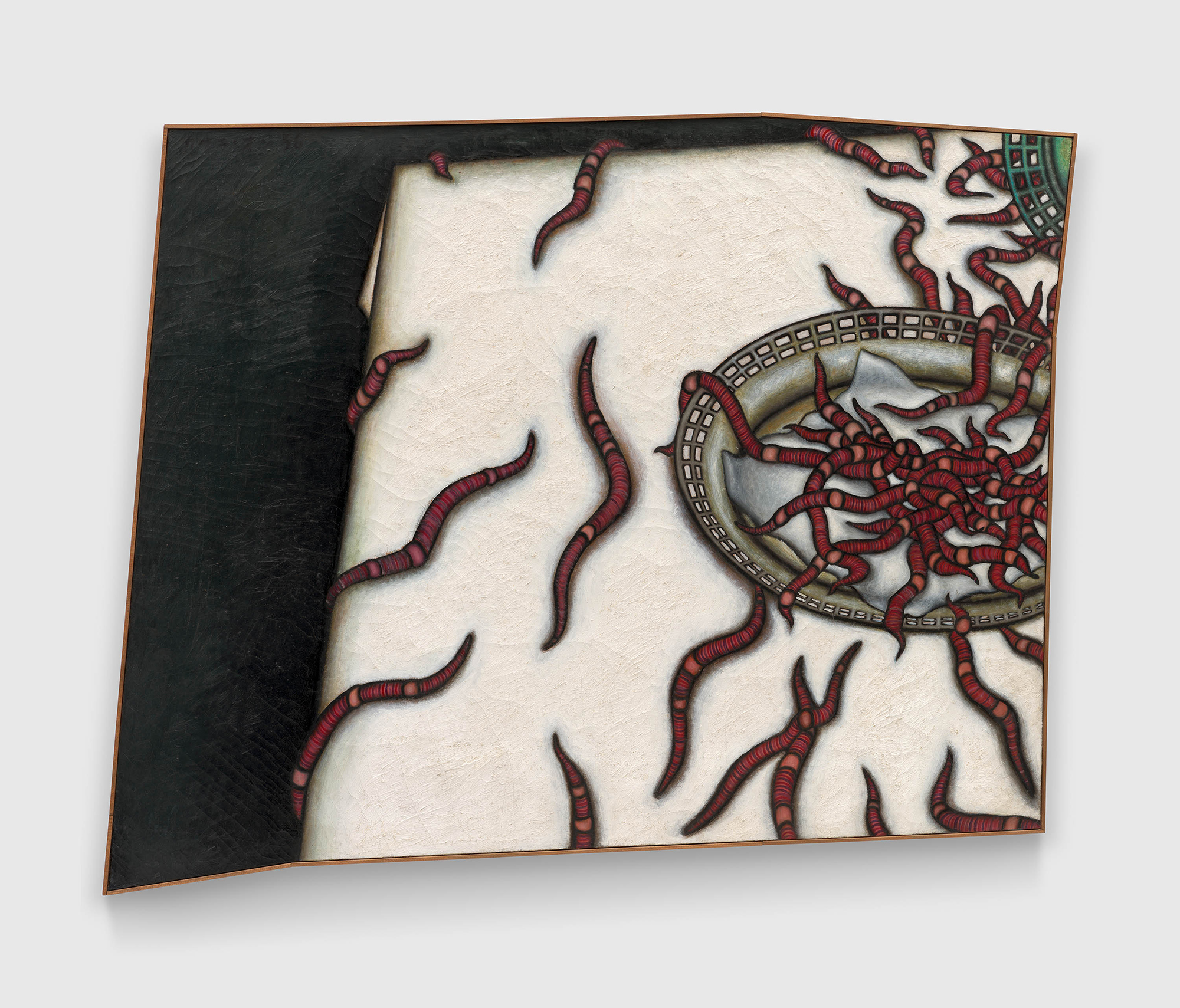

 Reproduced thanks to the understanding of the One Million Years Foundation.


沒有留言:
張貼留言