Japanese nō dramas
這本《能劇選集》收錄了24部能劇,每部劇都附有導言,由羅亞爾·泰勒編輯並翻譯,是了解能劇的絕佳途徑。能劇對日本文學的其他領域影響深遠,因此絕對值得一讀。當然,譯本也十分出色。本書出版於1992年。
This is a really great way to get to know about nō drama, with 24 plays included, each with their own introductions, edited and translated by Royall Tyler. Nō has been really influential on other parts of Japanese literature, so definitely worth knowing about. And of course the translation is very good. Published in 1992.
---
"漫談"Donald Keene 譯/著的日本文學" 37:
THE PLEASURES OF JAPANESE LITERATURE 鳥瞰。
《日本能劇》(作者:亞瑟·韋利)
《日本能劇》(作者:亞瑟·韋利)是一部收錄了20世紀初日本傳統能劇譯作的合集。這部作品向西方讀者介紹了日本戲劇獨特而程式化的藝術形式,展現了其關於命運、記憶和人生境遇的核心文化主題,並透過能劇豐富詩意的語言和精湛的表演將其樓娓道來。能劇通常包含歷史人物、鬼魂和精神元素,這些都是敘事的核心。在合集的開篇,韋利撰寫了一篇導論,帶領讀者沉浸於能劇的世界,探討了能劇的意義以及它與西方戲劇截然不同的舞台呈現和表演風格。開頭收錄了三部劇作:《敦盛》,圍繞著罪惡與救贖的主題展開,講述了武士出身的僧侶熊谷與他在戰場上殺死的青年敦盛的鬼魂相遇的故事。 《生田》講述了一個男孩尋找已故父親敦守的故事,著重刻畫了失去親人和父子情深的主題。 《常正》則探討了一個亡靈回到人間聆聽人們為他祈禱的悲傷故事。透過這些故事,本書展現了能劇所特有的深刻精神內涵與情感力量。 (此為自動產生的摘要。)可免費下載https://www.gutenberg.org/ebooks/43304
《日本能劇》(作者:亞瑟·韋利)
《日本能劇》(作者:亞瑟·韋利)是一部收錄了20世紀初日本傳統能劇譯作的合集。這部作品向西方讀者介紹了日本戲劇獨特而程式化的藝術形式,展現了其關於命運、記憶和人生境遇的核心文化主題,並透過能劇豐富詩意的語言和精湛的表演將其樓娓道來。能劇通常包含歷史人物、鬼魂和精神元素,這些都是敘事的核心。在合集的開篇,韋利撰寫了一篇導論,帶領讀者沉浸於能劇的世界,探討了能劇的意義以及它與西方戲劇截然不同的舞台呈現和表演風格。開頭收錄了三部劇作:《敦盛》,圍繞著罪惡與救贖的主題展開,講述了武士出身的僧侶熊谷與他在戰場上殺死的青年敦盛的鬼魂相遇的故事。 《生田》講述了一個男孩尋找已故父親敦守的故事,著重刻畫了失去親人和父子情深的主題。 《常正》則探討了一個亡靈回到人間聆聽人們為他祈禱的悲傷故事。透過這些故事,本書展現了能劇所特有的深刻精神內涵與情感力量。 (此為自動產生的摘要。)
可免費下載
https://www.gutenberg.org/ebooks/43304
The Nō Plays of Japan by Arthur Waley
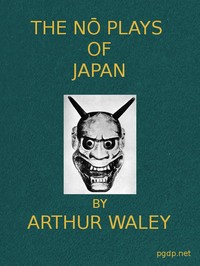
"The Nō Plays of Japan" by Arthur Waley is a collection of translations of traditional Japanese Nō dramas written in the early 20th century. This work introduces Western readers to the unique and stylized form of Japanese theater, capturing its essential cultural themes of fate, memory, and the human condition as they unfold through the richly poetic language and elaborate performances of the Nō plays. The plays often feature historical figures, ghosts, and spiritual elements that are central to the narratives. At the start of the collection, Waley provides an introduction that immerses the reader in the world of Nō theatre, discussing its significance and the staging and performance style that distinguish it from Western drama. The opening section presents three plays: "Atsumori," which revolves around the themes of guilt and redemption, introduces Kumagai, a warrior turned priest, who encounters the ghost of Atsumori, a young man he killed in battle. "Ikuta" follows a young boy seeking to meet his deceased father, Atsumori, and highlights themes of loss and parental connection. Finally, "Tsunemasa" explores the sorrow of a ghost who returns to listen to prayers dedicated to him. Through these narratives, the book encapsulates the profound spiritual and emotional depth characteristic of Nō plays. (This is an automatically generated summary.) Show Less
TO
  DŌAMI


CONTENTS


                             PAGE

  KEY TO PLANS             12, 14
  PLANS                    13, 15
  INTRODUCTION              17-29
  NOTE ON BUDDHISM          30-32

    CHAPTER I
  ATSUMORI                  36-44
  IKUTA                     45-50
  TSUNEMASA                 51-56

    CHAPTER II
  KUMASAKA                  60-68
  EBOSHI-ORI                69-80
  BENKEI ON THE BRIDGE      81-86

    CHAPTER III
  KAGEKIYO                  89-99
  HACHI NO KI             100-112
  SOTOBA KOMACHI          113-124

    CHAPTER IV
  UKAI                    127-133
  AYA NO TSUZUMI          134-141
  AOI NO UYE              142-151

    CHAPTER V
  KANTAN                  155-164
  THE HŌKA PRIESTS        165-175
  HAGOROMO                176-184

    CHAPTER VI
  TANIKŌ                  185-193
  IKENIYE                 194-200
  HATSUYUKI               201-204
  HAKU RAKUTEN            205-213

    CHAPTER VII
  SUMMARIES               217-249

    CHAPTER VIII
  FARCE (KYOGEN)          253-257

      SHORT BIBLIOGRAPHY  258-259

      APPENDICES          260-268


ILLUSTRATIONS


  YOUNG WOMAN’S MASK           _Frontispiece_
                                  FACING PAGE
  YOUNG MAN’S MASK                         70
  DEMON MASK                              152
  THE ANGEL IN _HAGOROMO_                 176
  IZUTSU                                  216
  THE DRAGON LADY IN _AMA_                234
  YŪYA READING THE LETTER                 238
  YAMAUBA (THE LADY OF THE MOUNTAINS)     244


[Illustration: KEY TO PLAN I

THEATRE SET UP IN THE RIVER-BED AT KYŌTO IN 1464; ONAMI’S TROUPE
ACTED ON IT FOR THREE DAYS “WITH IMMENSE SUCCESS.”

  A The Shōgun.
  B His attendants.
  C His litter.
  D His wife.
  E Her ladies.
  F Her litter.
  G Auditorium.
  H Stage.
  I Musicians.
  J _Hashigakari._
  K _Gakuya_, served as actors’ dressing-room and musicians’ room.
]

[Illustration]


[Illustration: KEY TO PLAN II

MODERN STAGE

    A The Stage.

    B The _shite’s_ Pillar.

    C _Shite’s_ seat, also called “Name-saying seat.”

    D _Metsuke-bashira_, Pillar on which the actor fixes his eye.

    E _Sumi_, the corner.

    F _Waki’s_ Pillar, also called the Prime Minister’s Pillar.

    G _Waki’s_ seat.

    H _Waki’s_ direction-point. (The point he faces when in his normal
    position.)

    I Flute-player’s Pillar.

    J _Atoza_, the Behind-space.

    K _Kagami-ita_, the back-wall with the pine-tree painted on it.

    L The musicians. (Represented by the four small circles.)

    M The stage-attendant’s place. (A stage-hand in plain clothes who
    fetches and carries.)

    N _Kirido_, “Hurry-door,” also called “Forgetting-door” and
    “Stomach-ache-door”; used by the chorus and occasionally by actors
    making a hurried exit. _Vide_ _Hōkazō_, p. 205.

    O Chorus, the leader sits near P.

    P The Nobles’ door (now seldom used).

    Q The _Hashigakari_.

    R The _kyōgen’s seat_.

    S The three pine-branches.

    T _Shirasu_, a gravel-path.

    U _Kizahashi_, steps from stage to auditorium, formerly used by an
    actor summoned to speak with the Shōgun.

    V Actors’ dressing-room.

    W Curtain between Q and V.

    X Dressing-room window.

    Y Musicians’ room.]

[Illustration]
多阿米
內容
頁
計劃 12、14 的關鍵計劃 13、15簡介 17-29佛教註 30-32
第一章厚守36-44生田45-50常政 51-56
第二章熊坂 60-68EBOSHI-ORI 69-80橋上的辨慶 81-86
第三章影清 89-99八之木 100-112蕎麥小町 113-124
第四章UKAI 127-133津綾 134-141葵之夜142-151
第五章
關丹 155-164
法華祭司 165-175
羽衣 176-184
第六章
谷公 185-193
池尼耶 194-200
初雪 201-204
樂天白 205-213
第七章
摘要 217-249
第八章
狂言 253-257
簡短參考書目 258-259
附錄 260-268
插畫
少女的面具(卷首插圖)
對頁
少年的面具70
惡魔面具 152
羽衣天使 176
伊津 216
天龍女 234
讀信的遊矢 238
山岳女 244
[插圖:圖例一
1464年,京都河床搭建的戲台;大波劇團
在此演出三天,「大獲成功」。
A 將軍。
B 他的侍從。
C 他的轎子。
D 他的妻子。
E 她的侍女們。
F 她的轎子。
G 觀眾席。
H 舞台。
I 樂師。
J _Hashigakari_
K _Gakuya_,曾用作演員更衣室和樂師休息室。
]
[插圖]
[插圖:平面圖二圖例
現代舞台
A 舞台。
B _Shite_ 柱。
C _Shite_ 座,又稱為「念名座」。
D _Metsuke-bashira_,演員注視的柱子。
E _Sumi_,角。
F _Waki_ 柱,又稱首相柱。
G _Waki_ 座。
H _Waki_ 方位點。 (他正常站位時面向的方向。)
I 笛子演奏者柱。
J _Atoza_,後方空間。
K 鏡板,繪有鬆樹的後牆。
L 樂師。 (以四個小圓圈表示。)
M 舞台侍者的位置。 (一位身著便服的舞台工作人員,負責
取送和搬運。 )
N 桐門,“匆忙之門”,又稱“遺忘之門”和
「胃痛之門」;合唱團使用,有時演員也會在
匆忙退場時使用。參見《放藏》,第205頁。
O 合唱團,領唱者坐在P附近。
P 貴族之門(現在很少使用)。
Q 橋刈。
R 狂言的座位。
S 三根松枝。
T 白砂,一條碎石路。
U _木座橋_,舞台通往觀眾席的台階,過去曾供被召見覲見將軍的演員使用。
V 演員化妝間。
W Q 和 V 之間的簾子。
X 化妝間窗戶。
Y 樂師室。
[插圖]
引言
西方戲劇是寫實主義的最後堡壘。沒有人
將繪畫或音樂僅視為生活的記錄。但即使是法國和德國的舞台改革先驅,似乎也認為戲劇屬於生活,而非藝術。戲劇是組織起來的人類經驗,觀眾必須盡可能地
被允許與演員共同體驗。
歐美一些人想要走相反的路。
他們希望看到一種大膽追求風格化和簡化的戲劇,徹底拋棄19世紀舞台上那些矯揉造作的
繁複。這種戲劇在日本存在且由來已久,這在西方早已是眾所周知的事實。但
迄今為止,很少有戲劇被翻譯成能夠讓西方讀者了解其文學價值的方式。只有透過精準的學術研究,西方才能了解「能劇的靈魂」。
如果文本的翻譯是真的,美國讀者會自行領悟其豐富的內涵,而日本作家往往未能充分意識到這一點。日本人為了讓五行詩更容易被我們理解,常常將其擴展成一長篇論述,這種做法破壞了原作的結構。如有需要,我會在註腳中加以解釋。我認為沒有必要指出(正如一位日本評論家建議的那樣),例如,《小町》的「情調」與《熊坂》的「情調」不同。美國讀者完全能夠理解這些差異,即使了解每個「くがい」(kurai)或能劇類別的專業名稱,也無濟於事。當然,研究莎士比亞的日本學生也無需被告知《哈姆雷特》的「くがい」與《一報還一報》的「くがい」不同。
如果像這樣的書籍充斥著大量不必要的專業術語,就像一本精美的日本版畫銷售目錄那樣令人厭煩,那該有多糟糕。
我已盡量避免使用此類術語,
將劇作視為文學作品,而非某種神秘莫測的德爾斐神諭。
在這篇簡短的導言中,我沒有足夠的篇幅對現代能劇進行完整的描述,
也無法詳述其起源。但
譯者的讀者會發現,他們需要了解一些相關資訊。
我已盡力以盡可能簡潔的方式提供這些信息,
有時甚至採用示意圖而非文字描述的形式。
以下是美國讀者可能希望了解更多內容的一些要點:
(1) 能劇舞台。
從圖版二和
第10-13頁的平面圖可以看出現代能劇舞台的一些形式。實際的舞台(A)大約是18英尺見方。
後牆的木板上繪有一棵松樹;其他兩側都是開放的。一條走廊(稱為“hashigakari”)通往休息室,
走廊與休息室之間用簾子隔開,簾子會在演員入場時升起。
觀眾席位於舞台的兩到三側。
合唱團通常排成兩排,坐在(或更確切地說是蹲著)凹室(O)裡。樂手們坐在舞台後方的凹室(J)裡,
鼓手靠近走廊,然後兩面手鼓和笛子。
樂手凹室周圍以及走廊都設有欄桿。走廊的欄桿上繫著三根
真正的松枝,在平面圖中標示為S。它們將在圖版II中看到。
舞台上方有一個屋頂,其形狀模仿了
神道教寺廟的屋頂。
(2) 表演者。
(a)演員
第一個從觀眾席走上舞台的演員是助手(waki)。他的主要職責是解釋主角(shite,或稱為「表演者」)跳劇中核心舞蹈的背景。每位主角都有「輔助演員」(waki 和 shite)或「同伴」。
有些劇只需要兩位主角,有些劇則需要十位甚至十二位。女性角色當然由男性扮演。助手(waki)總是男性。
合唱團
由八到十二位身著傳統服飾的人組成,他們坐在舞台兩側,分成兩排。他們的唯一職責是,當演員因舞蹈動作而無法舒適地演唱時,替他演唱台詞。他們在演出開始前從側門進入,
並一直坐在那裡直到演出結束。
(_c_) _樂師們。 _
離觀眾席最近的是“大鼓”,它的樂器放在地上,用鼓槌敲擊。這種鼓槌並非在所有劇目中都會使用。
接下來是一位用指套敲擊的手鼓手;再接下來是一位用裸手敲擊的手鼓手。
最後是笛子。它只在特定的時間點出現,
尤其是在劇目的開頭、高潮和結尾。
服裝。
雖然能劇幾乎完全摒棄了其他外在的輔助手段,但它卻極度依賴華麗精緻的服裝來營造效果。
一些相關的記載可以在奧斯瓦爾德·西克特的信件中找到,
這些信件收錄在我的書的末尾。Show moreSend feedbackUse the arrows to see the full translation.INTRODUCTION
The theatre of the West is the last stronghold of realism. No one
treats painting or music as mere transcripts of life. But even pioneers
of stage-reform in France and Germany appear to regard the theatre as
belonging to life and not to art. The play is an organized piece of
human experience which the audience must as far as possible be allowed
to share with the actors.
A few people in America and Europe want to go in the opposite
direction. They would like to see a theatre that aimed boldly at
stylization and simplification, discarding entirely the pretentious
lumber of 19th century stageland. That such a theatre exists and has
long existed in Japan has been well-known here for some time. But
hitherto very few plays have been translated in such a way as to give
the Western reader an idea of their literary value. It is only through
accurate scholarship that the “soul of Nō” can be known to the West.
Given a truthful rendering of the texts the American reader will supply
for himself their numerous connotations, a fact which Japanese writers
do not always sufficiently realize. The Japanese method of expanding a
five-line poem into a long treatise in order to make it intelligible to
us is one which obliterates the structure of the original design. Where
explanations are necessary they have been given in footnotes. I have
not thought it necessary to point out (as a Japanese critic suggested
that I ought to have done) that, for example, the “mood” of _Komachi_
is different from the “mood” of _Kumasaka_. Such differences will be
fully apparent to the American reader, who would not be the better off
for knowing the technical name of each _kurai_ or class of Nō. Surely
the Japanese student of Shakespeare does not need to be told that the
_kurai_ of “Hamlet” is different from that of “Measure for Measure”?
It would be possible to burden a book of this kind with as great a mass
of unnecessary technicality as irritates us in a smart sale-catalogue
of Japanese Prints. I have avoided such terms to a considerable extent,
treating the plays as literature, not as some kind of Delphic mystery.
In this short introduction I shall not have space to give a complete
description of modern Nō, nor a full history of its origins. But the
reader of the translations will find that he needs some information
on these points. I have tried to supply it as concisely as possible,
sometimes in a schematic rather than a literary form.
These are some of the points about which an American reader may wish to
know more:
(1) THE NŌ STAGE.
Something of its modern form may be seen from Plate II and from the
plans on pp. 10-13. The actual stage (A) is about 18 feet square. On
the boards of the back wall is painted a pine-tree; the other sides
are open. A gallery (called _hashigakari_) leads to the green-room,
from which it is separated by a curtain which is raised to admit the
actor when he makes his entry. The audience sit either on two or three
sides of the stage. The chorus, generally in two rows, sit (or rather
squat) in the recess (O). The musicians sit in the recess (J) at the
back of the stage, the stick-drum nearest the “gallery,” then the two
hand-drums and the flute. A railing runs round the musician’s recess,
as also along the gallery. To the latter railing are attached three
real pine-branches, marked S in the plan. They will be seen in Plate
II. The stage is covered by a roof of its own, imitating in form the
roof of a Shintō temple.
(2) THE PERFORMERS.
(_a_) _The Actors._
The first actor who comes on to the stage (approaching from the
gallery) is the _waki_ or assistant. His primary business is to explain
the circumstances under which the principal actor (called _shite_ or
“doer”) came to dance the central dance of the play. Each of these main
actors (_waki_ and _shite_) has “adjuncts” or “companions.”
Some plays need only the two main actors. Others use as many as ten or
even twelve. The female rôles are of course taken by men. The _waki_ is
always a male rôle.
(_b_) _The Chorus._
This consists of from eight to twelve persons in ordinary native dress
seated in two rows at the side of the stage. Their sole function is to
sing an actor’s words for him when his dance-movements prevent him
from singing comfortably. They enter by a side-door before the play
begins and remain seated till it is over.
(_c_) _The Musicians._
Nearest to the gallery sits the “big-drum,” whose instrument rests on
the ground and is played with a stick. This stick-drum is not used in
all plays.
Next comes a hand-drummer who plays with thimbled finger; next a second
who plays with the bare hand.
Finally, the flute. It intervenes only at stated intervals,
particularly at the beginning, climax and end of plays.
COSTUME.
Though almost wholly banishing other extrinsic aids, the Nō relies
enormously for its effects on gorgeous and elaborate costume. Some
references to this will be found in Oswald Sickert’s letters at the end
of my book.
Masks are worn only by the _shite_ (principal actor) and his
subordinates. The _shite_ always wears a mask if playing the part of a
woman or very old man. Young men, particularly warriors, are usually
unmasked. In child-parts (played by boy-actors) masks are not worn. The
reproduction of a female mask will be found on Plate I. The masks are
of wood. Many of those still in use are of great antiquity and rank as
important specimens of Japanese sculpture.
PROPERTIES.
The properties of the Nō stage are of a highly conventionalized kind.
An open frame-work represents a boat; another differing little from it
denotes a chariot. Palace, house, cottage, hovel are all represented
by four posts covered with a roof. The fan which the actor usually
carries often does duty as a knife, brush or the like. Weapons are more
realistically represented. The short-sword, belt-sword, pike, spear and
Chinese broad-sword are carried; also bows and arrows.
DANCING AND ACTING.
Every Nō play (with, I think, the sole exception of _Hachi no Ki_,
translated on p. 100) includes a _mai_ or dance, consisting usually
of slow steps and solemn gestures, often bearing little resemblance
to what is in America associated with the word “dance.” When the
_shite_ dances, his dance consists of five “movements” or parts; a
“subordinate’s” dance consists of three. Both in the actors’ miming and
in the dancing an important element is the stamping of beats with the
shoeless foot.
THE PLAYS.
The plays are written partly in prose, partly in verse. The prose
portions serve much the same purpose as the iambics in a Greek play.
They are in the Court or upper-class colloquial of the 14th century, a
language not wholly dead to-day, as it is still the language in which
people write formal letters.
The chanting of these portions is far removed from singing; yet they
are not “spoken.” The voice falls at the end of each sentence in a
monotonous cadence.
A prose passage often gradually heightens into verse. The chanting,
which has hitherto resembled the intoning of a Roman Catholic priest,
takes on more of the character of “recitativo” in opera, occasionally
attaining to actual song. The verse of these portions is sometimes
irregular, but on the whole tends to an alternation of lines of five
and seven syllables.
The verse of the lyric portions is marked by frequent use of
pivot-words[1] and puns, particularly puns on place-names. The 14th
century Nō-writer, Seami, insists that pivot-words should be used
sparingly and with discretion. Many Nō-writers did not follow this
advice; but the use of pivot-words is not in itself a decoration more
artificial than rhyme, and I cannot agree with those European writers
to whom this device appears puerile and degraded. Each language must
use such embellishments as suit its genius.
Another characteristic of the texts is the use of earlier literary
material. Many of the plays were adapted from dance-ballads already
existing and even new plays made use of such poems as were associated
in the minds of the audience with the places or persons named in the
play. Often a play is written round a poem or series of poems, as will
be seen in the course of this book.
This use of existing material exceeds the practice of Western
dramatists; but it must be remembered that if we were to read Webster,
for example, in editions annotated as minutely as the Nō-plays, we
should discover that he was far more addicted to borrowing than we
had been aware. It seems to me that in the finest plays this use of
existing material is made with magnificent effect and fully justifies
itself.
The reference which I have just made to dance-ballads brings us to
another question. What did the Nō-plays grow out of?
"The Nō Plays of Japan" by Arthur Waley is a collection of translations of traditional Japanese Nō dramas written in the early 20th century. This work introduces Western readers to the unique and stylized form of Japanese theater, capturing its essential cultural themes of fate, memory, and the human condition as they unfold through the richly poetic language and elaborate performances of the Nō plays. The plays often feature historical figures, ghosts, and spiritual elements that are central to the narratives. At the start of the collection, Waley provides an introduction that immerses the reader in the world of Nō theatre, discussing its significance and the staging and performance style that distinguish it from Western drama. The opening section presents three plays: "Atsumori," which revolves around the themes of guilt and redemption, introduces Kumagai, a warrior turned priest, who encounters the ghost of Atsumori, a young man he killed in battle. "Ikuta" follows a young boy seeking to meet his deceased father, Atsumori, and highlights themes of loss and parental connection. Finally, "Tsunemasa" explores the sorrow of a ghost who returns to listen to prayers dedicated to him. Through these narratives, the book encapsulates the profound spiritual and emotional depth characteristic of Nō plays. (This is an automatically generated summary.) Show Less
TO DŌAMI CONTENTS PAGE KEY TO PLANS 12, 14 PLANS 13, 15 INTRODUCTION 17-29 NOTE ON BUDDHISM 30-32 CHAPTER I ATSUMORI 36-44 IKUTA 45-50 TSUNEMASA 51-56 CHAPTER II KUMASAKA 60-68 EBOSHI-ORI 69-80 BENKEI ON THE BRIDGE 81-86 CHAPTER III KAGEKIYO 89-99 HACHI NO KI 100-112 SOTOBA KOMACHI 113-124 CHAPTER IV UKAI 127-133 AYA NO TSUZUMI 134-141 AOI NO UYE 142-151 CHAPTER V KANTAN 155-164 THE HŌKA PRIESTS 165-175 HAGOROMO 176-184 CHAPTER VI TANIKŌ 185-193 IKENIYE 194-200 HATSUYUKI 201-204 HAKU RAKUTEN 205-213 CHAPTER VII SUMMARIES 217-249 CHAPTER VIII FARCE (KYOGEN) 253-257 SHORT BIBLIOGRAPHY 258-259 APPENDICES 260-268 ILLUSTRATIONS YOUNG WOMAN’S MASK _Frontispiece_ FACING PAGE YOUNG MAN’S MASK 70 DEMON MASK 152 THE ANGEL IN _HAGOROMO_ 176 IZUTSU 216 THE DRAGON LADY IN _AMA_ 234 YŪYA READING THE LETTER 238 YAMAUBA (THE LADY OF THE MOUNTAINS) 244 [Illustration: KEY TO PLAN I THEATRE SET UP IN THE RIVER-BED AT KYŌTO IN 1464; ONAMI’S TROUPE ACTED ON IT FOR THREE DAYS “WITH IMMENSE SUCCESS.” A The Shōgun. B His attendants. C His litter. D His wife. E Her ladies. F Her litter. G Auditorium. H Stage. I Musicians. J _Hashigakari._ K _Gakuya_, served as actors’ dressing-room and musicians’ room. ] [Illustration] [Illustration: KEY TO PLAN II MODERN STAGE A The Stage. B The _shite’s_ Pillar. C _Shite’s_ seat, also called “Name-saying seat.” D _Metsuke-bashira_, Pillar on which the actor fixes his eye. E _Sumi_, the corner. F _Waki’s_ Pillar, also called the Prime Minister’s Pillar. G _Waki’s_ seat. H _Waki’s_ direction-point. (The point he faces when in his normal position.) I Flute-player’s Pillar. J _Atoza_, the Behind-space. K _Kagami-ita_, the back-wall with the pine-tree painted on it. L The musicians. (Represented by the four small circles.) M The stage-attendant’s place. (A stage-hand in plain clothes who fetches and carries.) N _Kirido_, “Hurry-door,” also called “Forgetting-door” and “Stomach-ache-door”; used by the chorus and occasionally by actors making a hurried exit. _Vide_ _Hōkazō_, p. 205. O Chorus, the leader sits near P. P The Nobles’ door (now seldom used). Q The _Hashigakari_. R The _kyōgen’s seat_. S The three pine-branches. T _Shirasu_, a gravel-path. U _Kizahashi_, steps from stage to auditorium, formerly used by an actor summoned to speak with the Shōgun. V Actors’ dressing-room. W Curtain between Q and V. X Dressing-room window. Y Musicians’ room.] [Illustration]
多阿米
內容
頁
計劃 12、14 的關鍵
計劃 13、15
簡介 17-29
佛教註 30-32
第一章
厚守36-44
生田45-50
常政 51-56
第二章
熊坂 60-68
EBOSHI-ORI 69-80
橋上的辨慶 81-86
第三章
影清 89-99
八之木 100-112
蕎麥小町 113-124
第四章
UKAI 127-133
津綾 134-141
葵之夜142-151
第五章
關丹 155-164
法華祭司 165-175
羽衣 176-184
第六章
谷公 185-193
池尼耶 194-200
初雪 201-204
樂天白 205-213
第七章
摘要 217-249
第八章
狂言 253-257
簡短參考書目 258-259
附錄 260-268
插畫
少女的面具(卷首插圖)
對頁
少年的面具70
惡魔面具 152
羽衣天使 176
伊津 216
天龍女 234
讀信的遊矢 238
山岳女 244
[插圖:圖例一
1464年,京都河床搭建的戲台;大波劇團
在此演出三天,「大獲成功」。
A 將軍。
B 他的侍從。
C 他的轎子。
D 他的妻子。
E 她的侍女們。
F 她的轎子。
G 觀眾席。
H 舞台。
I 樂師。
J _Hashigakari_
K _Gakuya_,曾用作演員更衣室和樂師休息室。
]
[插圖]
[插圖:平面圖二圖例
現代舞台
A 舞台。
B _Shite_ 柱。
C _Shite_ 座,又稱為「念名座」。
D _Metsuke-bashira_,演員注視的柱子。
E _Sumi_,角。
F _Waki_ 柱,又稱首相柱。
G _Waki_ 座。
H _Waki_ 方位點。 (他正常站位時面向的方向。)
I 笛子演奏者柱。
J _Atoza_,後方空間。
K 鏡板,繪有鬆樹的後牆。
L 樂師。 (以四個小圓圈表示。)
M 舞台侍者的位置。 (一位身著便服的舞台工作人員,負責
取送和搬運。 )
N 桐門,“匆忙之門”,又稱“遺忘之門”和
「胃痛之門」;合唱團使用,有時演員也會在
匆忙退場時使用。參見《放藏》,第205頁。
O 合唱團,領唱者坐在P附近。
P 貴族之門(現在很少使用)。
Q 橋刈。
R 狂言的座位。
S 三根松枝。
T 白砂,一條碎石路。
U _木座橋_,舞台通往觀眾席的台階,過去曾供被召見覲見將軍的演員使用。
V 演員化妝間。
W Q 和 V 之間的簾子。
X 化妝間窗戶。
Y 樂師室。
[插圖]
引言
西方戲劇是寫實主義的最後堡壘。沒有人
將繪畫或音樂僅視為生活的記錄。但即使是
法國和德國的舞台改革先驅,似乎也認為戲劇屬於生活,而非藝術。戲劇是組織起來的
人類經驗,觀眾必須盡可能地
被允許與演員共同體驗。
歐美一些人想要走相反的路。
他們希望看到一種大膽追求
風格化和簡化的戲劇,徹底拋棄19世紀舞台上那些矯揉造作的
繁複。這種戲劇在日本存在且由來已久,這在西方早已是眾所周知的事實。但
迄今為止,很少有戲劇被翻譯成能夠讓
西方讀者
了解其文學價值的方式。只有透過
精準的學術研究,西方才能了解「能劇的靈魂」。
如果文本的翻譯是真的,美國讀者會自行領悟其豐富的內涵,而日本作家往往未能充分意識到這一點。日本人為了讓五行詩更容易被我們理解,常常將其擴展成一長篇論述,這種做法破壞了原作的結構。如有需要,我會在註腳中加以解釋。我認為沒有必要指出(正如一位日本評論家建議的那樣),例如,《小町》的「情調」與《熊坂》的「情調」不同。美國讀者完全能夠理解這些差異,即使了解每個「くがい」(kurai)或能劇類別的專業名稱,也無濟於事。當然,研究莎士比亞的日本學生也無需被告知《哈姆雷特》的「くがい」與《一報還一報》的「くがい」不同。
如果像這樣的書籍充斥著大量不必要的專業術語,就像一本精美的日本版畫銷售目錄那樣令人厭煩,那該有多糟糕。
我已盡量避免使用此類術語,
將劇作視為文學作品,而非某種神秘莫測的德爾斐神諭。
在這篇簡短的導言中,我沒有足夠的篇幅對現代能劇進行完整的描述,
也無法詳述其起源。但
譯者的讀者會發現,他們需要了解一些相關資訊。
我已盡力以盡可能簡潔的方式提供這些信息,
有時甚至採用示意圖而非文字描述的形式。
以下是美國讀者可能希望了解更多內容的一些要點:
(1) 能劇舞台。
從圖版二和
第10-13頁的平面圖可以看出現代能劇舞台的一些形式。實際的舞台(A)大約是18英尺見方。
後牆的木板上繪有一棵松樹;其他兩側
都是開放的。一條走廊(稱為“hashigakari”)通往休息室,
走廊與休息室之間用簾子隔開,簾子會在演員入場時升起。
觀眾席位於舞台的兩到三側。
合唱團通常排成兩排,坐在(或更確切地說是蹲著)凹室(O)裡。樂手們坐在舞台後方的凹室(J)裡,
鼓手靠近走廊,然後兩面手鼓和笛子。
樂手凹室周圍以及走廊都設有欄桿。走廊的欄桿上繫著三根
真正的松枝,在平面圖中標示為S。它們將在圖版
II中看到。
舞台上方有一個屋頂,其形狀模仿了
神道教寺廟的屋頂。
(2) 表演者。
(a)演員
第一個從觀眾席走上舞台的演員是助手(waki)。他的主要職責是解釋主角(shite,或稱為「表演者」)跳劇中核心舞蹈的背景。每位主角都有「輔助演員」(waki 和 shite)或「同伴」。
有些劇只需要兩位主角,有些劇則需要十位甚至十二位。女性角色當然由男性扮演。助手(waki)總是男性。
合唱團
由八到十二位身著傳統服飾的人組成,他們坐在舞台兩側,分成兩排。他們的唯一職責是,當演員因舞蹈動作而無法舒適地演唱時,替他演唱台詞。他們在演出開始前從側門進入,
並一直坐在那裡直到演出結束。
(_c_) _樂師們。 _
離觀眾席最近的是“大鼓”,它的樂器放在地上,
用鼓槌敲擊。這種鼓槌並非在所有劇目中都會使用。
接下來是一位用指套敲擊的手鼓手;再接下來是一位
用裸手敲擊的手鼓手。
最後是笛子。它只在特定的時間點出現,
尤其是在劇目的開頭、高潮和結尾。
服裝。
雖然能劇幾乎完全摒棄了其他外在的輔助手段,但它卻極度依賴華麗精緻的服裝來營造效果。
一些相關的記載可以在奧斯瓦爾德·西克特的信件中找到,
這些信件收錄在我的書的末尾。
Show more
Send feedback
Use the arrows to see the full translation.
INTRODUCTION
The theatre of the West is the last stronghold of realism. No one
treats painting or music as mere transcripts of life. But even pioneers
of stage-reform in France and Germany appear to regard the theatre as
belonging to life and not to art. The play is an organized piece of
human experience which the audience must as far as possible be allowed
to share with the actors.
A few people in America and Europe want to go in the opposite
direction. They would like to see a theatre that aimed boldly at
stylization and simplification, discarding entirely the pretentious
lumber of 19th century stageland. That such a theatre exists and has
long existed in Japan has been well-known here for some time. But
hitherto very few plays have been translated in such a way as to give
the Western reader an idea of their literary value. It is only through
accurate scholarship that the “soul of Nō” can be known to the West.
Given a truthful rendering of the texts the American reader will supply
for himself their numerous connotations, a fact which Japanese writers
do not always sufficiently realize. The Japanese method of expanding a
five-line poem into a long treatise in order to make it intelligible to
us is one which obliterates the structure of the original design. Where
explanations are necessary they have been given in footnotes. I have
not thought it necessary to point out (as a Japanese critic suggested
that I ought to have done) that, for example, the “mood” of _Komachi_
is different from the “mood” of _Kumasaka_. Such differences will be
fully apparent to the American reader, who would not be the better off
for knowing the technical name of each _kurai_ or class of Nō. Surely
the Japanese student of Shakespeare does not need to be told that the
_kurai_ of “Hamlet” is different from that of “Measure for Measure”?
It would be possible to burden a book of this kind with as great a mass
of unnecessary technicality as irritates us in a smart sale-catalogue
of Japanese Prints. I have avoided such terms to a considerable extent,
treating the plays as literature, not as some kind of Delphic mystery.
In this short introduction I shall not have space to give a complete
description of modern Nō, nor a full history of its origins. But the
reader of the translations will find that he needs some information
on these points. I have tried to supply it as concisely as possible,
sometimes in a schematic rather than a literary form.
These are some of the points about which an American reader may wish to
know more:
(1) THE NŌ STAGE.
Something of its modern form may be seen from Plate II and from the
plans on pp. 10-13. The actual stage (A) is about 18 feet square. On
the boards of the back wall is painted a pine-tree; the other sides
are open. A gallery (called _hashigakari_) leads to the green-room,
from which it is separated by a curtain which is raised to admit the
actor when he makes his entry. The audience sit either on two or three
sides of the stage. The chorus, generally in two rows, sit (or rather
squat) in the recess (O). The musicians sit in the recess (J) at the
back of the stage, the stick-drum nearest the “gallery,” then the two
hand-drums and the flute. A railing runs round the musician’s recess,
as also along the gallery. To the latter railing are attached three
real pine-branches, marked S in the plan. They will be seen in Plate
II. The stage is covered by a roof of its own, imitating in form the
roof of a Shintō temple.
(2) THE PERFORMERS.
(_a_) _The Actors._
The first actor who comes on to the stage (approaching from the
gallery) is the _waki_ or assistant. His primary business is to explain
the circumstances under which the principal actor (called _shite_ or
“doer”) came to dance the central dance of the play. Each of these main
actors (_waki_ and _shite_) has “adjuncts” or “companions.”
Some plays need only the two main actors. Others use as many as ten or
even twelve. The female rôles are of course taken by men. The _waki_ is
always a male rôle.
(_b_) _The Chorus._
This consists of from eight to twelve persons in ordinary native dress
seated in two rows at the side of the stage. Their sole function is to
sing an actor’s words for him when his dance-movements prevent him
from singing comfortably. They enter by a side-door before the play
begins and remain seated till it is over.
(_c_) _The Musicians._
Nearest to the gallery sits the “big-drum,” whose instrument rests on
the ground and is played with a stick. This stick-drum is not used in
all plays.
Next comes a hand-drummer who plays with thimbled finger; next a second
who plays with the bare hand.
Finally, the flute. It intervenes only at stated intervals,
particularly at the beginning, climax and end of plays.
COSTUME.
Though almost wholly banishing other extrinsic aids, the Nō relies
enormously for its effects on gorgeous and elaborate costume. Some
references to this will be found in Oswald Sickert’s letters at the end
of my book.
Masks are worn only by the _shite_ (principal actor) and his
subordinates. The _shite_ always wears a mask if playing the part of a
woman or very old man. Young men, particularly warriors, are usually
unmasked. In child-parts (played by boy-actors) masks are not worn. The
reproduction of a female mask will be found on Plate I. The masks are
of wood. Many of those still in use are of great antiquity and rank as
important specimens of Japanese sculpture.
PROPERTIES.
The properties of the Nō stage are of a highly conventionalized kind.
An open frame-work represents a boat; another differing little from it
denotes a chariot. Palace, house, cottage, hovel are all represented
by four posts covered with a roof. The fan which the actor usually
carries often does duty as a knife, brush or the like. Weapons are more
realistically represented. The short-sword, belt-sword, pike, spear and
Chinese broad-sword are carried; also bows and arrows.
DANCING AND ACTING.
Every Nō play (with, I think, the sole exception of _Hachi no Ki_,
translated on p. 100) includes a _mai_ or dance, consisting usually
of slow steps and solemn gestures, often bearing little resemblance
to what is in America associated with the word “dance.” When the
_shite_ dances, his dance consists of five “movements” or parts; a
“subordinate’s” dance consists of three. Both in the actors’ miming and
in the dancing an important element is the stamping of beats with the
shoeless foot.
THE PLAYS.
The plays are written partly in prose, partly in verse. The prose
portions serve much the same purpose as the iambics in a Greek play.
They are in the Court or upper-class colloquial of the 14th century, a
language not wholly dead to-day, as it is still the language in which
people write formal letters.
The chanting of these portions is far removed from singing; yet they
are not “spoken.” The voice falls at the end of each sentence in a
monotonous cadence.
A prose passage often gradually heightens into verse. The chanting,
which has hitherto resembled the intoning of a Roman Catholic priest,
takes on more of the character of “recitativo” in opera, occasionally
attaining to actual song. The verse of these portions is sometimes
irregular, but on the whole tends to an alternation of lines of five
and seven syllables.
The verse of the lyric portions is marked by frequent use of
pivot-words[1] and puns, particularly puns on place-names. The 14th
century Nō-writer, Seami, insists that pivot-words should be used
sparingly and with discretion. Many Nō-writers did not follow this
advice; but the use of pivot-words is not in itself a decoration more
artificial than rhyme, and I cannot agree with those European writers
to whom this device appears puerile and degraded. Each language must
use such embellishments as suit its genius.
Another characteristic of the texts is the use of earlier literary
material. Many of the plays were adapted from dance-ballads already
existing and even new plays made use of such poems as were associated
in the minds of the audience with the places or persons named in the
play. Often a play is written round a poem or series of poems, as will
be seen in the course of this book.
This use of existing material exceeds the practice of Western
dramatists; but it must be remembered that if we were to read Webster,
for example, in editions annotated as minutely as the Nō-plays, we
should discover that he was far more addicted to borrowing than we
had been aware. It seems to me that in the finest plays this use of
existing material is made with magnificent effect and fully justifies
itself.
The reference which I have just made to dance-ballads brings us to
another question. What did the Nō-plays grow out of?

沒有留言:
張貼留言