【特別報導:台灣美術雙年展|黑水──濃稠滯留如何重形流動】
展覽試圖以「臨來」的概念做為對殖民遺緒的回應,承襲斯圖亞特.霍爾(Stuart Hall)對身分認同的理解:認同不僅關乎「我是誰」,更是一個不斷生成、變動的「成為何者」的過程。也因此,「臨來」成為此屆台雙展論述中最值得反覆咀嚼的關鍵詞。若將「臨來」視為一種「將臨的身分」,那麼問題隨之浮現──這個將臨的究竟是什麼?是新的主體位置?新的政治倫理?抑或是一種尚未命名的共在形式?然而,「黑水」並未嘗試為此提供一條明確的出口或指引。相反地,展覽透過作品之間不斷生成的並置、對照與摩擦,使「臨來」更像是一個未決的端點──一種被懸置的未來想像。
在這樣的結構中,展覽透過反覆出現的作品組合做為推進論述的策略。其中,馬躍.比吼與「白浪博物館」之間的呼應,構成兩個探討「定居殖民」(Settler colonialism)的關鍵視角。(撰文/方彥翔,節選自《藝術家》609期,2026年2月號)
圖說:
白浪博物館 白浪圖書室 2025 空間裝置 尺寸依場地而定 於「黑水─2025台灣美術雙年展」展場一景
(攝影:泰墨創藝影像有限公司;圖版提供:國立臺灣美術館)Courtesy of the artist
 節錄文章連結請見留言處
Stuart Hall /Stuart Henry McPhail Hall FBA (1932 – 2014) was a Jamaican-born British Marxist sociologist, cultural theorist, and political .
Stuart Hall的書,有好幾本已有漢譯。2014
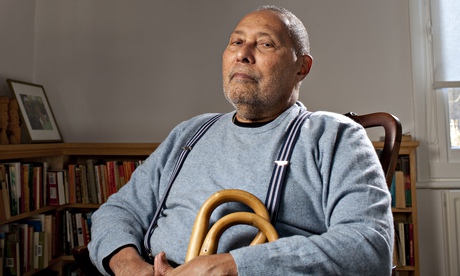
斯圖亞特霍爾:「他彬彬有禮,從不大聲說話,因為那不符合禮儀。」照片:大衛萊文
斯圖亞特·霍爾的靈魂深處燃燒著革命的火焰。從某種意義上說,他駁斥了吉爾·斯科特-赫倫的“革命不會被電視直播”的觀點。我成長於20世紀70年代和80年代初的托特納姆,母親上夜班,我經常熬夜觀看開放大學的電視節目,這些節目在常規頻道結束後播出。斯圖亞特的廣播生涯正值阿爾夫·加內特和《愛你的鄰居》風靡的年代,他打破了這些節目所呈現的所有刻板印象。我從小就沒有父親,因此,當這位雄辯滔滔、口齒伶俐的男士在我本該睡覺的時候輕聲細語地與我交談時,我完全被他迷住了。
最重要的是,斯圖亞特的語言中蘊含著一種強烈的現代性和反主流文化的活力——這種現代性挑戰著我在學校、新聞和日常生活中所聽到的一切。一代又一代的社工、教師、學者、媒體研究專業的學生、政治運動家以及其他許多人,都曾全心投入開放大學的課程中,並深受他的影響。
我成為國會議員後,認識了斯圖亞特,並與他建立了深厚的友誼。他主動聯絡我,並會來下議院喝茶。在我擔任文化大臣期間,我們有很多聯繫,當時他是里文頓廣場(Rivington Place)的主席——里文頓廣場是他大力支持的位於倫敦東部的文化機構,致力於黑人檔案、攝影和藝術。我非常樂意為他提供支持和資金,幫助他進行這個意義非凡的計畫。他似乎為我當時擔任文化大臣而感到自豪,並且本能地理解這類專案的必要性。
斯圖亞特在我生命中扮演著一位慈父般的角色。他的聲音輕柔卻充滿感染力,思想權威而嚴謹。他並非那種說教式的權威人物,而是給人一種非常開朗的感覺,熱愛爵士樂、藝術以及政治。他是一位具有指導意義的人物,既權威又發人深省,但始終彬彬有禮。他從不提高嗓門,因為那不符合禮儀。史都華會認真傾聽你的發言,並對每件事都提出質疑。例如,在2011年騷亂之後,他很快就打電話給我,溫和地問我一些他不認同的回應。
出生於牙買加賦予了史都華對英國——他後來定居的地方——截然不同的視角。他敏銳地意識到自己多元的血統:非洲、葡萄牙、西印度群島、猶太和英國,正是這種背景使他對「他者」的批判帶有強烈的個人色彩。
歷史將會給予史都華作為一位公共知識分子和博學家應有的評價。在學術巨匠的行列中,我會將他與埃里克·霍布斯鮑姆和拉爾夫·米利班德相提並論。他的研究跨越多個學科,在文化研究、媒體研究、人類學、社會史和性別研究等領域留下了深遠的影響——對我們如今分析世界的方式做出了卓越的貢獻。他提出了我們今天所理解的多元文化主義和多重認同的概念。他不僅創造了「柴契爾主義」一詞,而且在柴契爾上台之前就撰寫了對這一主義的開創性解構文章。他也對英國社會主義中那些助長柴契爾主義滋生的弊端進行了最尖銳的批判。他的許多研究成果構成了新工黨的基礎,當然,他後來也對新工黨進行了嚴厲的批評。
11月底舉行的史都華追悼會,自然是一場感人至深的盛會,是對他非凡一生的紀念。他的女兒以父親和靈魂伴侶的身份,向他致以了美好的悼念;來自世界各地的學術同仁、藝術家和作家,以及那些曾受他教導、啟發和指導的人們,齊聚一堂,向他致以最真摯的敬意。能夠參與其中,我深感榮幸。夫復何求?
Publications (incomplete)
1960s
- (1960). "Crosland Territory", New Left Review, no. 2, pp. 2–4.
- (1961), with P. Anderson. "Politics of the Common Market", New Left Review, no. 10, pp. 1–15.
- (1961). "The New Frontier", New Left Review, no. 8, pp. 47–48.
- (1961). "Student Journals", New Left Review, no. 7, pp. 50–51.
- (1964), with Paddy Whannell. The Popular Arts. London: Hutchinson.
- (1968). The Hippies: An American Moment. Birmingham: Centre for Contemporary Cultural Studies.
1970s
- (1971). Deviancy, Politics and the Media. Birmingham: Centre for Contemporary Cultural Studies.
- (1971). "Life and Death of Picture Post", Cambridge Review, vol. 92, no. 2201.
- (1972), with P. Walton. Situating Marx: Evaluations and Departures. London: Human Context Books.
- (1972). "The Social Eye of Picture Post", Working Papers in Cultural Studies, no. 2, pp. 71–120.
- (1973). Encoding and Decoding in the Television Discourse. Birmingham: Centre for Contemporary Cultural Studies.
- (1973). A ‘Reading’ of Marx's 1857 Introduction to the Grundrisse. Birmingham: Centre for Contemporary Cultural Studies.
- (1974). "Marx’s Notes on Method: A ‘Reading’ of the ‘1857 Introduction’", Working Papers in Cultural Studies, no. 6, pp. 132–171.
- (1977), with T. Jefferson. Resistance Through Rituals, Youth Subcultures in Post-War Britain. London: Hutchinson.
- (1977). "Journalism of the Air under Review", Journalism Studies Review, vol. 1, no. 1, pp. 43–45.
- (1978), with C. Critcher, T. Jefferson, J. Clarke, B. Roberts. Policing the Crisis: Mugging, the State and Law and Order. London: Macmillan. London: Macmillan Press. ISBN 0-333-22061-7 (paperback) ISBN 0-333-22060-9 (hardbound).
- (1979). 'The Great Moving Right Show', Marxism Today. January.
1980s
- (1980). "Encoding / Decoding." In: Hall, D. Hobson, A. Lowe, and P. Willis (eds). Culture, Media, Language: Working Papers in Cultural Studies, 1972–79. London: Hutchinson, pp. 128–138.
- (1980). "Cultural Studies: two paradigms". Media, Culture and Society. vol.2, pp. 57–72.
- (1981). "Notes on Deconstructing the Popular". In People's History and Socialist Theory. London: Routledge.
- (1981), with P. Scraton. "Law, Class and Control". In: M. Fitzgerald, G. McLennan & J. Pawson (eds). Crime and Society, London: RKP.
- (1988). The Hard Road to Renewal: Thatcherism and the Crisis of the Left. London: Verso.
- (1986). "Gramsci’s Relevance for the Study of Race and Ethnicity", Journal of Communication Inquiry, vol. 10, no. 2, pp. 5–27.
- (1986), with M. Jacques. "People Aid: A New Politics Sweeps the Land", Marxism Today, July, pp. 10–14.
1990s
- (1992). "The Question of Cultural Identity". In: Hall, David Held, Anthony McGrew (eds), Modernity and Its Futures. Cambridge: Polity Press, pp. 274–316.
- (1997). Representation: Cultural Representations and Signifying Practices. London: SAGE Publications Ltd.
'Godfather of multiculturalism' Stuart Hall dies aged 82
Sociologist influenced academic, political and cultural debate in Britain for over six decades
Stuart Hall's writing on race, gender, sexuality and identity was considered groundbreaking. Photograph: David Levene
Academics, writers and and politicians have paid tribute to one of Britain's leading intellectuals, the sociologist and cultural theorist Stuart Hall, who has died age 82.
Known as the "godfather of multiculturalism", Hall had a huge influence on academic, political and cultural debates for over six decades.
Jamaican-born Hall was professor of sociology at the Open University from 1979 to 1997, topping off an academic career that began as a research fellow in Britain's first centre for cultural studies, set up by Richard Hoggart at the University of Birmingham in 1964. Hall would later lead the centre and was seen as a key figure in the development of cultural studies as an academic discipline.
Martin Bean, vice-chancellor of The Open University said: "He was a committed and influential public intellectual of the new left, who embodied the spirit of what the OU has always stood for: openness, accessibility, a champion for social justice and of the power of education to bring positive change in peoples' lives."
His impact was felt far outside the realms of academia, however. His writing on race, gender, sexuality and identity, and the links between racial prejudice and the media in the 1970s, was considered groundbreaking.
Diane Abbott, the Labour MP for Hackney North and Stoke Newington said: "For me he was a hero. A black man who soared above and beyond the limitations imposed by racism and one of the leading cultural theorists of his generation."
Later he wrote for and was associated closely with the journal Marxism Today in the 1980s. The journal's critique of Thatcherism - a term that Hall is said to have coined - challenged traditional leftwing thinking that held that culture was determined purely by economic forces, a view that would come to influence the Labour party leaders Neil Kinnock and Tony Blair.
David Lammy, MP for Tottenham paid tribute to his friend's intellectual range and prescience: "He was one of those 'cut-through' academics that could write in an incredibly erudite, Ivy-league way but who could also explain things in a way that could be understood by the ordinary man and woman. He was a thinker that you could not ignore."
Lammy said Hall would often come to visit him at the House of Commons, offering counsel and advice but was never afraid to berate him where he felt Lammy was wrong: "He was someone I had huge respect for, a real father figure. He was a kind, generous, wonderful man and a great, great role model".
In one of Hall's last interviews, with the Guardian two years ago, Hall expressed pessimism about politics generally and the Labour party specifically. "The left is in trouble. It has not got any ideas, it has not got any independent analysis of its own, and therefore it has got no vision. It just takes the temperature: 'Whoa, that's no good, let's move to the right.' It has no sense of politics being educative, of politics changing the way people see things."
Hall received a traditional "English" schooling in Jamaica before winning a scholarship to Oxford University in 1951. He took a degree in English but later abandoned a PhD on Henry James to concentrate on politics, setting up the influential New Left Review journal with the leftwing academics Raymond Williams and EP Thompson.
A documentary about his life by the film-maker John Akomfrah, called The Stuart Hall Project, was shown in cinemas in September. Writing in the Observer, the journalist Tim Adams wrote of the film: "You come to see how pivotal his [Hall's] voice has been in shaping the progressive debates of our times – around race, gender and sexuality – and how an increasingly conservative culture has worked lately to marginalise his nuanced understanding of this country."
Hall had been suffering ill health for some time, and had retreated from public life.
----
Known as the "godfather of multiculturalism", Hall had a huge influence on academic, political and cultural debates for over six decades.
Jamaican-born Hall was professor of sociology at the Open University from 1979 to 1997, topping off an academic career that began as a research fellow in Britain's first centre for cultural studies, set up by Richard Hoggart at the University of Birmingham in 1964. Hall would later lead the centre and was seen as a key figure in the development of cultural studies as an academic discipline.
Martin Bean, vice-chancellor of The Open University said: "He was a committed and influential public intellectual of the new left, who embodied the spirit of what the OU has always stood for: openness, accessibility, a champion for social justice and of the power of education to bring positive change in peoples' lives."
His impact was felt far outside the realms of academia, however. His writing on race, gender, sexuality and identity, and the links between racial prejudice and the media in the 1970s, was considered groundbreaking.
Diane Abbott, the Labour MP for Hackney North and Stoke Newington said: "For me he was a hero. A black man who soared above and beyond the limitations imposed by racism and one of the leading cultural theorists of his generation."
Later he wrote for and was associated closely with the journal Marxism Today in the 1980s. The journal's critique of Thatcherism - a term that Hall is said to have coined - challenged traditional leftwing thinking that held that culture was determined purely by economic forces, a view that would come to influence the Labour party leaders Neil Kinnock and Tony Blair.
David Lammy, MP for Tottenham paid tribute to his friend's intellectual range and prescience: "He was one of those 'cut-through' academics that could write in an incredibly erudite, Ivy-league way but who could also explain things in a way that could be understood by the ordinary man and woman. He was a thinker that you could not ignore."
Lammy said Hall would often come to visit him at the House of Commons, offering counsel and advice but was never afraid to berate him where he felt Lammy was wrong: "He was someone I had huge respect for, a real father figure. He was a kind, generous, wonderful man and a great, great role model".
In one of Hall's last interviews, with the Guardian two years ago, Hall expressed pessimism about politics generally and the Labour party specifically. "The left is in trouble. It has not got any ideas, it has not got any independent analysis of its own, and therefore it has got no vision. It just takes the temperature: 'Whoa, that's no good, let's move to the right.' It has no sense of politics being educative, of politics changing the way people see things."
Hall received a traditional "English" schooling in Jamaica before winning a scholarship to Oxford University in 1951. He took a degree in English but later abandoned a PhD on Henry James to concentrate on politics, setting up the influential New Left Review journal with the leftwing academics Raymond Williams and EP Thompson.
A documentary about his life by the film-maker John Akomfrah, called The Stuart Hall Project, was shown in cinemas in September. Writing in the Observer, the journalist Tim Adams wrote of the film: "You come to see how pivotal his [Hall's] voice has been in shaping the progressive debates of our times – around race, gender and sexuality – and how an increasingly conservative culture has worked lately to marginalise his nuanced understanding of this country."
Hall had been suffering ill health for some time, and had retreated from public life.
----

沒有留言:
張貼留言