“Nothing is as dangerous in architecture as dealing with separated problems. If we split life into separated problems we split the possibilities to make good building art.” Alvar Aalto
#architecture #design #problemsolving #innovation #creativity #art #AlvarAalto #integrateddesign #possibilities #buildingart
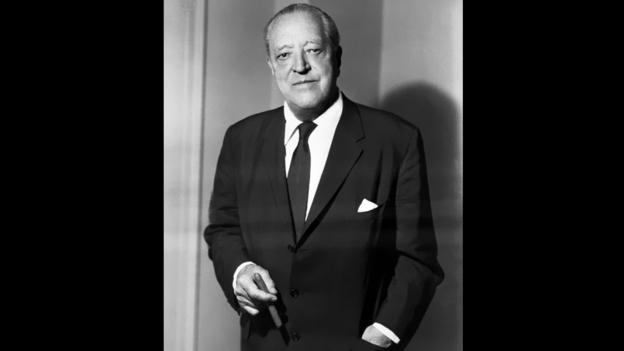
Today marks 130 years since the birth of German-American architect Ludwign
Mies Van Der Rohe.
In honor of this tremendously influential figure, we're shining some light into…
*****
Design Icons | 24 September 2013
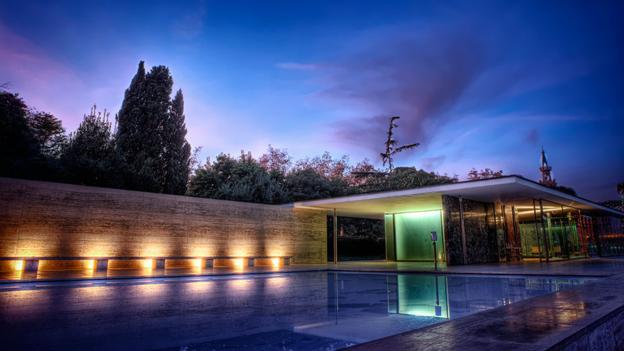
Why the ‘Barcelona’ Pavilion is a modernist classic
HIDE CAPTION
- National pride
- The German Pavilion was commissioned to represent Germany at the 1929 International Exhibition in Barcelona. (Corbis)
Mies van der Rohe’s German Pavilion in Barcelona is one of the most
influential modernist buildings of the 20th Century, argues Jonathan
Glancey.
For
more than half a century, the ‘Barcelona Pavilion’ haunted the
imagination of modern architects worldwide. Here was one of the most
enticing, beautiful and refined buildings of all time, and yet it had
stood for no more than a few months before it was pulled down. All that
was left, from 1930, of this exquisite structure by the great German
architect Ludwig Mies van der Rohe (1886-1969) were drawings and
photographs.
Even then, these were enough to inspire imperfect
lookalike designs over several decades in the guise of new houses and
art galleries. The reason this beautiful pavilion with its geometric
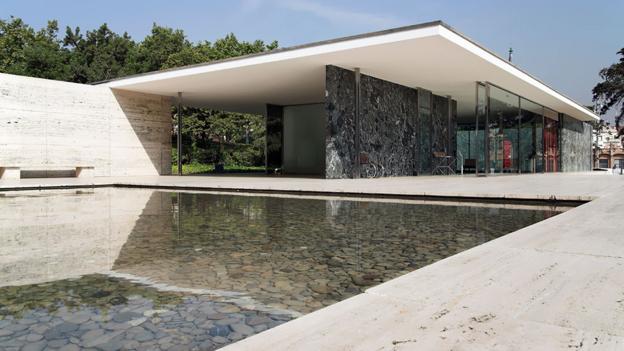
arrangement of shimmering glass and marble planes – its slimline roof
supported by eight of the slenderest chromed-steel columns– had been so
short lived was that it had been nothing more, if nothing less, than a
temporary exhibition space.
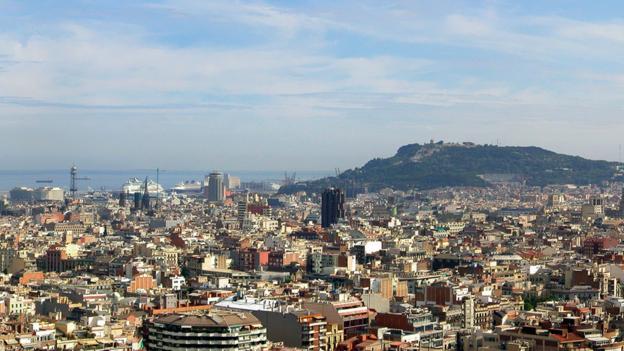
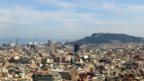
Set high on Montjuic, a hill
overlooking the harbour of Barcelona, the pavilion was visited by
hundreds of thousands of people. It was commissioned by the Weimar
Republic; and its job was to advertise a new, progressive, democratic
and modern Germany, a decade on from the Treaty of Versailles and the
carnage of World War I. And, yet, this vision of the future was no
starkly functional ‘machine for living’. No: the German Pavilion, to
give Mies’s 1929 triumph its proper name, was realised in rich and
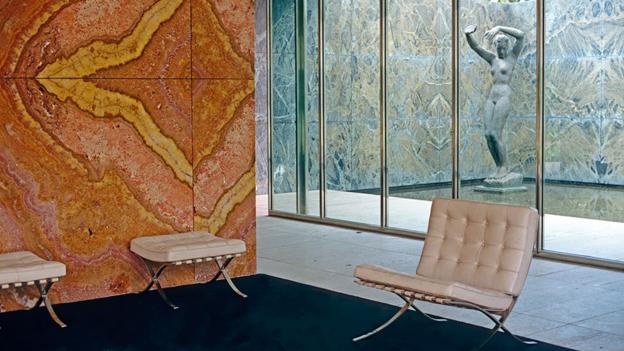
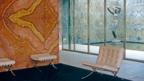
stunning materials: four shades of tinted glass, along with marble,
onyx, chromed steel and travertine.
- 音節
- trav • er • tine
- 発音
- trǽvərtìːn
[名][U]温泉沈殿物:石灰華の一種でイタリアでは建材.
- 音節
- on • yx
- 発音
- ɑ'niks | ɔ'n-
- onyxの変化形
- onyxes (複数形)
[名]
1 [U][C]《宝石》縞瑪瑙(しまめのう), オニキス.
2 [U]黒色.
━━[形]黒い, 漆黒の.
Out of this world
Set
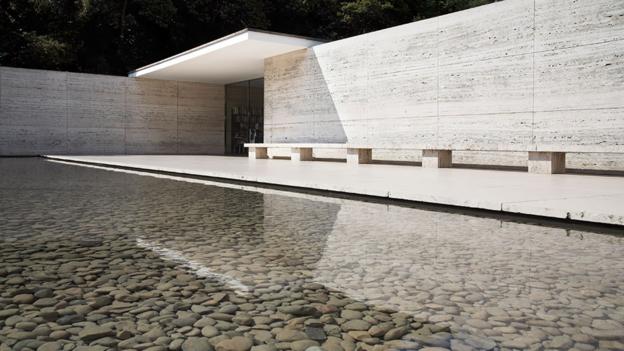
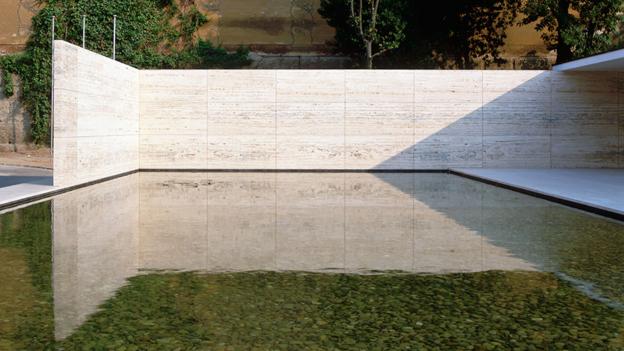
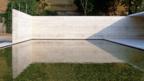
on a travertine plinth, its gleaming, offset walls created subtle
spatial illusions enhanced by sunlight, and moonlight, shimmering and
sparkling from both the rich building materials and from the rectangular
pool that permeated the structure. Walking through the pavilion, with
reflections of sun-dappled water playing on the underside of the roof,
and breezes wafting through open walls, it was hard to tell interior
from exterior. It was built quickly, as you expect of an exhibition
stand, and yet the quality of the materials Mies chose meant that the
German Pavilion looked as if it would last for decades rather than
months. The roof – a thin plane of concrete render over steel – appeared
to float over the structure, creating the extraordinary effect of a
building that was at once substantial and ethereal.
This
dreamlike sensation was reinforced by the fact that there was nothing to
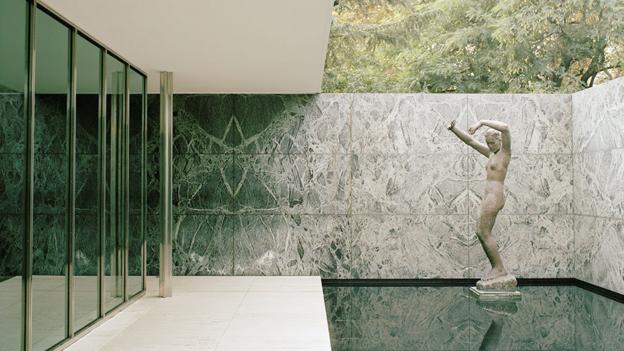
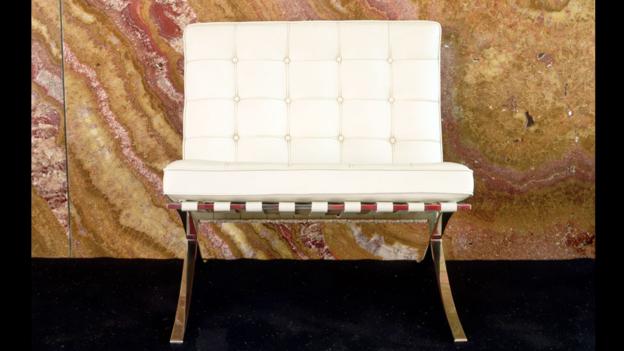
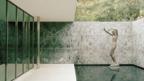
see inside beyond the architecture itself, save for a single sculpture
of a female nude - Alba, or Dawn, by the German artist George Kolbe -
and the architect’s new leather and chrome steel Barcelona chairs. While
other nations worked hard to show what they were made of through rich
and eclectic displays of art and design, Weimar Germany chose to
represent itself through this minimalist and ethereal pavilion alone.
Master builder
Mies
went on to great heights. Alongside Le Corbusier, Frank Lloyd Wright
and Alvar Aalto, he has long been considered one of the masters of 20th
Century Modern architecture. Germany, however, was under Nazi rule
within just three years of the closure of the 1929 Barcelona Expo.
Despite trying to win commissions, Mies was considered anathema by the
new regime. The last principal of the Bauhaus – closed, under government
pressure, in 1933 – he went to the Institute of Technology (ITT),
Chicago, four years later, where he created a school of thought and
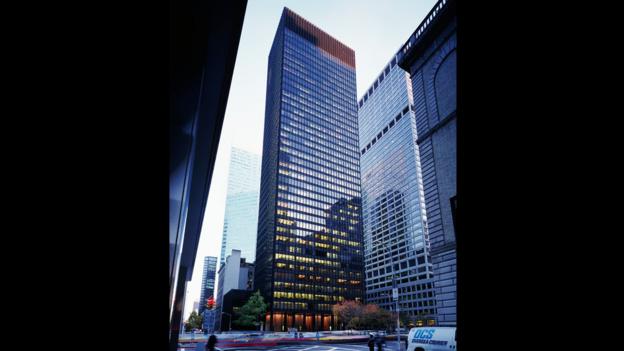
design. A US citizen from 1944, he produced such magnificent buildings
as the seemingly timeless bronze-clad Seagram Tower (1958) on New York’s
Park Avenue. His cool, rational architecture – “less is more” he said,
famously – was adopted by young modern architects worldwide, initially
perhaps for the better, but as the quality dropped with quantity, for
the worse. Less had become a bore.
The memory of the Barcelona
Pavilion, however, lived on. It had demonstrated how beautiful and
lyrical modern architecture could be. And, as modernism came
increasingly under attack in the 1970s and 80s – accused of ugliness and
even brutality – the aesthetic and cultural value of the pavilion only
grew. In 1983, the Fundacio Mies van der Rohe was set up in Barcelona
with the aim of recreating the legendary pavilion. Compelling,
captivating and utterly enchanting, the replica opened in 1986. And,
partly as a result, there was indeed a revival of purist modernism in
Europe and the United States in the late Eighties and through the
following decade.
Nothing, though - no prince, no planning
authority, no public inquiry – could ever deny the beauty of, nor dent
the reputation of the Barcelona Pavilion. Today, the perfect replica is
open to the public everyday, a design as exquisite in its own modern way
as a Greek temple, and so very happily sited in what – certainly in
terms of architecture, design and urban planning – is, by common
consent, one of the world’s greatest cities.
If you would like to comment on this story or anything else you have seen on BBC Culture, head over to our Facebook page or message us on Twitter.