紀念Paul Klee ( 1879-1940),墓碑銘文 “在這個世界上,我完全無形。因為我既棲居於亡者之中,也棲居於未出生者之中。比平常更接近造物的核心。但仍然遠遠不夠。” 。讀《克利的日記· 羅馬之旅 1901 》(中文1980 )。吳瑪悧 譯:保羅.克利。Paul Klee and the Bauhaus; Nicholas Fox (2009-10-27) 中文版早已出版 《包浩斯人: 現代主義六大師傳奇, 葛羅培、克利、康丁斯基、約瑟夫.亞伯斯、安妮.亞伯斯、密斯凡德羅的真實故事》2011,Klee and Kandinsky at the Bauhaus
Paul Klee's gravestone inscription, translation into English:
"In this world, I am completely intangible. For I dwell just as much among the dead as among the unborn. Somewhat closer to the heart of creation than usual. And still not nearly close enough."
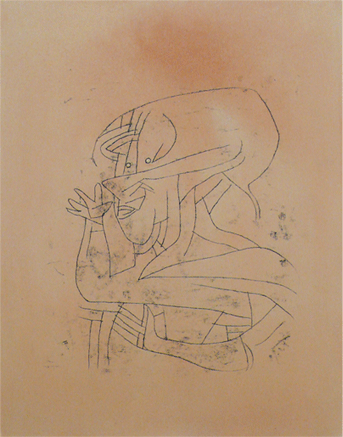
Between 1916 and 1925, Paul Klee (1879–1940) created approximately fifty hand puppets for his son Felix, with thirty still extant. For the heads, the artist utilized materials from his household: beef bones and electrical outlets, bristle brushes, leftover bits of fur, and nutshells.
Paul Klee and the BauhausHardcover– April 30, 1973 英譯本 Text: English, German (translation)
這本書有的時候將Klee 翻譯成正確的"克雷" (第26頁);Weimar 翻譯成麥瑪 (23)有誤。 "1924年他在葉那Jena 藝術公會作品展的演講" (p. 26)另外一說:Jena 大學演講,英譯北書名 Klee on Modern Art他幻想"作品能有無限的寬廣度,能統合元素性、物理性的、內容的、風格的領域。"
【追書時報 25】The Bauhaus Group: Six Masters of Modernism by Weber Nicholas Fox (2009-10-27) 中文版早已出版 《包浩斯人: 現代主義六大師傳奇, 葛羅培、克利、康丁斯基、約瑟夫.亞伯斯、安妮.亞伯斯、密斯凡德羅的真實故事》2011,生日的故事也可參考 youtube " 206 包浩斯群英(BAUHAUS, 1919-1933):簡介與導讀 2018-01-10 漢清講堂"
P is for Paul Klee
Born on 18 December 1879. Klee came from a generation that would shape the modern world. Albert Einstein (who published the Theory of Relativity in Bern in 1905) was born in March 1879, Georges Braque and Pablo Picasso in 1880 and 1881 respectively.
Anni Albers told the story of the celebrations at the Bauhaus for Klee’s fiftieth birthday in 1929 (as recounted in Nicholas Fox Weber’s In The Bauhaus Group: Six Masters of Modernism). Hiring a Junkers aeroplane, manufactured locally in Dessau, she and other students parachuted an angel-shaped package of gifts onto the roof of Klee’s house. Much as inspiration seemed to fall from the sky, so did praise; one collector at the time simply called him ‘our greatest German artist.’
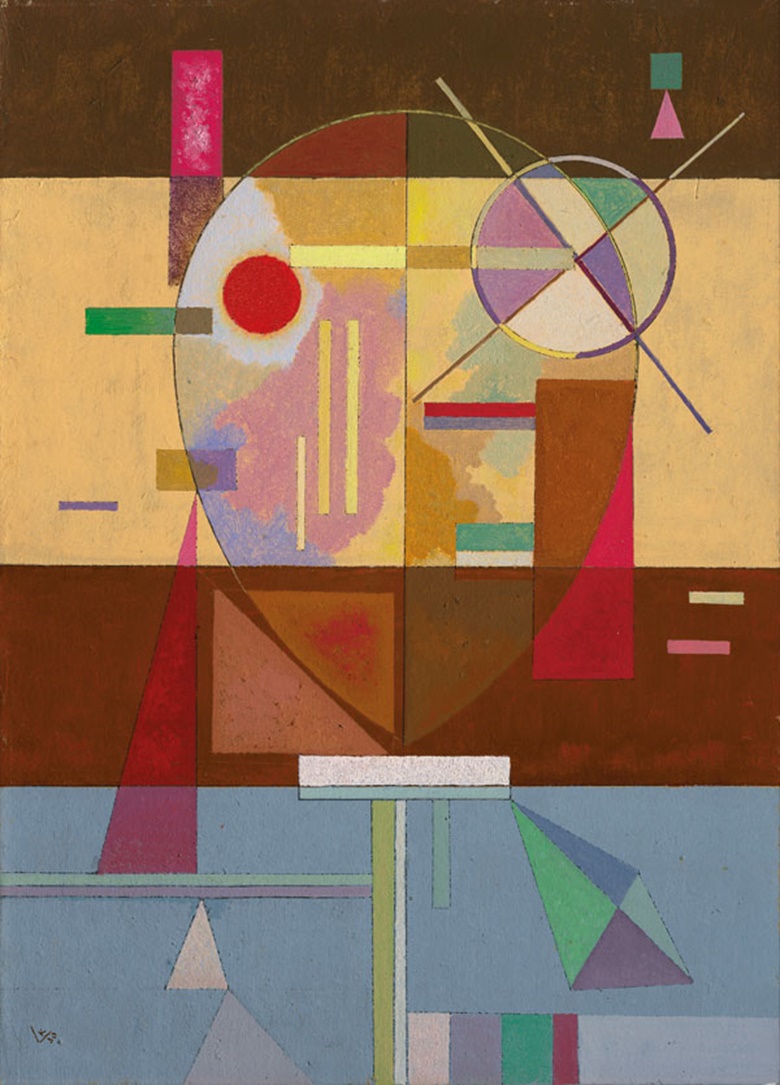
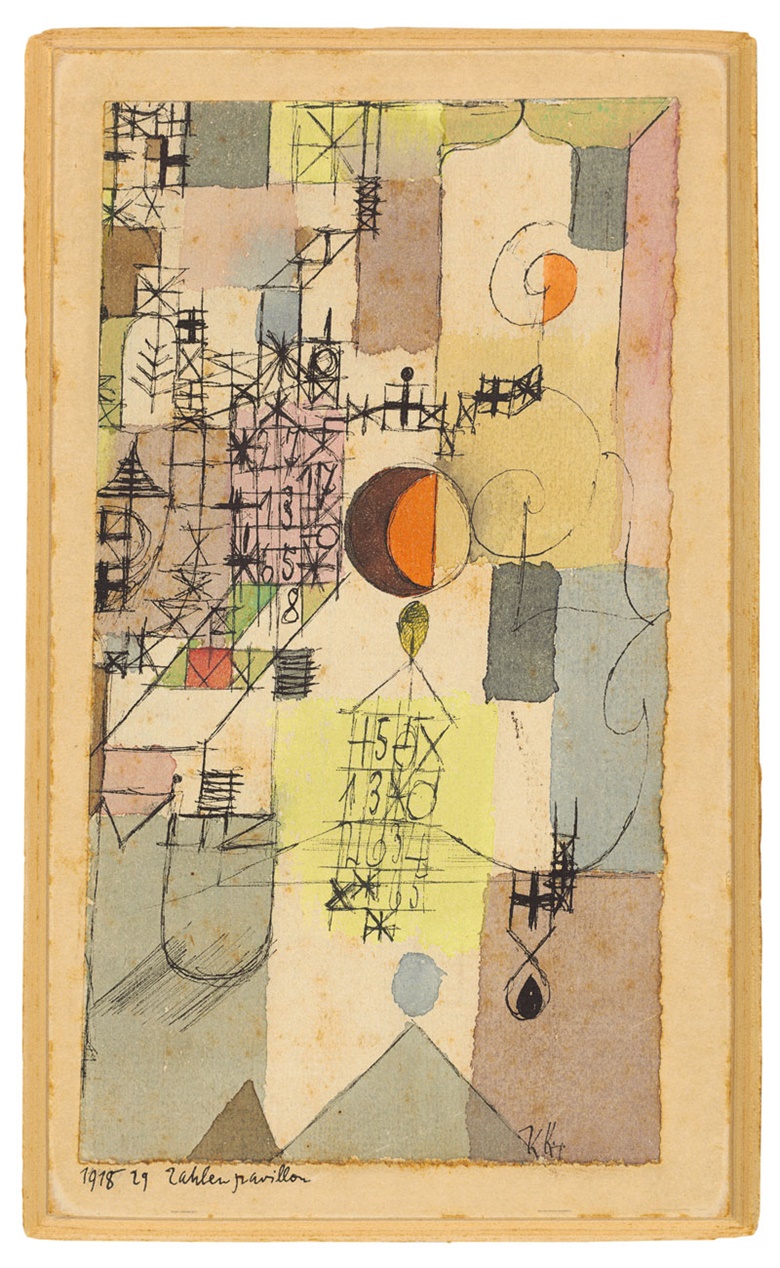
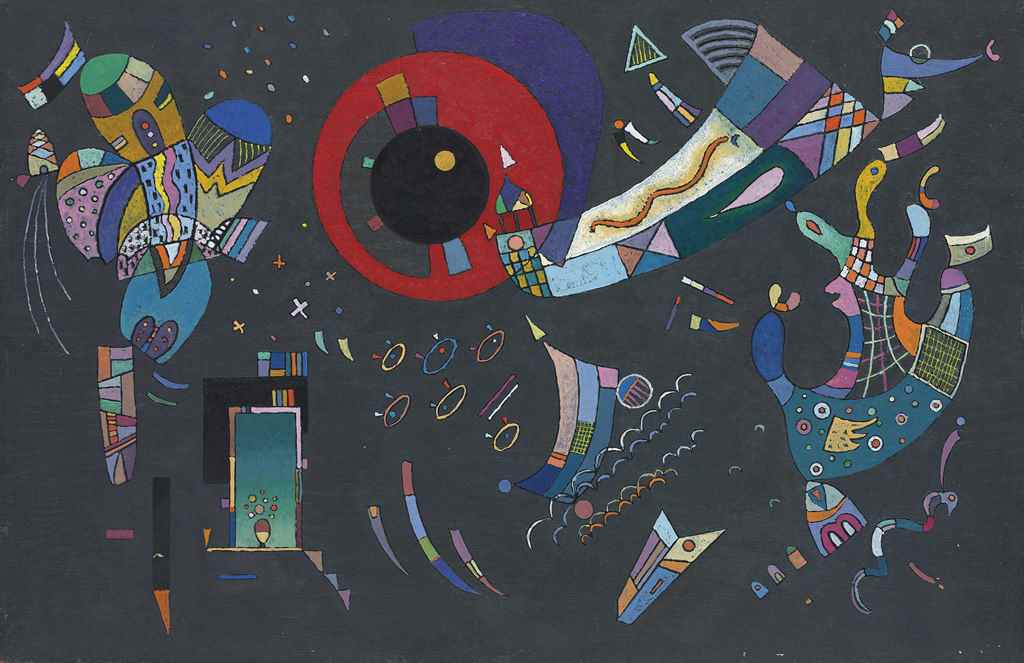
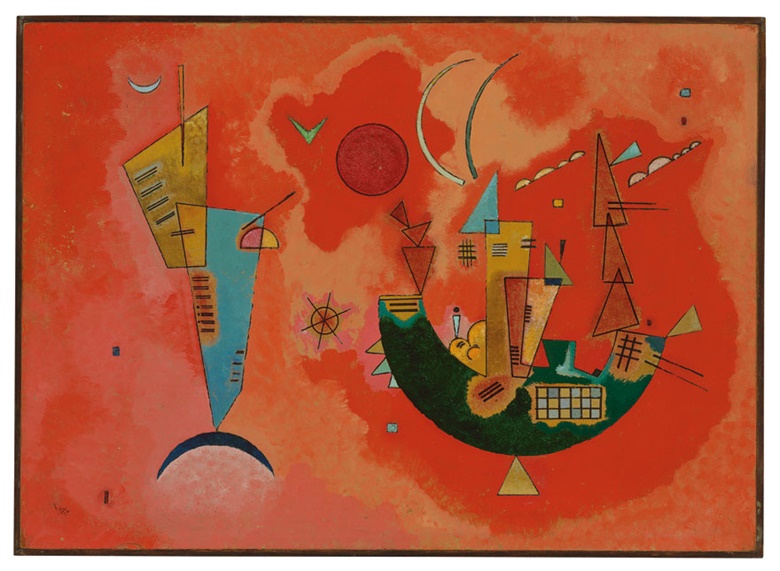
Klee and Kandinsky at the Bauhaus https://www.christies.com/features/Klee-and-Kandinsky-7441-3.aspx 有英文影片
Klee and Kandinsky at the Bauhaus
Specialist Jay Vincze looks at the highly influential period of the artists’ lives when they were neighbours, friends and colleagues at the Bauhaus — with a collection of works offered in our Impressionist & Modern Art Evening Sale on 22 June
For over 30 years Wassily Kandinsky and Paul Klee enjoyed one of the most fruitful and lasting friendships in modern art, working, exhibiting and living alongside one another during some of the most groundbreaking years of their careers.
The pair embarked on their artistic education in Munich in the early years of the 20th century, studying at the city’s academy of fine arts under the tutelage of the painter Franz von Stuck. But it was not until a decade later, in October 1911, that they would become acquainted. By this stage, the two were neighbours, living on the same street in the artists’ quarter of Schwabing.
Kandinsky recorded his first impressions of the young Klee in a letter to his close friend Franz Marc, explaining that ‘there is certainly something there in his soul’. Klee, meanwhile, noted in his diary: ‘Personal acquaintance [with Kandinsky] has given me a somewhat deeper confidence in him. He is somebody and has an exceptionally fine, clear mind.’ They discussed Kandinsky’s plans to establish a new society of artists and agreed to meet more often in the future.
At this time Kandinsky left the New Artists’ Association of Munich, of which he had been a founding member, to establish The Blue Rider group with his friend Franz Marc. In his role as special correspondent for the Swiss periodical Die Alpen, Klee glowingly reviewed The Blue Rider exhibition in December 1911, reserving special praise for Kandinsky. Klee soon joined the group for their second exhibition in 1912, subtitled Black and White, in which he was represented by 17 drawings.
Throughout the years immediately preceding the First World War, the older artist made introductions on Klee’s behalf, encouraging collectors such as Arthur Jerome Eddy to purchase the young artist’s work. But at the outbreak of war Kandinsky was forced to fee Germany as an enemy alien. Although the pair met briefly in Switzerland in the summer of 1914, they would not reconnect again for almost eight years. By this time, their professional fortunes had dramatically changed.
Klee was now a widely acclaimed painter, experiencing critical and commercial success across Europe. In 1921, he was invited by Walter Gropius to become a master at the Bauhaus in Weimar, which granted him a new degree of financial security and professional standing.
Kandinsky, on the other hand, had been absent from the German art scene for a number of years, working on the reorganisation of the cultural establishment in Russia following the Revolution. After encountering the ideological limitations of the Constructivists, who rejected his subjectivism and spiritualism, he returned to Germany where he was, once again, the subject of fierce controversy. From Berlin he sent a letter to Klee at the Bauhaus, expressing his desire to see his old friend.
Just a few months later, Klee would assist Kandinsky and his wife in their move to Weimar, where Kandinsky joined the faculty of the Bauhaus. They came to know each other as colleagues and revived their tradition of exchanging small paintings and works on paper on each other’s birthdays and at Christmas.
When the Bauhaus moved to Dessau in 1926, they became neighbours again, living side-by-side in two semi-detached masters’ houses on the new Bauhaus site. Here they fell into an easy routine, working and teaching, socialising together with their wives, and taking long walks in the valley of the Elbe river.
With the rise to power of the National Socialists in 1933, Germany became a dangerous place for both artists to live
As they entered the 1930s, an increasingly complex and dangerous political climate in Germany ushered in a period of intense uncertainty and upheaval. Klee resigned from his Bauhaus position in 1931 to begin a new post at the Art Academy in Dusseldorf, while the dissolution of the school in Dessau in 1932 saw Kandinsky move to Berlin. However, with the rise to power of the National Socialists in 1933, Germany became a dangerous place for both artists to live.
Klee was dismissed from his teaching post by the authorities, and both he and Kandinsky were labelled ‘degenerate’ artists by the new government, who confiscated their works from public collections. Both fed the country, Klee moving to his hometown of Bern in neutral Switzerland and Kandinsky to Paris. They remained in contact during this time via regular letters.
Klee and Kandinsky saw each other for the last time in February 1937, when Kandinsky and his wife Nina travelled to the Swiss capital for the opening of a retrospective of his work at the Kunsthalle Bern. While there, they made a point of visiting Klee, who was largely housebound due to the debilitating illness that had plagued him since 1935. Kandinsky brought with him the watercolour Above-Below, which he dedicated ‘To my dear friend of many years’.
The two would remain close until Klee’s death in 1940, and Kandinsky continued to remember his friend in his writings for the rest of his life.
Bauhaus adj. Of, relating to, or characteristic of a 20th-century school of design, the aesthetic of which was influenced by and derived from techniques and materials employed especially in industrial fabrication and manufacture.
[German, an architecture school founded by Walter Gropius : Bau, construction, architecture (from Middle High German bū, building, from Old High German, from būan, to dwell, settle) + Haus, house (from Middle High German hūs, from Old High German).]
Paul Klee led an artistic life that spanned the 19th and 20th centuries, but he kept his aesthetic sensibility tuned to the future. Because of that, much of the Swiss-German Bauhaus-associated painter’s work, which at its most distinctive defines its own category of abstraction, still exudes a vitality today.
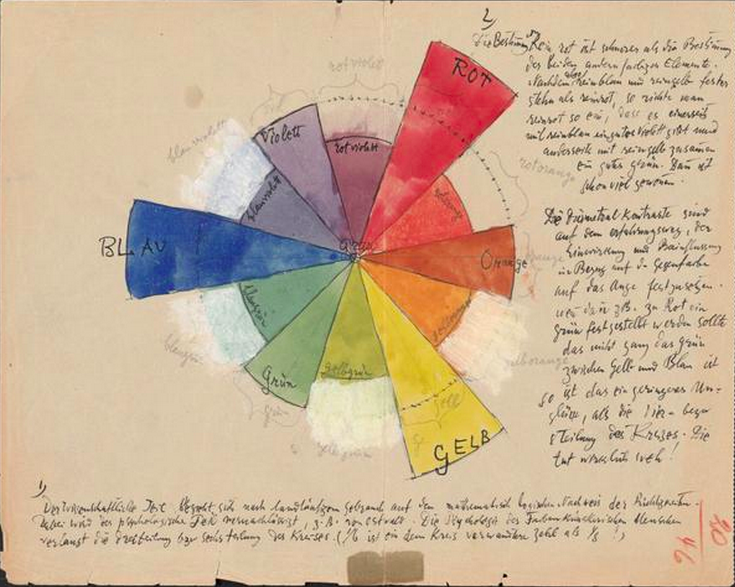
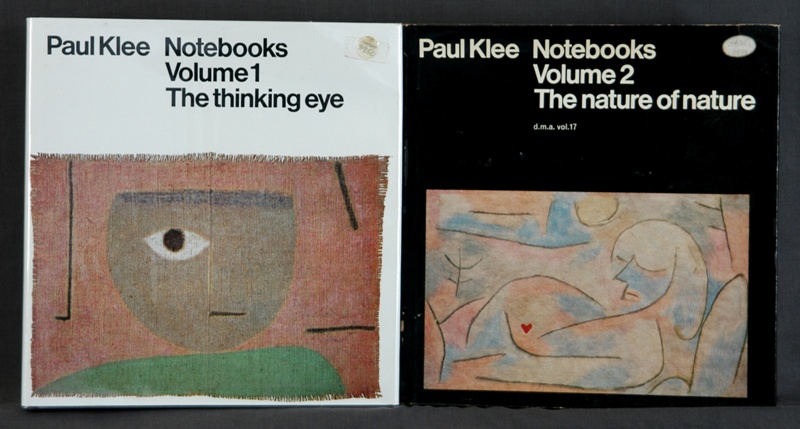
And he left behind not just those 9,000 pieces of art (not counting the hand puppetshe made for his son), but plenty of writings as well, the best known of which came out in English as Paul Klee Notebooks, two volumes (The Thinking Eye and The Nature of Nature) collecting the artist’s essays on modern art and the lectures he gave at the Bauhaus schools in the 1920s.
“These works are considered so important for understanding modern art that they are compared to the importance that Leonardo’s A Treatise on Painting had for Renaissance,” says Monoskop. Their description also quotes critic Herbert Read, who described the books as “the most complete presentation of the principles of design ever made by a modern artist – it constitutes the Principia Aesthetica of a new era of art, in which Klee occupies a position comparable to Newton’s in the realm of physics.”
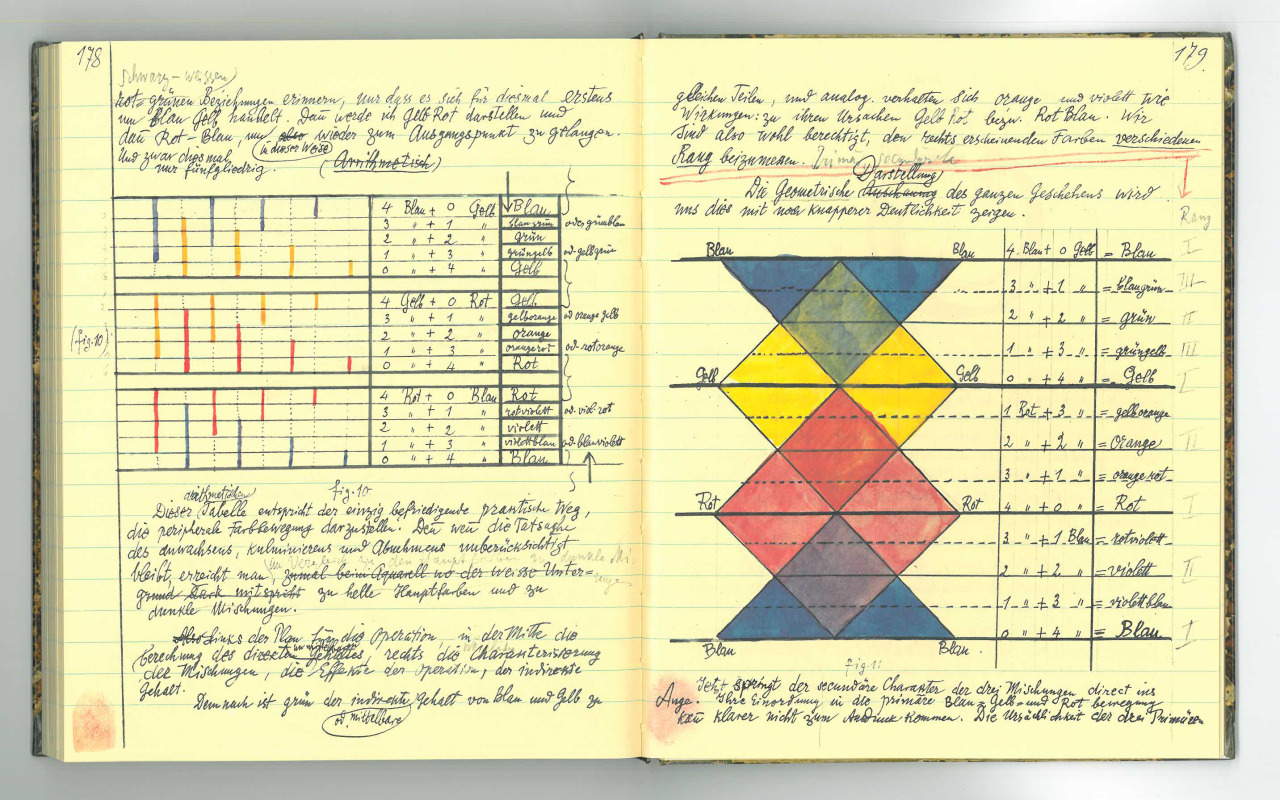
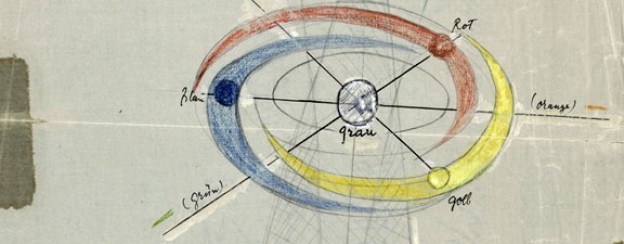
More recently, the Zentrum Paul Klee made available online almost all 3,900 pages of Klee’s personal notebooks, which he used as the source for his Bauhaus teaching between 1921 and 1931. If you can’t read German, his extensively detailed textual theorizing on the mechanics of art (especially the use of color, with which he struggled before returning from a 1914 trip to Tunisia declaring, “Color and I are one. I am a painter”) may not immediately resonate with you. But his copious illustrations of all these observations and principles, in their vividness, clarity, and reflection of a truly active mind, can still captivate anybody — just as his paintings do.
PaulKlee / text by Will Grohmann ; [translated by Norbert Guterman]
出版項
New York : H.N. Abrams, 1985
此書湖南美術出版社1990年代有翻譯本 Klee 的墓碣採用雨云女士的翻譯 不過沒說明
The Klee Universe
Christine Hopfengart (Author), Dieter Scholz (Editor), Christina Thomson (Editor), Paul Klee (Author) There are artists whose métier is the observation or documentation of the world, and artists who set the world aside altogether to build their own visionary cosmology, designing its constituent parts from scratch as a personal mythology relayed in motifs. Paul Klee (1879-1940) was such an artist, as his aphorism "Art does not reproduce the visible, rather it makes visible" testifies, and The Klee Universe addresses his work from this perspective. In 1906, Klee noted in his diary, "All will be Klee," and in 1911, as the encyclopedist of his cosmos, he began to meticulously chronicle his works in a catalogue that, by the time he died, was to contain more than 9,000 items. Here, in the fashion of an Orbis Pictus or a Renaissance emblem book, Klee's oeuvre is made legible as a cogent entirety, in thematic units address: the human life cycle, from birth and childhood to sexual desire, parenthood and death; music, architecture, theater and religion; plants, animals and landscapes; and, finally, darker, destructive forces in the shape of war, fear and death. The Klee Universe reimagines the artist as a Renaissance man, an artist of great learning whose cosmos proves to be a coherent system of ideas and images. Paul Klee (1879-1940) was born and died in Switzerland, though he never obtained Swiss citizenship. Technically of German nationality, he taught at the Bauhaus from 1921 to 1926, alongside Wassily Kandinsky, Franz Marc and others. Seventeen of his works were included in the Nazi's infamous 1937 Munich exhibition of "degenerate art."
Product Details
Hardcover: 368 pages
Publisher: Hatje Cantz (April 1, 2009)
Language: English
書名/作者
保羅克利-天使之靜默 = Paul Klee, the silence of the angel / Alégria, INA, ARTE France製作


沒有留言:
張貼留言