2025年12月20日 星期六

Alfred A. Knopf 出版社 Primo Levi’s THE PERIODIC TABLE (translated by Raymond Rosenthal) 新封面2025;Art: A Field Guide Paperback – November 27, 2001 by Robert Cumming. AMAZON 的 書籍頁面Videos: Help others learn more about this product by uploading a video!


https://en.wikipedia.org/wiki/Alfred_A._Knopf簡史 Alfred A. Knopf
Alfred A. Knopf
Parent companyPenguin Random House
Founded1915; 110 years ago
FounderBlanche Wolf Knopf and Alfred A. Knopf Sr.
Country of originUnited States
Headquarters locationNew York City, U.S.
Official websiteknopfdoubleday.com/imprint/knopf/ Edit this at Wikidata


Advertisement by Knopf


In 2015, Knopf celebrated its 100th anniversary by publishing a commemorative book, Alfred A. Knopf, 1915–2015: A Century of Publishing.[4]

People

Editors and publishers

While there have been many notable editors at Knopf there have only been four editors-in-chief: Alfred A. Knopf, Sr.Robert GottliebSonny Mehta (who died in 2019) and Jordan Pavlin.[29] Other influential editors at Knopf included Harold Strauss (Japanese literature), Herbert Weinstock (biography of musical composers), Judith Jones (translations, The Diary of Anne Frank, culinary texts), Peter Mendelsund (art director and book cover designer)[30] as well as Bobbie Bristol, Angus Cameron, Ann Close, Charles Elliott, Gary Fisketjon, Lee Goerner, Ashbel GreenCarol Brown Janeway, Michael Magzis, Anne McCormick, Nancy Nicholas, Daniel Okrent, Regina Ryan, Sophie Wilkins, and Victoria Wilson. Knopf also employed literary scouts to good advantage.[31]

Authors


Primo Levi’s THE PERIODIC TABLE


Originally published in Italian in 1975, Primo Levi’s THE PERIODIC TABLE (translated by Raymond Rosenthal) is now refreshed with a stunning new cover and an introduction by Rivka Galchen. Celebrating 50 years of this brilliant work.
“One of the most important Italian writers.”
—Umberto Eco
Design by Tyler Comrie
Animation by @minjgoto
. .
#ThePeriodicTable
#PrimoLevi
#RivkaGalchen
#SchockenBooks


Art: A Field Guide Paperback – November 27, 2001
by Robert Cumming (Author)
5.0 5.0 out of 5 stars (1)


Your eyes will indeed be opened, and what you see in works of art will come newly alive when you have Robert Cumming, the former chairman of Christie's International Art Studies, as your guide.

With tremendous erudition and tart, provocative opinions, Cumming zeroes in on the essential characteristics of more than 770 painters, showing us, for example, what it was that made Rembrandt's art unique. He explains the conventions of narrative and iconography in Western art, such as the representation of St. Lawrence, who is always seen lying on a hot griddle. And Cumming defines several hundred terms-- both technical (gouache, sfumato, craquelure) and critical/historical (Expressionism, Mannerism, the Hudson River School)-- that so often mystify a viewer.

Cumming's no-nonsense guide is enlightening and entertaining; lavishly illustrated with the key works of hundreds of artists; concise and portable enough to use in the "field" (museums and galleries); and so substantial you will refer to it often at home.


Product details

  • Publisher ‏ : ‎ Knopf
  • Publication date ‏ : ‎ November 27, 2001
  • Edition ‏ : ‎ First Edition
  • Language ‏ : ‎ English
  • Print length ‏ : ‎ 480 pages
  • ISBN-10 ‏ : ‎ 037541312X
  • ISBN-13 ‏ : ‎ 978-0375413124
  • Item Weight ‏ : ‎ 1.56 pounds
  • Dimensions ‏ : ‎ 5.42 x 0.9 x 8.85 inches
  • Best Sellers Rank: #6,631,577 in Books (See Top 100 in Books)
  • Customer Reviews: 

About the author

Follow authors to get new release updates, plus improved recommendations.

My website is www.robertcumming.net

............................................

“Life is for sharing, Robert!” So advised Edouardo Paolozzi many decades ago, and he showed me how to do it, not through words or holding forth, but by unspoken example. Nothing thrilled him more than using his eyes and looking, and sharing what he saw with others.

More people go to museums and art galleries in a year than go to football matches. That is a well-established statistic. Yet how many people who go to the National Gallery in London bother to, or even know how to, look at the pictures on display? They might see a lot of pictures (the best part of 2000 if they walk round all the rooms), yet they probably never stop and properly look at a single one.

How do I know this? When I worked at the Tate Gallery, I used to do surveys of visitors' behaviour; and when I visit a museum or gallery with my students I make them do the same. They are genuinely shocked to find that most visitors invariably spend more time reading the labels that they do looking at the works of art, and that five seconds is more than the average time spent in front of any one picture. Photographing the labels, with scarcely a glance of the work of art next to it, seems to be the current fashion. How many of the nearly ten million visitors to the Louvre each year get close enough to the Mona Lisa to have a proper look, let alone notice that there are two different landscapes in the back ground behind her, each with a different horizon that can never meet up. She knows: no wonder she smiles so wittingly!

Looking at works of art takes time and patience, but the rewards to be reaped are immense. I regularly spend over one hour in front of a single work with my students, We share what we see (because we all see something different), discuss it, puzzle over it, enjoy it, and discover (if the work of art is in good) that this is only the beginning. Even better, we all go away excited, refreshed and rewarded, and with a very clear visual memory of what we have been looking at.

How then to look at and enjoy the work of art on display in a public place? The worst thing to do is to seek refuge in words and verbal information or explanations. The words simply blind you to what you might see and enjoy with your own eyes. Can you imagine going to a concert and sitting next to somebody who talks throughout the whole performance? You would not be able to listen to a single note of music! Yet that is what happens when some voice babbles at you as you look at a work of art. I have seen groups whose eyes have been fixated on the face or voice of their guide, with their backs turned to the works of art being talked about: they might as well have been blind-folded. By the time they get home, will they remember any of the information or dates that have been thrown at them? Probably not.

Can you imagine the frustration of being invited to share a bottle of rare vintage wine, only to suffer your hosting droning on about its exceptional qualities, burdening you with endless facts and figures about the vineyard, but never actually pulling the cork to allow you to taste it for yourself and make up your own mind?

What to do, then? I can only offer my solution. Whether I am visiting a museum or gallery for first time, or revisiting one that I know well, and whether I am on my own or with another person, I play a simple game. In every room I ask myself this question, and I cannot leave the room until I have answered it: which of these objects/works of art do I really want for myself? Which of them delights the eye, gives pleasure, makes me smile/ think/ feel, makes me want to share it with somebody else?

The game really does make me have a good look at everything that is there. Sometimes, having had a good look, it turns out to be the small, at first glance insignificant and unknown picture or object, that is my final choice, rather than the big, familiar and obvious. Sometimes it is a no-brainer: there is one lovely thing which really stands out from all the rest. The game gets difficult in a room which is full of lovely things: but I can only have one – so which is it going to be, and why? The game is also difficult when the room is full of unappealing nothings, a ragbag of the third or fourth rate. But the rules of the game must be obeyed: I am not allowed to leave without choosing one thing; so, it forces me to look at them all and to find a glimmer of merit, somewhere, in one of them.

I played the game with Paolozzi; I have introduced countless dozens of others to the game. We all have such a good time playing it and sharing our opinions and discoveries. I cannot tell you how satisfying and rewarding the game is. I play it with my wife who enjoys the game as much as I do. We go around independently and then revisit each room and share our choices. Sometimes we agree, but as like as not we surprise each other, and that makes each of us take a further look. Best of all it means that each of us remembers one thing from each room; and then there is the final question: out of all the things that you chose today, room by room, which is the one single thing that you really want?

The game is surprisingly tiring, so best follow the example of a football match: a first half of 45 minutes (let's say 60 as it is an art game); then a half-time break of 15 minutes (let's say 30 if the museum has a nice coffee shop); a second half of 45/60 minutes. Thus, 2 to 2 ½ hours in total: a morning or afternoon thoroughly well spent with the eye and mind well exercised: the reward at the end of it being something to remember, possibly forever. Nobody loses at this game. What could be better?

..................................

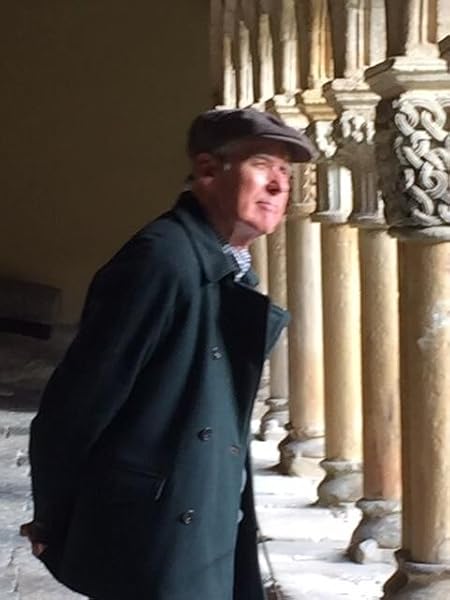
Robert Cumming (art historian)

From Wikipedia, the free encyclopedia

Robert Alexander Cumming (born May 1945) is professor of the history of art at Boston University. He worked for the Tate Gallery, London, before moving to Christie's auction house where he founded the education department. After he retired from Christie's he joined Boston University. Cumming is a prolific author of art history books aimed at young people and beginners. His edited edition of the letters between Bernard Berenson and Kenneth Clark is published by Yale University Press.

Early life

Robert Cumming was born in May 1945. He received his advanced education at Trinity Hall, Cambridge, where he studied law. He qualified as a barrister and began to practice but returned to Trinity Hall to study art history.[1]

Career

Cumming worked in the education department of the Tate Gallery, London, before moving to Christie's auction house in 1978 where he founded Christie's Education which continues to offer graduate programmes in London and New York, and non-degree programmes in London, Paris, New York and Melbourne. He retired from Christie's in 2000, after which he was responsible for the Boston University Study Abroad London Centre from 2004 to 2012 before becoming professor of art history with the university.[1]

Writing

Cumming is a prolific author and is particularly known for his association with Dorling Kindersley for whom he has written many introductory level and explanatory works of art history. First inspired by his interactions with novices and young people during his time at the Tate Gallery.[1] His subsequent experience in teaching adults and students of all ages has resulted in over a dozen books. His books have been translated into over 20 languages, have sold over one million copies, and been awarded literary prizes in the UK, Holland and Italy.

His knowledge of connoisseurship came to the fore in his 2015 edited edition of the correspondence between Bernard Berenson and Kenneth Clark, published by Yale University Press, which was positively reviewed.[2][3][4]

Personal life

Cumming lives in Buckinghamshire and is married to Carolyn. The couple have two daughters, Chloe and Phoebe.[5]


【 眾生報:每日人事物 2025 1223週二;20251221發 】


https://hcpeople.blogspot.com/2024/09/2025.html
五十幾年的《小王子》迷:台灣,香港,韓國....... 沈採耕《 天文學家不看星星 和小王子看日落》;黃騰輝(Robert Huang)(古典玫瑰咖啡店聯瑣)和陳錦芳(Chen Jing Fan)(1936年—) the “Jane Austen” rose及我們的(《小王子》 by Saint-Exupery, Antoine de "我是城市的建築者...... 我只是在風中的一粒玉米種籽。但我擋住風並把種籽埋進土裏,而以神的名義使西洋杉成長。" ) 2025年曆是由東海大學聯名出版 封面:格局與蛻變—黃騰輝的藝術世界。賴方玉。

2025牯嶺街書香創意市集1220 1221 出版品 夏爾·波德萊爾 (Charles Baudelaire) 的詩集《惡之花》(Les Fleurs du Mal),及其詩作中常有的「劇場」意象。辛波絲卡 Wisława Szymborska全集 ,譯者: 林蔚昀,黑體文化, 2025《劇場印象》

「清酒真相」旨在讓人瞭解 澄清人們對清酒的常見誤解 NHK World-Japan 推出了一個名為「清酒真相」(SAKE TRUTH)的節目,旨在探索清酒的各個方面,包括風味的科學原理和歷史創新。 東京大學實驗 (機械感官,就甜,酸.....四面向量度) 飲用溫度:清酒可依其風格選擇冷藏4度C、常溫20度或溫熱(焗酒50度)飲用。

中國的「後發劣勢 Curse to the Late Comer」 ——王璞讀楊小凱《憲政與經濟》隨感:楊小凱在書中多次比喻的:這就好比遊戲規則的制定者、裁判、和下場比賽的選手都是同一群人一樣荒誕不經描述出輝煌成就後面的隱患:貌似佔盡後機,經濟突飛猛進。可是沒有政治體制的變革,經濟上的成果勢必落入權力群體的腰包。。 ; China bans an independent think-tank critical of its policie自由派智庫天則經濟研究所被強制關閉。茅于軾 (天則經濟研究所)90歲自述、〈給你所愛的人以自由》:我的喜悅與期待;Taishang(台商)、卓桐華:台商是動物,不是植物 ;


『張文』全家都是桃園人!他崇拜誰?他的氣話,變裝,買兇器.......〈差一步成大屠殺!張文汽油彈意外起火 原始計畫曝光〉。北捷恐攻釀4死9傷!遇到恐怖襲擊時的反應措施 "Run → Hide → Fight. 跑 → 藏 → 打";張文空軍退伍背景曝;「遺落筆記本」成破案關鍵,2025;台北的2015/2016隨機砍人事件 :中山站濺血 生日鬱悶殺人出氣 渣男北捷狂砍 4傷(多人談)。日本退休人員犯罪率高於十來歲青年;

自學遠比學校重要:大學16周 (大學功能待辯論.......柏克萊正以十年視野重建教育版圖,讓學生在最劇烈的科技浪潮中仍具備競爭力);中小學每周上課四天。四天制學校週向越來越多的城鎮和城市推廣.....


台灣The Economist 周刊的店面鋪排,慢一周 (2024年換經銷商、 )預備讀《經濟學人(The Economist 聖誕-新年特刊 )及2026年展望》讀《經濟學人(The Economist Nov. 23~29 2024 )及2025年展望》;芬蘭經驗《經濟學人(The Economist) 2026年全球大趨勢》2026年美國迎來建國兩百五十週年之際,美國比50年前的建國兩百週年更加薄弱 。讀《經濟學人(The Economist Nov. 23~29 2024 )及2025年展望THE WORLD AHEAD 2025》紐約時報展望2025:那些可能改变世界的事件;芬蘭經驗是烏克蘭最重要借鏡,專業記者,網錄影片,客觀,有“評論,修正”等等,這些是社群媒體如Meta, X 等做不到的。醜,力拼"AI 戰 ""的 Musk xAI 白刃戰接下來一期:The key is robust security guarantees for Ukrainians?

兩位行納粹禮的老美互鬥:Steve Bannon 鬥 Elon Musk「百分之百專注於目標的人,那就是伊隆馬斯克。沒有噪音,百分之百專注,」。前白宮首席策略師班農(Steve Bannon)"宣稱"特朗普將於2028年競選並贏得第三屆總統任期

廣告到收買:廣告無所不在,良性的,從麥當勞的牛肉堡,NHK國際台的日本文化特色....... ;惡性廣告,假新聞橫行,2025年國台辦釋放美女群..... 中國全球媒體人士大收買運動,外國媒體人1500萬元 (抽成300萬) 網路有錄音帶; 中文者小角500萬?廖雨詩,疑似暗中收受中國國台辦資金;馮光遠 暱稱,轉大彎的「word play」

英籍瑞士裔作家兼哲學家艾倫·狄波頓(Alain de Botton),全球知名的「人生學校」(The School of Life)創辦人。「日常哲學」風格聞名於世;代表作包括《我談的那場戀愛》 、《擁抱逝水年華》、《哲學的慰藉》及《旅行的藝術》等等,台灣先覺出版社,無不膾炙人口。 愛恨機場: Alain de Botton 狄波頓 《機場裡的小旅行: 狄波頓第五航站日記 A Week at the Airport: A Heathrow Diary》; (Henry Mintzberg) 《為什麼我討厭搭飛機------管理大師笑談管理Tales for the Tormented Traveler》The Flying Circus: Why We Love to Hate Our Airlines and Airports

倉本聰(Sô Kuramoto. 1935 .age 90 years),自傳《先跳了再說:我的履歷書》台灣2021以前?/中國2024 (見る前に跳んだ 私の履歴書),中文版的序/導言,都寫得很精彩.....「人類明明能靠大自然恩賜的利息過日子,偏偏卻加以破壞動用大自然的本金」 日劇「從北國來」更要感謝農民等生產者..... Ken Ogata 緒形拳

許良宇圖書館(台中東勢 參考羅時瑋攝影;台中綠美館,東海宗教中心,.....) 。捐款千萬的美夢,實際很少,另有原因,他說我應該恢復"漢清講堂" hc iTaiwan forum

"
"1975級回娘家"上貼文大度山居歲月 羅時瑋/第17屆建築系。同學苦邦/許邦雄:苦邦家的百香果 --- 苦邦音樂 HC: 東海IE1975級同學會狂想曲(2024年底). hc 與他打屁 , 談 "吃、喫、《國語日報字典 喫》有十三義。食、定食満喫"。 葉龍夫醫師走了2024,Tyler Cowen (1962~ 泰勒‧科文 經濟學), the man who wants to know everything《邊際革命 Marginal Revolution》經濟部落格

感動 (66~85) 感動: 讀完《白鯨》就像是經歷了一場精神洗禮。(Moby Dick By Herman Melville赫曼‧梅爾維爾原作直播討論) 曹永洋導論 愛、『擁抱』(山頂小屋校長)、赫塞( HESSE)小說《珠戲》與台灣華德福教育。):訪客。 瞇眼讀史:苦笑鳥瞰華人世界百年史 (1): 習近平(中國夢,中國香港,白紙革命) vs 蔡英文 六大核心產業”一日“要做”兩工“ 的苦日子,《多桑》的時代。兔年好故事:這個世界太美了,....佳節樂音.......人類文明大成就:梵諦岡的聖彼得大教堂(St. Peter's Basilica)等群英 (D/W)、聖家族( La Sagrada Familia, Barcelona, Spain):高第Antoni Gaudí 及身後 (1926~ )百年的營建團隊 (2012) 許多“微感動”,冬至快樂!友情與師生情:曹永洋;李肇修、廖志峰 (都是漢清講堂之友)。直播會前會後「 淚光 閃爍」曹永洋:文學史上的 白鯨記(2023年12月21日)《白鯨記》(Moby Dick ByHerman Melville。英國聖誕特色,今年最盛 幽默諷刺美國Trump 事件,最妙 二齒 Panto goes political 人類自由指數。《回憶錄》佳節近:Christmas trees. 40年代世界時尚設計。黎智英受訪時的眼淚..... 開審。香港不可思議的 INTERNET... facebook...... 珠戲? (H. Hesse))小世界相處一處: 詳內文.......戴資穎 。陳永興/水牛建築師事務所(羅時瑋、謝雅琪導覽、思頻陪走 新竹香山華德福學校+幼兒園) 感動 (67):醉月半世紀:《水邊》(許達然); 海邊 (孟祥森); 湖:朱自清;未央歌(陸橋) ;醉月湖; Wivenhoe Park (Univ. of Essex John Constable

歌劇導演曾道雄教授。身為基隆女婿林右昌、馬水龍、蔣理容。虞戡平導演

《領導人的覺醒時刻:Stan哥與AI對話》(宏碁創辦人施振榮董事長)。宏碁分家。 林憲銘 緯創 (緯創砸279億 進擊AI基建 大搶網通、雲端等新商機) 緯穎;宏碁;明碁改名的佳世達.......(謝金河 AI賽道上的贏家會愈來愈少 ) 兩個施振榮 2014年6月退休/施振榮Stan哥退休20年感恩音樂會202412、林憲銘 Acer 40年 團隊:陳俊聖、黃少華;王振堂、翁建仁

汪浩:國共勾結亂台灣?冷戰中的兩面派:英國的臺灣政策1949-1958、 蔡珠兒 、許悔之

畫家梁丹丰的筆記本 (吳鳴)《陳景林、馬毓秀的染織世界》新書發表會絮語

彭明輝(吳鳴)《陳景林、馬毓秀的染織世界》新書發表會絮語20251219,彭博 父子

老友相聚會議紀錄/感想:吳鳴《陳景林、馬毓秀的染織世界》新書發表會絮語,蔡其達,梁國淦父子,鄭麗軒2025; 梁耕三博士。梁國淦買書母親 新潮文庫20230927

Sam ​Altman:Nvidia to Invest $100 Billion in OpenAI. Values OpenAI at $500 Billion 這筆還沒簽約. OpenAI旗下的ChatGPT行動應用本週全球消費者支出突破30億美元大關。 AI ​不會取代創作 :用戶快速成長至每週 7 億活躍用戶之際。OpenAI 和 Nvidia 合作大投資;能源需求

沒有留言:

網誌存檔