1978年,兩位傳奇藝術家為莫札特的歌劇《魔笛》創作了標誌性的、廣受讚譽的舞台設計。英國藝術家大衛霍克尼為格林德伯恩歌劇節設計了充滿活力、如夢似幻的舞台劇,而著名插畫家莫里斯桑達克則為休斯頓歌劇院創作了他的第一幅戲劇設計作品。
Web results

 、寫歌劇《魔笛》時用的翼琴(Clavichord),還有許多親筆書信等,完整的介紹了莫札特的生平。
 或桑達克的作品,這個展覽非常推薦。當然,每次去摩根圖書館都一定要進去摩根家族那華麗的圖書室繞一圈,看看鍍金年代製作的三層樓胡桃木書架、巨大的壁爐和壁畫,以及許多珍貴的館藏。
2026
This spring, David Hockney will unveil a major new work at Turner Contemporary in Margate, UK, as part of the gallery’s 15th-anniversary celebrations. The piece, a massive 22-by-32-foot installation, will transform the museum’s floor-to-ceiling window in the Sunley Gallery overlooking Margate’s beaches and the North Sea.
Read more: https://www.artnews.com/....../david-hockney-to-paint....../
今年春天,大衛霍克尼將在英國馬蓋特的特納當代美術館展出一件大型新作,以此慶祝美術館成立15週年。這件尺寸為22英尺乘32英尺的巨型裝置作品,將佔據桑利畫廊內俯瞰馬蓋特海灘和北海的落地窗。
This spring, David Hockney will unveil a major new work at Turner Contemporary in Margate, UK, as part of the gallery’s 15th-anniversary celebrations. The piece, a massive 22-by-32-foot installation, will transform the museum’s floor-to-ceiling window in the Sunley Gallery overlooking Margate’s beaches and the North Sea.
Read more: https://www.artnews.com/....../david-hockney-to-paint....../
----
david hockney 等人認為它太容易損害,應留在法國,不應在英國展。
"It’s very symbolic for France and maybe even more for the UK"

theguardian.com
Emmanuel Macron 'agrees to loan Bayeux Tapestry to Britain'
我們的社群絕大多數都站在大衛霍克尼這邊,認為貝葉掛毯無可取代,即使只是暫時搬遷到倫敦,也絕不能冒任何風險。
----
2021
H無論如何,春天都無法被取消…… 大衛霍克尼和馬丁蓋福德的新書《春天無法被取消》現已出版。這本振奮人心的宣言闡述了藝術的啟發力量。本書基於兩位好友之間大量的全新對話和通信,涵蓋了這段特殊的隔離時期及其影響;藝術家在鄉村生活中發現的全新創作方向;以及數十年來一直令他著迷的主題:光線、色彩、空間、感知、水、樹木等等。它不僅教導我們如何觀察,也教導我們如何生活。anching Chung
2021年3月25日 ·
Thames & Hudson
2021年3月25日 ·
No matter what, Spring cannot be cancelled…
---
大衛霍克尼:繪畫人生
這位英國藝術家在摩根圖書館與博物館舉辦的新展覽,其動人之處在於聚焦於摯愛之人以及人際關係的複雜性…
展覽在材料運用上包羅萬象,但主題卻十分集中,宛如溫馨的家庭聚會。展覽中僅描繪了五個人:霍克尼先生本人、他的母親,以及三位與他相識近五十年的摯友:格雷戈里·埃文斯,他曾經的情人、前策展人兼摯友;紡織品設計師西莉亞·伯特韋爾;以及莫里斯·佩恩,一位版畫大師,霍克尼先生自職業生涯早期便與其合作。
《格雷戈里》(1979),紙上墨水。圖片來源:大衛霍克尼
如果友誼是本次展覽的主題之一,而運用各種材料和風格進行繪畫的樂趣是另一個主題,那麼時間本身就是第三個主題。展覽分為五個章節——無字的人物小傳——在這些章節中,我們看到了霍克尼先生的朋友們在人生旅程中不同情緒和場景下的寫照。如同我們自身一樣,我們也能在他們臉上看見時光的流逝。
霍克尼先生本質上是在記錄他與他人交織的人生。有時這種記錄是直白的,例如他創作於1974年巴黎一家酒店房間的那幅生動活潑的彩色鉛筆畫《父母與我自畫像》。畫中,藝術家的臉映照在梳妝台的鏡子裡,出現在父母的臉龐之間,父母分別坐在他兩側,身後是深黃色的窗簾。他的父親看起來整潔又不失風度。他母親的裙子是隨意的塗鴉式設計——寬鬆而隨意,這似乎與她溫暖的個性以及對兒子更積極的鼓勵相得益彰。他最感人的肖像畫之一創作於1978年2月19日,也就是她丈夫的葬禮當天。這幅畫用倫勃朗鍾愛的棕褐色墨水繪製,畫中的她身穿外套,頭戴帽子,神情略顯茫然卻又平靜,彷彿在審視人生的下一個階段。
《莫里斯 1998》,蝕刻版畫。圖片來源:大衛霍克尼基金會
展覽的第一面牆展現了霍克尼先生早期的才華和對藝術的執著,而展出的作品創作於20世紀50年代,我認為這些作品在美國並不常見。尤其令人印象深刻的是一幅創作於1954年的自畫像拼貼畫,那一年霍克尼先生17歲。誠然,他當時已在英國約克郡布拉德福德的布拉德福德藝術學院學習(他於1937年出生於此),但這幅作品仍然令人好奇他是如何創作出來的。這幅作品主要由貼在新聞紙上的彩色雜誌片段拼貼而成,展現了這位年輕藝術家專注地審視自己和我們。他自信的神態、標誌性的大眼鏡和蓬鬆的瀏海——儘管顏色很深——已然顯現。暗淡的色彩令人眼前一亮,也印證了霍克尼先生在1961年第一次欣喜若狂的紐約之旅中,將頭髮染成安迪·沃霍爾式的白色,以增強其與生俱來的魅力是多麼明智。
《西莉亞‧卡倫納克,1971年8月》,色鉛筆畫於紙上。圖片來源:大衛霍克尼基金會
《西莉亞,2019年11月21日》,墨水和壓克力顏料畫於紙上。圖片來源:大衛霍克尼
藝術家藍色外套、海軍藍夾克、紅色圍巾和黃色領帶上交錯的色彩碎片,預示著他20世紀80年代合成寶麗來照片中多面立體主義的風格。視覺上的巧妙構思已然顯現:紅色圍巾中包含著另一條紅色圍巾的圖像碎片,圍巾被隨意地揉皺,彷彿來自廣告。在媒材的轉換中,他襯衫領子的格子圖案被隨意地用灰色水彩暈染在白色剪紙上。
展覽的核心是專門介紹霍克尼先生朋友的部分。格雷戈里·埃文斯的作品以近乎小說般的豐富圖像呈現,涵蓋了風格、媒介以及他本人不斷變化的形象。他最初是一位身材高挑、容貌俊美的少年,一頭瀑布般的捲發(以馬蒂斯式的簡潔筆觸描繪),而在展覽結尾的一幅大型水墨畫中,他卻變成了一位氣度不凡、體態豐腴、戴著眼鏡、眉頭緊鎖的年長男子,幾乎讓人認不出來。
《母親,布拉德福德。 1978年2月19日》,紙上棕褐色墨水畫。圖片來源:大衛霍克尼基金會
優雅的西莉亞·伯特韋爾被認為是霍克尼先生的繆斯,她以寧靜的氣質、眼線勾勒的雙眸和時尚品味為展覽增添了光彩。她的精神狀態僅在1973年的一幅大型憂鬱石版畫中有所減弱,這幅作品偽裝成水墨畫,卻是展覽中最出色的作品之一。
莫里斯·佩恩是一位技藝精湛的版畫家,曾與霍克尼先生合作創作過許多版畫作品,他無疑是這位藝術家最穩定的創作對象之一。他身材精瘦,言簡意賅,與馬塞爾·杜尚有幾分神似,姿態和沈思的表情變化不多,這使得霍克尼先生的技法更加爐火純青。一幅創作於1998年的大幅蝕刻版畫,筆觸細膩,完美展現了這種媒材獨特的黑色表現力。
Our community overwhelmingly sided with David Hockney, arguing that the Bayeux Tapestry is too irreplaceable to justify the risks of moving it to London, even temporarily
David Hockney: A Life in Drawing
The British artist’s new show at the Morgan Library & Museum derives its poignant power from its focus on loved ones and the complex nature of relationships...

While lavishly inclusive in terms of materials, the show is otherwise tightly focused, a cozy family affair. Only five people are depicted here: Mr. Hockney, his mother and three intimates whom he has known, traveled with, drawn and also painted for around five decades: Gregory Evans, his one-time lover, former curator and longtime friend; the textile designer Celia Birtwell; and Maurice Payne, a master printer with whom Mr. Hockney has collaborated since early in his career.
Image “Gregory” (1979), ink on paper.Credit...David Hockney
If friendship is one of the show’s themes, and the glory of drawing in various materials and styles is another, then time itself is the third. The exhibition is divided into five chapters — wordless capsule biographies — in which we see Mr. Hockney’s friends in various moods and settings as they progress through life. As with ourselves, we can see time pass on their faces.
Mr. Hockney is essentially documenting his life as it has entwined with others. Sometimes this is literal, as in the sprightly colored pencil drawing “Study for My Parents and Myself,” made in a hotel room in Paris in 1974. The artist’s face, reflected in a dressing-table mirror, appears between those of his parents, seated to either side before deep yellow drapes. His father looks tidy and subtly dapper. His mother’s dress is loosely scribbled — expansive and improvised, which seems appropriate to her warmer personality and more active encouragement of her son. One of his most touching portraits of her dates from Feb. 19, 1978, the day of her husband’s funeral. Drawn in sepia ink (favored by Rembrandt), she wears a coat and hat, and looks a little blank but calm, as if appraising the next phase of her life.
Image “Maurice 1998,” etching. Credit...The David Hockney Foundation
ADVERTISEMENT
The show’s first wall offers a taste of Mr. Hockney’s early talent and commitment to art with works from the 1950s that I don’t think have often been exhibited in this country. Especially impressive is a self-portrait collage from 1954, the year Mr. Hockney turned 17. Granted he was already studying at the Bradford School of Art in Bradford in Yorkshire, England, where he was born in 1937, but it still makes one curious about how he got to it. Fashioned mostly from small colorful scraps of glossy magazine images glued to newsprint, it shows the young artist intently studying himself and us. Already in place are his self-possession, big glasses and mop head bangs — albeit very dark. The dull color startles, confirming how right Mr. Hockney was to enhance his innate charisma by peroxiding his hair Andy Warhol white in 1961, on his first ecstatic trip to New York.
Image “Celia Carennac, August 1971,” colored pencil on paper.Credit...The David Hockney Foundation
Image “Celia, 21 Nov 2019,” ink and acrylic on paper.Credit...David Hockney
The jumbled fragments of color that define the artist’s blue coat, navy jacket, red scarf and yellow necktie presage the multifaceted Cubist vibe of his composite Polaroids from the 1980s. Visual wit is already apparent: The red of the scarf includes bits of an image of a red scarf, stylishly rumpled, as if from an advertisement. In a shift of mediums, the checked pattern of his shirt collar is casually indicated with gray wash brushed on white cutout paper.
The sections devoted to Mr. Hockney’s friends form the core of the exhibition. Gregory Evans is represented by an almost novelistic profusion of images in terms of style, medium and his own changing appearance. He begins as a tall boyish beauty with cascading curls (depicted with fine, Matissean sparseness), and is almost unrecognizable as an imposing older figure, heavier and scowling through eyeglasses in a large ink drawing at the show’s end.
Image “Mother, Bradford. 19 Feb 1978,” sepia ink on paper.Credit...The David Hockney Foundation
The elegant Celia Birtwell who is considered Mr. Hockney’s muse, brightens the show with her serenity, kohl-rimmed eyes and fashion sense. Her spirit darkens only once in a large morose lithograph from 1973 that masquerades as an ink drawing and is one of the best images in the show.
Maurice Payne, a master printer who has collaborated with Mr. Hockney on many of his prints, must be one of the artist’s steadiest subjects. Lean and laconic, with a certain resemblance to Marcel Duchamp, he changes little in pose or thoughtful expression, which makes Mr. Hockney’s command all the clearer. A large, densely worked etching of him from 1998 gives a wonderful account of the medium’s special way of infusing black with textured light.
At the end, this ebullient show circles back to the artist’s self-portraits, which often catch him in the act of drawing, looking hard, sharply, at what is in front of him. A final wall displays eight monumental drawings in ink and sometimes acrylic of his three old friends. Each has embraced aging a different way — Ms. Birtwell most buoyantly, her open face reflecting the artist’s own unfailing curiosity. Approaching paintings in terms of impact, these latest portrayals attest to Mr. Hockney’s undiminished ambition for the medium so central to his achievement. They also attest to the endurance of love in our lives and the role of art in making us see it.
David Hockney: Drawing From Life
Oct. 2 through May 30 at the Morgan Library & Museum, 225 Madison Avenue, Manhattan; 212-685-0008, themorgan.org.
David Hockney’s Life in Painting: Spare, Exuberant, Full
Nov. 23, 2017
Roberta Smith, the co-chief art critic, regularly reviews museum exhibitions, art fairs and gallery shows in New York, North America and abroad. Her special areas of interest include ceramics textiles, folk and outsider art, design and video art. @robertasmithnyt
A version of this article appears in print on Oct. 2, 2020, Section C, Page 1 of the New York edition with the headline: A
---2008.11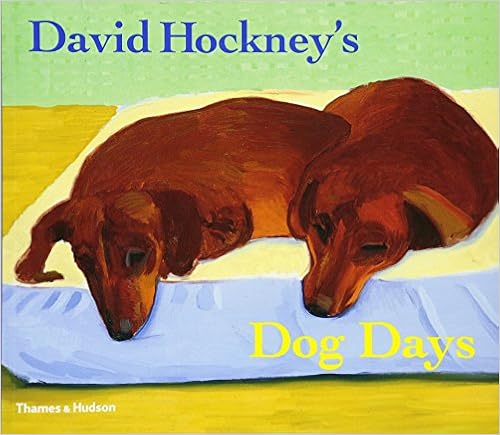
David Hockney's Dog Days Paperback – September 17, 2006
David Hockney introduces his two dachshunds, Stanley and Boodgie, in this delightful new book. The result of both sharp observation and affection, these paintings and drawings are lyrical studies in form and color. A text by the artist himself gives a behind-the-scenes glimpse of how to work with models who don't necessarily want to sit still. Hockney has provided additional drawings made specially on the page, and has been largely involved in the layout of the book, creating a charming and unified whole.
我們的社群絕大多數都站在大衛霍克尼這邊,認為貝葉掛毯無可取代,即使只是暫時搬遷到倫敦,也絕不能冒任何風險。
大衛霍克尼:繪畫人生
這位英國藝術家在摩根圖書館與博物館舉辦的新展覽,其動人之處在於聚焦於摯愛之人以及人際關係的複雜性…
展覽在材料運用上包羅萬象,但主題卻十分集中,宛如溫馨的家庭聚會。展覽中僅描繪了五個人:霍克尼先生本人、他的母親,以及三位與他相識近五十年的摯友:格雷戈里·埃文斯,他曾經的情人、前策展人兼摯友;紡織品設計師西莉亞·伯特韋爾;以及莫里斯·佩恩,一位版畫大師,霍克尼先生自職業生涯早期便與其合作。
圖片
Our community overwhelmingly sided with David Hockney, arguing that the Bayeux Tapestry is too irreplaceable to justify the risks of moving it to London, even temporarily
David Hockney: A Life in Drawing
The British artist’s new show at the Morgan Library & Museum derives its poignant power from its focus on loved ones and the complex nature of relationships...
While lavishly inclusive in terms of materials, the show is otherwise tightly focused, a cozy family affair. Only five people are depicted here: Mr. Hockney, his mother and three intimates whom he has known, traveled with, drawn and also painted for around five decades: Gregory Evans, his one-time lover, former curator and longtime friend; the textile designer Celia Birtwell; and Maurice Payne, a master printer with whom Mr. Hockney has collaborated since early in his career.
Image
“Gregory” (1979), ink on paper.Credit...David Hockney
If friendship is one of the show’s themes, and the glory of drawing in various materials and styles is another, then time itself is the third. The exhibition is divided into five chapters — wordless capsule biographies — in which we see Mr. Hockney’s friends in various moods and settings as they progress through life. As with ourselves, we can see time pass on their faces.
Mr. Hockney is essentially documenting his life as it has entwined with others. Sometimes this is literal, as in the sprightly colored pencil drawing “Study for My Parents and Myself,” made in a hotel room in Paris in 1974. The artist’s face, reflected in a dressing-table mirror, appears between those of his parents, seated to either side before deep yellow drapes. His father looks tidy and subtly dapper. His mother’s dress is loosely scribbled — expansive and improvised, which seems appropriate to her warmer personality and more active encouragement of her son. One of his most touching portraits of her dates from Feb. 19, 1978, the day of her husband’s funeral. Drawn in sepia ink (favored by Rembrandt), she wears a coat and hat, and looks a little blank but calm, as if appraising the next phase of her life.
Image
“Maurice 1998,” etching. Credit...The David Hockney Foundation
ADVERTISEMENT
The show’s first wall offers a taste of Mr. Hockney’s early talent and commitment to art with works from the 1950s that I don’t think have often been exhibited in this country. Especially impressive is a self-portrait collage from 1954, the year Mr. Hockney turned 17. Granted he was already studying at the Bradford School of Art in Bradford in Yorkshire, England, where he was born in 1937, but it still makes one curious about how he got to it. Fashioned mostly from small colorful scraps of glossy magazine images glued to newsprint, it shows the young artist intently studying himself and us. Already in place are his self-possession, big glasses and mop head bangs — albeit very dark. The dull color startles, confirming how right Mr. Hockney was to enhance his innate charisma by peroxiding his hair Andy Warhol white in 1961, on his first ecstatic trip to New York.
Image
“Celia Carennac, August 1971,” colored pencil on paper.Credit...The David Hockney Foundation
Image
“Celia, 21 Nov 2019,” ink and acrylic on paper.Credit...David Hockney
The jumbled fragments of color that define the artist’s blue coat, navy jacket, red scarf and yellow necktie presage the multifaceted Cubist vibe of his composite Polaroids from the 1980s. Visual wit is already apparent: The red of the scarf includes bits of an image of a red scarf, stylishly rumpled, as if from an advertisement. In a shift of mediums, the checked pattern of his shirt collar is casually indicated with gray wash brushed on white cutout paper.
The sections devoted to Mr. Hockney’s friends form the core of the exhibition. Gregory Evans is represented by an almost novelistic profusion of images in terms of style, medium and his own changing appearance. He begins as a tall boyish beauty with cascading curls (depicted with fine, Matissean sparseness), and is almost unrecognizable as an imposing older figure, heavier and scowling through eyeglasses in a large ink drawing at the show’s end.
Image
“Mother, Bradford. 19 Feb 1978,” sepia ink on paper.Credit...The David Hockney Foundation
The elegant Celia Birtwell who is considered Mr. Hockney’s muse, brightens the show with her serenity, kohl-rimmed eyes and fashion sense. Her spirit darkens only once in a large morose lithograph from 1973 that masquerades as an ink drawing and is one of the best images in the show.
Maurice Payne, a master printer who has collaborated with Mr. Hockney on many of his prints, must be one of the artist’s steadiest subjects. Lean and laconic, with a certain resemblance to Marcel Duchamp, he changes little in pose or thoughtful expression, which makes Mr. Hockney’s command all the clearer. A large, densely worked etching of him from 1998 gives a wonderful account of the medium’s special way of infusing black
《格雷戈里》(1979),紙上墨水。圖片來源:大衛霍克尼
如果友誼是本次展覽的主題之一,而運用各種材料和風格進行繪畫的樂趣是另一個主題,那麼時間本身就是第三個主題。展覽分為五個章節——無字的人物小傳——在這些章節中,我們看到了霍克尼先生的朋友們在人生旅程中不同情緒和場景下的寫照。如同我們自身一樣,我們也能在他們臉上看見時光的流逝。
霍克尼先生本質上是在記錄他與他人交織的人生。有時這種記錄是直白的,例如他創作於1974年巴黎一家酒店房間的那幅生動活潑的彩色鉛筆畫《父母與我自畫像》。畫中,藝術家的臉映照在梳妝台的鏡子裡,出現在父母的臉龐之間,父母分別坐在他兩側,身後是深黃色的窗簾。他的父親看起來整潔又不失風度。他母親的裙子是隨意的塗鴉式設計——寬鬆而隨意,這似乎與她溫暖的個性以及對兒子更積極的鼓勵相得益彰。他最感人的肖像畫之一創作於1978年2月19日,也就是她丈夫的葬禮當天。這幅畫用倫勃朗鍾愛的棕褐色墨水繪製,畫中的她身穿外套,頭戴帽子,神情略顯茫然卻又平靜,彷彿在審視人生的下一個階段。
圖片
《莫里斯 1998》,蝕刻版畫。圖片來源:大衛霍克尼基金會
廣告
展覽的第一面牆展現了霍克尼先生早期的才華和對藝術的執著,而展出的作品創作於20世紀50年代,我認為這些作品在美國並不常見。尤其令人印象深刻的是一幅創作於1954年的自畫像拼貼畫,那一年霍克尼先生17歲。誠然,他當時已在英國約克郡布拉德福德的布拉德福德藝術學院學習(他於1937年出生於此),但這幅作品仍然令人好奇他是如何創作出來的。這幅作品主要由貼在新聞紙上的彩色雜誌片段拼貼而成,展現了這位年輕藝術家專注地審視自己和我們。他自信的神態、標誌性的大眼鏡和蓬鬆的瀏海——儘管顏色很深——已然顯現。暗淡的色彩令人眼前一亮,也印證了霍克尼先生在1961年第一次欣喜若狂的紐約之旅中,將頭髮染成安迪·沃霍爾式的白色,以增強其與生俱來的魅力是多麼明智。
圖片
《西莉亞‧卡倫納克,1971年8月》,色鉛筆畫於紙上。圖片來源:大衛霍克尼基金會
圖片
《西莉亞,2019年11月21日》,墨水和壓克力顏料畫於紙上。圖片來源:大衛霍克尼
藝術家藍色外套、海軍藍夾克、紅色圍巾和黃色領帶上交錯的色彩碎片,預示著他20世紀80年代合成寶麗來照片中多面立體主義的風格。視覺上的巧妙構思已然顯現:紅色圍巾中包含著另一條紅色圍巾的圖像碎片,圍巾被隨意地揉皺,彷彿來自廣告。在媒材的轉換中,他襯衫領子的格子圖案被隨意地用灰色水彩暈染在白色剪紙上。
展覽的核心是專門介紹霍克尼先生朋友的部分。格雷戈里·埃文斯的作品以近乎小說般的豐富圖像呈現,涵蓋了風格、媒介以及他本人不斷變化的形象。他最初是一位身材高挑、容貌俊美的少年,一頭瀑布般的捲發(以馬蒂斯式的簡潔筆觸描繪),而在展覽結尾的一幅大型水墨畫中,他卻變成了一位氣度不凡、體態豐腴、戴著眼鏡、眉頭緊鎖的年長男子,幾乎讓人認不出來。
圖片
《母親,布拉德福德。 1978年2月19日》,紙上棕褐色墨水畫。圖片來源:大衛霍克尼基金會
優雅的西莉亞·伯特韋爾被認為是霍克尼先生的繆斯,她以寧靜的氣質、眼線勾勒的雙眸和時尚品味為展覽增添了光彩。她的精神狀態僅在1973年的一幅大型憂鬱石版畫中有所減弱,這幅作品偽裝成水墨畫,卻是展覽中最出色的作品之一。
莫里斯·佩恩是一位技藝精湛的版畫家,曾與霍克尼先生合作創作過許多版畫作品,他無疑是這位藝術家最穩定的創作對象之一。他身材精瘦,言簡意賅,與馬塞爾·杜尚有幾分神似,姿態和沈思的表情變化不多,這使得霍克尼先生的技法更加爐火純青。一幅創作於1998年的大幅蝕刻版畫,筆觸細膩,完美展現了這種媒材獨特的黑色表現力。

沒有留言:
張貼留言